Food & Treats

5 Best Novel Protein Cat Food of 2026: Which Calms Sensitive Stomachs Best

Find the right novel protein food for cats with allergies or sensitivities – without the guesswork.

Many cats with food allergies or sensitivities end up on a novel protein diet. Duck, venison, and lamb replace chicken or fish to avoid common triggers. But switching foods often brings its own problems: vomiting, diarrhea, or a picky cat that refuses to eat.

The gap between marketing claims and your cat's actual response can be wide. Digestibility varies by individual, and the transition period is almost always longer than expected. This guide focuses on the four key specs that determine whether a food actually works for your cat, not just the label on the bag.

The right choice depends on matching the protein source, ingredient count, and grain content to your cat's specific digestive system. We've sorted through the most popular options so you can start with the formula that has the highest chance of success.

1

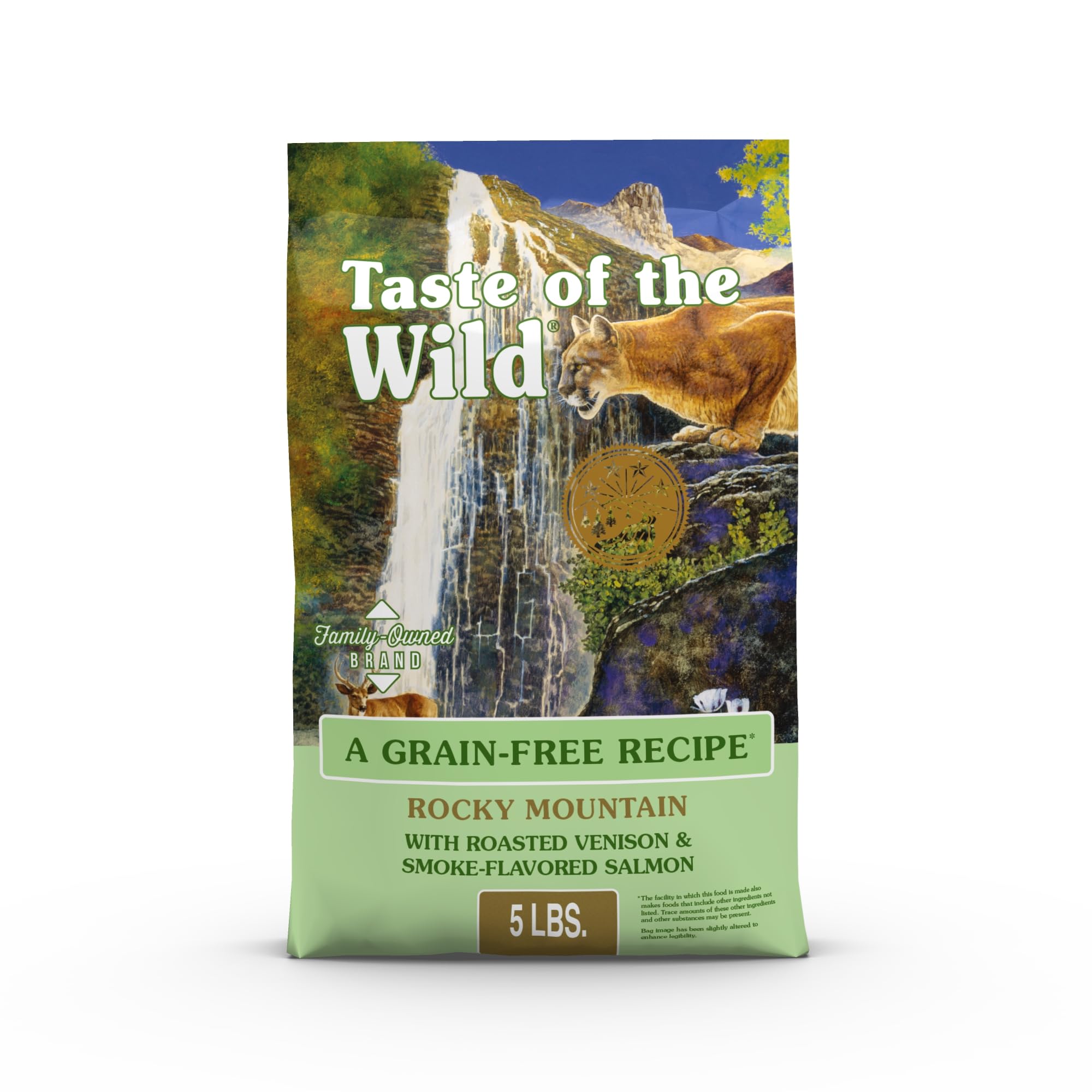
Taste of the Wild Venison

Top Pick
Taste of the Wild Venison

Budget grain-free

Our Score 9.4/10
Check Price

Worth Noting

  • Strong odor may be noticeable to owners, especially in enclosed spaces.
  • Some cats may experience digestive upset during transition
Grain-Free?
Yes
Primary Protein
Venison, salmon
Limited Ingredient?
No
Probiotic & Omega Content
Probiotics
Read the full review

With 42% protein from venison and salmon plus probiotics, this formula delivers premium nutrition at a mid-range price – a rare combination in the novel protein dry food aisle. It's a flexible choice for multi-cat households, though the Natural Balance limited-ingredient formula is a more targeted option for cats with confirmed allergies. This food suits budget-conscious owners who can work around a strong odor and a slow transition period, as some cats may have digestive sensitivity.

Transition slowly over 7–10 days to reduce the chance of digestive upset.

Bottom line: A cost-effective choice for households that want high-protein grain-free nutrition without the premium price – just plan for a slow transition and be prepared for the smell.
2

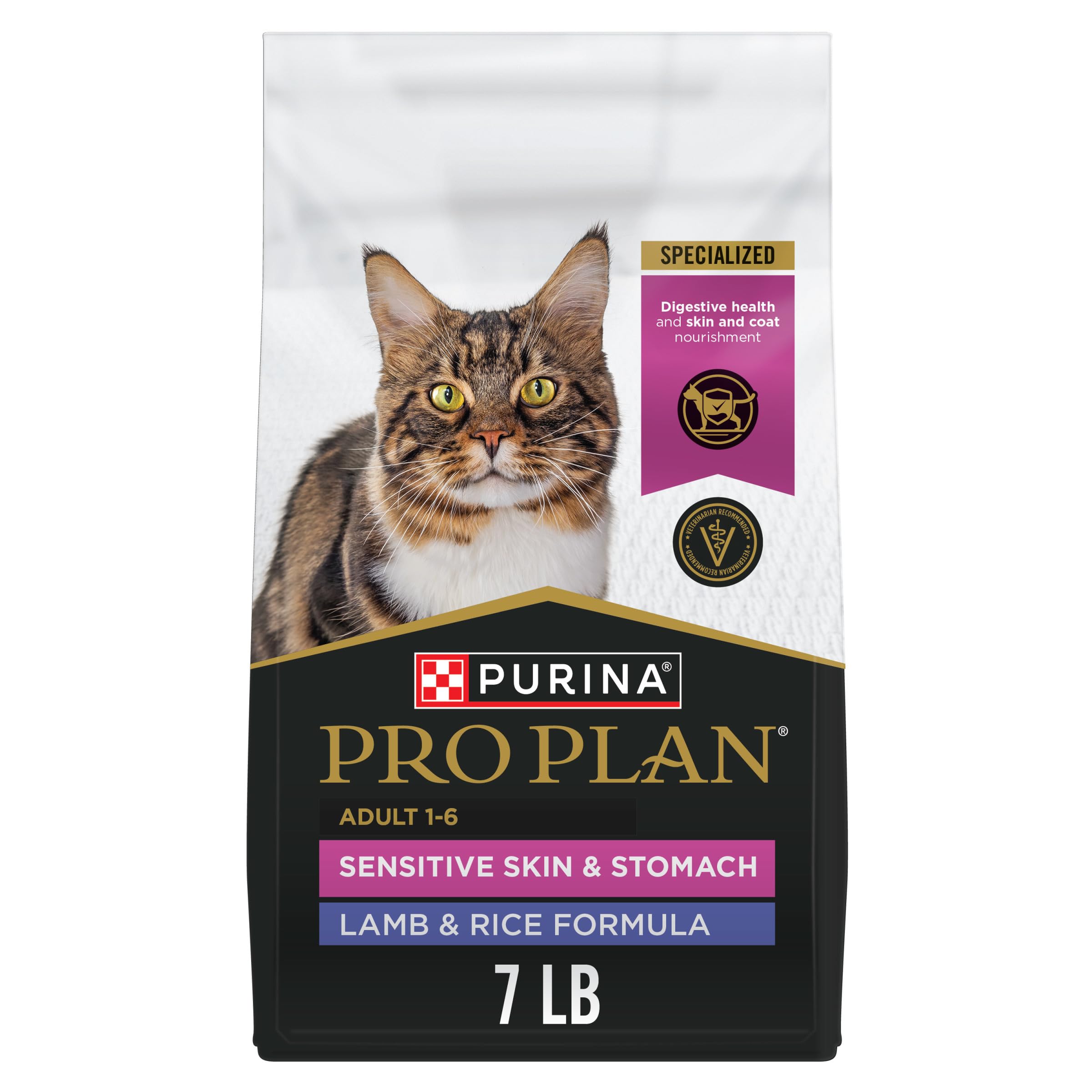
Purina Pro Plan Lamb & Rice

Purina Pro Plan Lamb & Rice

Sensitive stomachs

Our Score 9.4/10
Check Price

Worth Noting

  • Contains rice, so not suitable for cats with grain sensitivities.
  • Some cats may continue to have occasional vomiting or loose stools.
Grain-Free?
No
Primary Protein
Lamb
Limited Ingredient?
No
Probiotic & Omega Content
Probiotics, Omega-6
Read the full review

This lamb and rice formula from Purina Pro Plan includes probiotics that help settle sensitive stomachs and improve coat condition for cats with poultry allergies or skin issues. Palatability is high — even picky cats accept it. Owners note reduced vomiting and firmer stools with consistent use. Unlike limited-ingredient options, it contains rice and multiple ingredients, making it unsuitable for cats with grain allergies or those needing a strict single-protein diet. It works well as a daily diet for cats without those restrictions, offering consistent digestive support at a moderate price.

Verify your cat's tolerance to grains before making this a daily staple.

Bottom line: A consistent mid-range option for sensitive cats when grain-free isn't needed — just verify your cat's grain tolerance first.

3

Blue Buffalo Wilderness Duck

Blue Buffalo Wilderness Duck

Duck immune support

Our Score 9.4/10
Check Price

Worth Noting

  • Occasional constipation or vomiting can occur in some cats during transition.
Grain-Free?
Yes
Primary Protein
Duck
Limited Ingredient?
No
Probiotic & Omega Content
Omega-3 & 6
Read the full review

Blue Buffalo Wilderness Duck leads with real duck as the first ingredient, backed by a blend of antioxidants in its LifeSource Bits. This formula offers more immune support than a strict limited-ingredient diet, making it a fitting option for cats that tolerate multiple ingredients but need a novel protein to avoid poultry allergies. However, it is not as stripped-down as top limited-ingredient options like Natural Balance's duck and green pea; cats with extremely sensitive stomachs may still react. The premium pricing is worth it for owners prioritizing both novel protein and immune health, though a minority of cats have experienced constipation or vomiting—worth monitoring during transition.

Slowly transition your cat to this food over a week to help avoid any digestive changes.

Bottom line: A solid choice for cat owners who want a grain-free duck formula with added immune support and can accept a slightly higher price point.

4

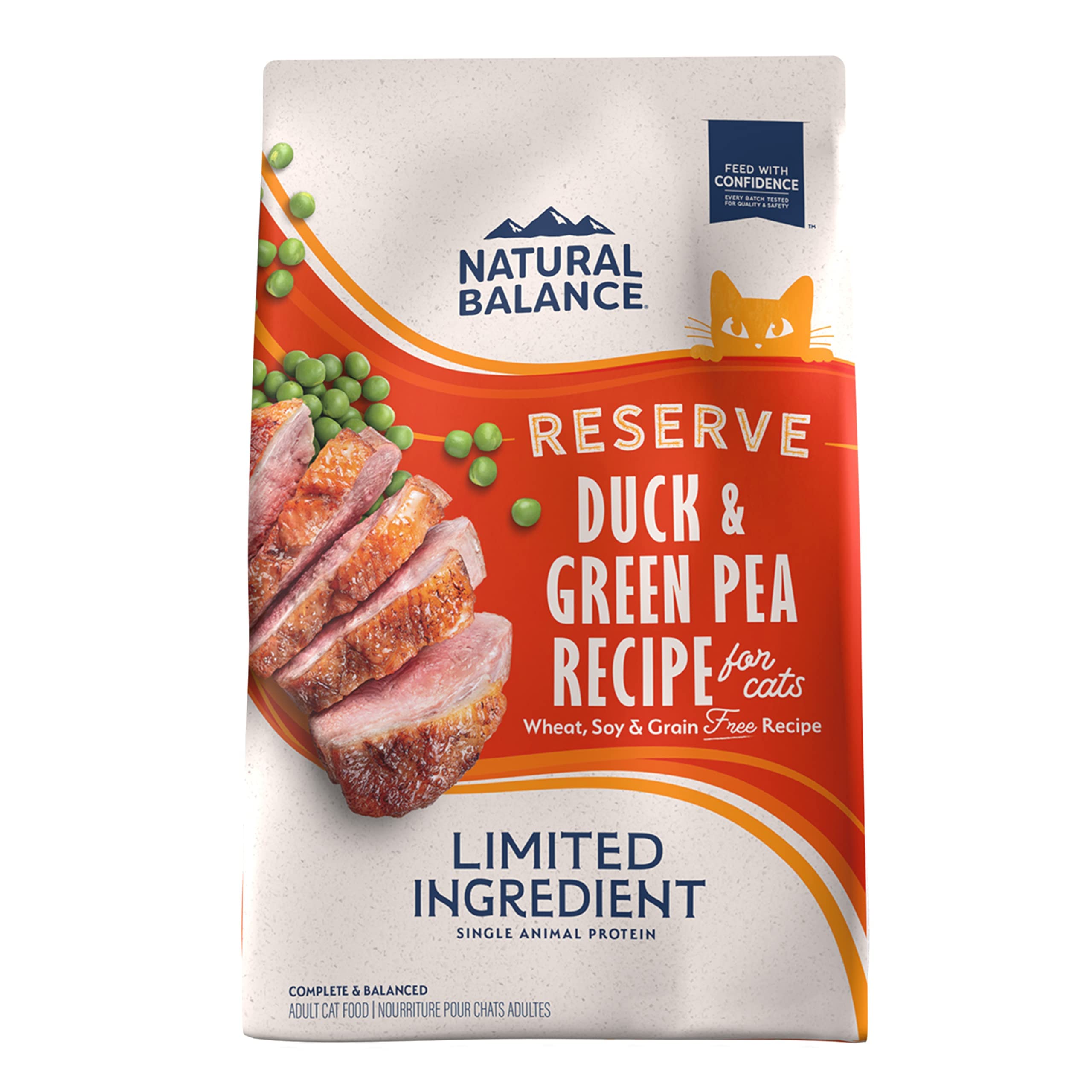
Natural Balance Duck & Pea

Natural Balance Duck & Pea

Allergy relief

Our Score 9.0/10
Check Price

Worth Noting

  • Some cats refuse to eat the duck flavor, requiring slow introduction.
  • A minority of cats may still experience allergic reactions to the formula.
Grain-Free?
Yes
Primary Protein
Duck (single)
Limited Ingredient?
Yes
Probiotic & Omega Content
Read the full review

This limited-ingredient dry food centers on duck as the sole animal protein and green peas for fiber, stripping away common allergens like chicken, corn, and soy. Owners of cats with confirmed sensitivities report smooth transitions to this formula, with steady digestion and no reactions in most cases. The grain-free approach supports cats that struggle with grains, though the real advantage is the short, traceable ingredient list that makes elimination diets straightforward.

Cats with known food allergies or digestive issues benefit most here, especially those that have reacted to multiple proteins in the past. The single-protein base removes guessing, but the duck flavor can be hit-or-miss: some cats refuse it outright. A slow, gradual transition over a week or two helps, but picky eaters may still reject the food entirely, making this less suited for cats that demand variety in their bowl.

Transition over 7-10 days by mixing with old food — gradual exposure improves acceptance of the duck protein.

Bottom line: For cat owners chasing a clean, low-variable diet to pin down allergy triggers, this is the most direct option. Picky cats are the only real hurdle.

5

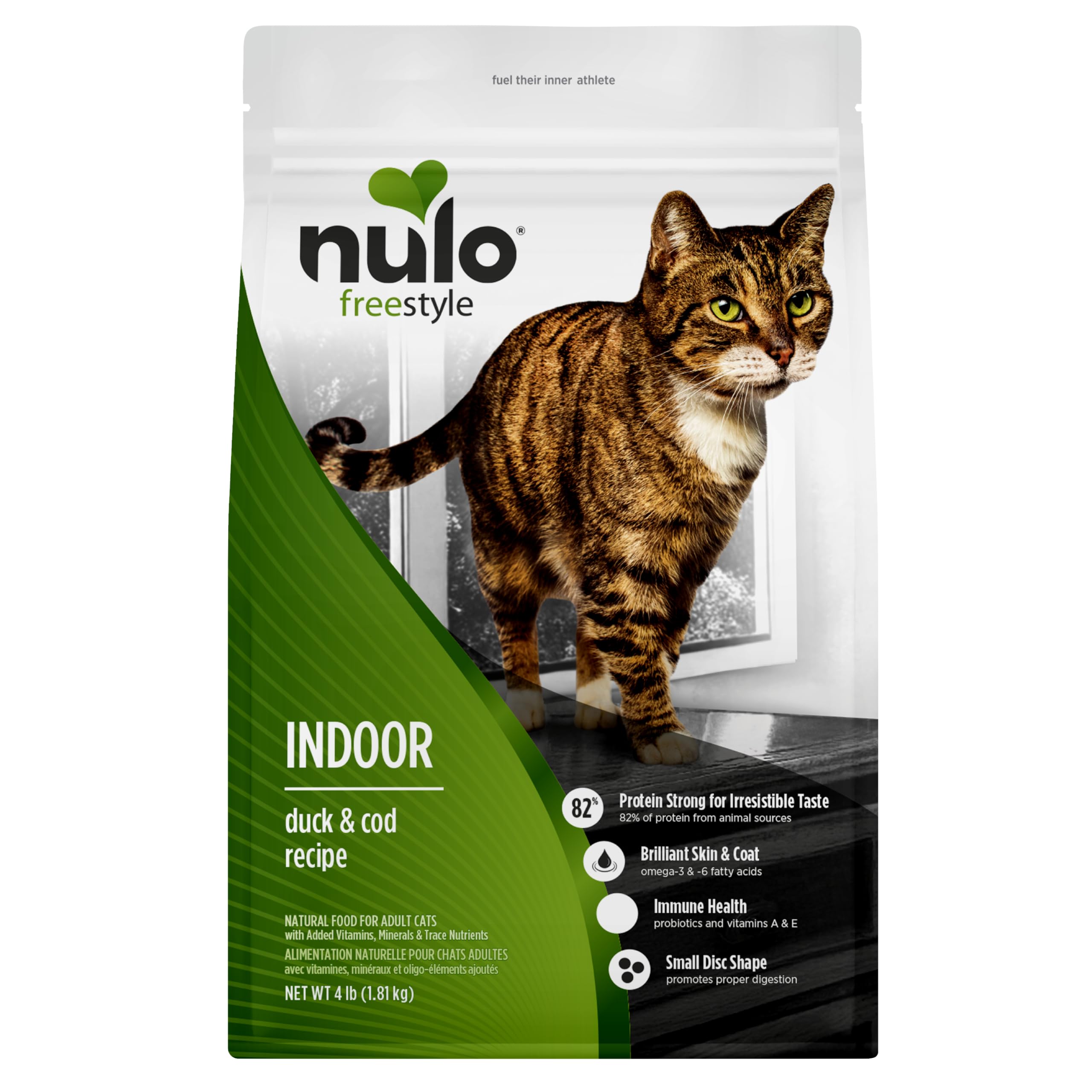
Nulo FreeStyle Duck & Cod

Nulo FreeStyle Duck & Cod

Indoor flat-faced

Our Score 9.0/10
Check Price

Worth Noting

  • Digestive upset may occur when transitioning, particularly for cats with sensitive stomachs
  • Some cats may refuse the duck-cod flavor, requiring a cautious trial start
Grain-Free?
Yes
Primary Protein
Duck, cod
Limited Ingredient?
No
Probiotic & Omega Content
Probiotic, Omegas
Read the full review

Nulo FreeStyle Duck & Cod offers the smallest kibble in the set, specifically shaped for flat-faced breeds. Unlike the top pick's limited-ingredient approach, this formula adds probiotics and omega fatty acids for indoor wellness. It suits owners prioritizing a clean, grain-free ingredient list with a novel protein blend of duck and cod. However, acceptance is not guaranteed — some cats may reject the flavor or experience digestive sensitivity. The premium per-pound cost also warrants consideration.

Introduce slowly over 7-10 days to minimize digestive issues and confirm acceptance.

Bottom line: Best for owners of flat-faced indoor cats who want a grain-free, probiotic-rich formula and are willing to work through potential palatability or digestive adjustments.

How to Choose

Primary Novel Protein Source

The protein is the foundation. Duck, venison, rabbit, and lamb are the most common novel proteins. If your cat has a confirmed chicken allergy, any of these can work, but individual tolerance varies. The key is to pick a single protein source – not a blend – so you can isolate the trigger.

Grain-Free vs. Grain-Inclusive

Grains like rice and oatmeal are common fillers that can cause issues for some cats. Grain-free formulas remove these, but not all cats need grain-free. If your cat tolerates grains, a grain-inclusive formula like Purina Pro Plan Lamb & Rice may be more digestible and is often cheaper. The trade-off: grain-free diets tend to be higher in protein and fat, which can upset sensitive stomachs if introduced too quickly.

Limited Ingredient vs. Multiple Proteins

Limited ingredient diets (LID) use a single protein and minimal carbohydrates. This makes them ideal for pinpointing allergies. Multi-protein blends increase the risk of triggering a reaction but often improve palatability. For a first trial, LID is the safer bet. Once you confirm a protein works, you may rotate to a blend for variety.

Probiotic and Omega Fatty Acid Content

Probiotics support gut health during the transition, reducing diarrhea and vomiting. Omega-3 and omega-6 fatty acids improve skin and coat condition, a common secondary issue in allergic cats. Look for guaranteed live probiotics (like BC30 in Nulo) or added omega oils. Not all foods list these – check the guaranteed analysis and ingredient list.

Kibble Size and Texture

Kibble size matters more than most owners realize. Large, hard kibble can be difficult for flat-faced cats (Persians, Exotics) or seniors with dental issues. Small disc-shaped kibble (like Nulo's) is easier to chew and less likely to cause gagging. For other cats, standard kibble size is fine, but always observe the first few days.

Frequently Asked Questions