Food & Treats

10 Best Cat Food for IBD of 2026: Options That Calm Sensitive Stomachs

Find the best over-the-counter cat food for IBD that actually reduces vomiting and diarrhea without breaking the bank or triggering allergies.

Inflammatory bowel disease in cats turns mealtime into a guessing game. One food stops the vomiting, another triggers diarrhea, and the 'sensitive stomach' label on many bags doesn't guarantee relief. The real challenge is that IBD triggers vary between cats — protein allergies, grain intolerance, or simply a need for high moisture.

This guide cuts through the marketing by focusing on what actually works for digestive health: novel proteins, prebiotic fiber, and the right moisture content. The trade-off you'll face is between grain-free formulas that avoid wheat and barley versus vet-recommended diets built on highly digestible chicken and rice. Neither is universally better — your cat's specific symptoms and history decide which path to take.

We've matched each product to the cat it serves best, so you can stop cycling through bags and find the one that settles your cat's gut without breaking your budget.

1

Purina ONE Sensitive Stomach 16 lb

Top Pick
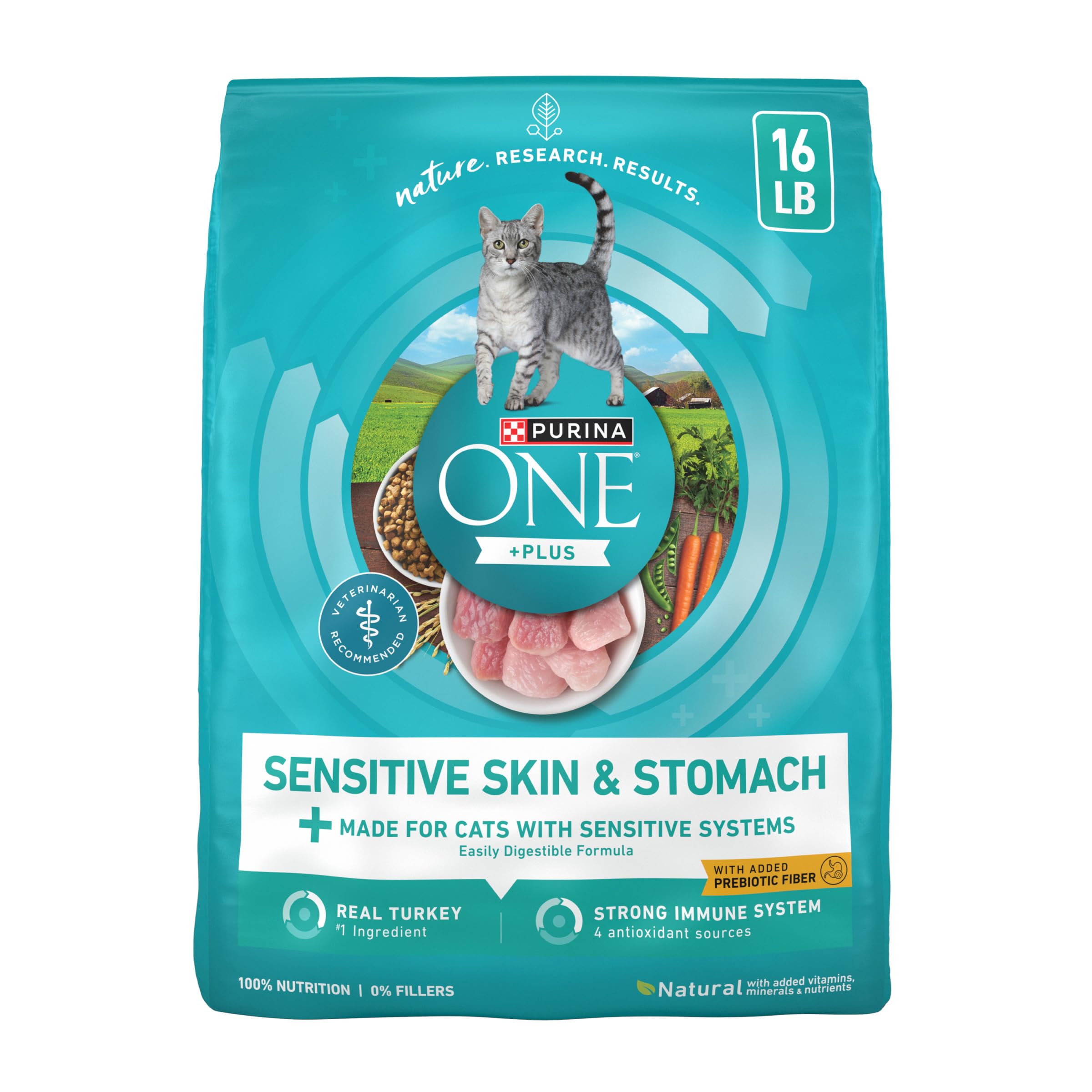
Purina ONE Sensitive Stomach 16 lb

Grain-free sensitive stomach

Our Score 9.6/10
Check Price

Worth Noting

  • Mid-range price can feel high compared to standard cat foods
  • Some cats continue to vomit after switching; not a solution for severe IBD
Grain-Free?
Yes
Protein Source
Turkey (first)
Prebiotic Fiber
Prebiotic fiber
Read the full review

Real turkey is the first ingredient in a grain-free formula with prebiotic fiber — a step up from budget-sensitive options that rely on by-products. Feedback indicates this combination reduces vomiting and digestive upset for most cats with mild to moderate sensitivity.

This food suits cats with mild to moderate stomach or skin issues who tolerate turkey. It will not replace a veterinary prescription diet for diagnosed IBD, and a small number of cats still vomit after switching. Avoid if your cat has a turkey allergy.

Transition gradually over 7–10 days to give the digestive system time to adjust.

Bottom line: Owners whose cats do well on this formula get solid digestive support at a mid-range price — but check turkey tolerance and transition slowly.
2

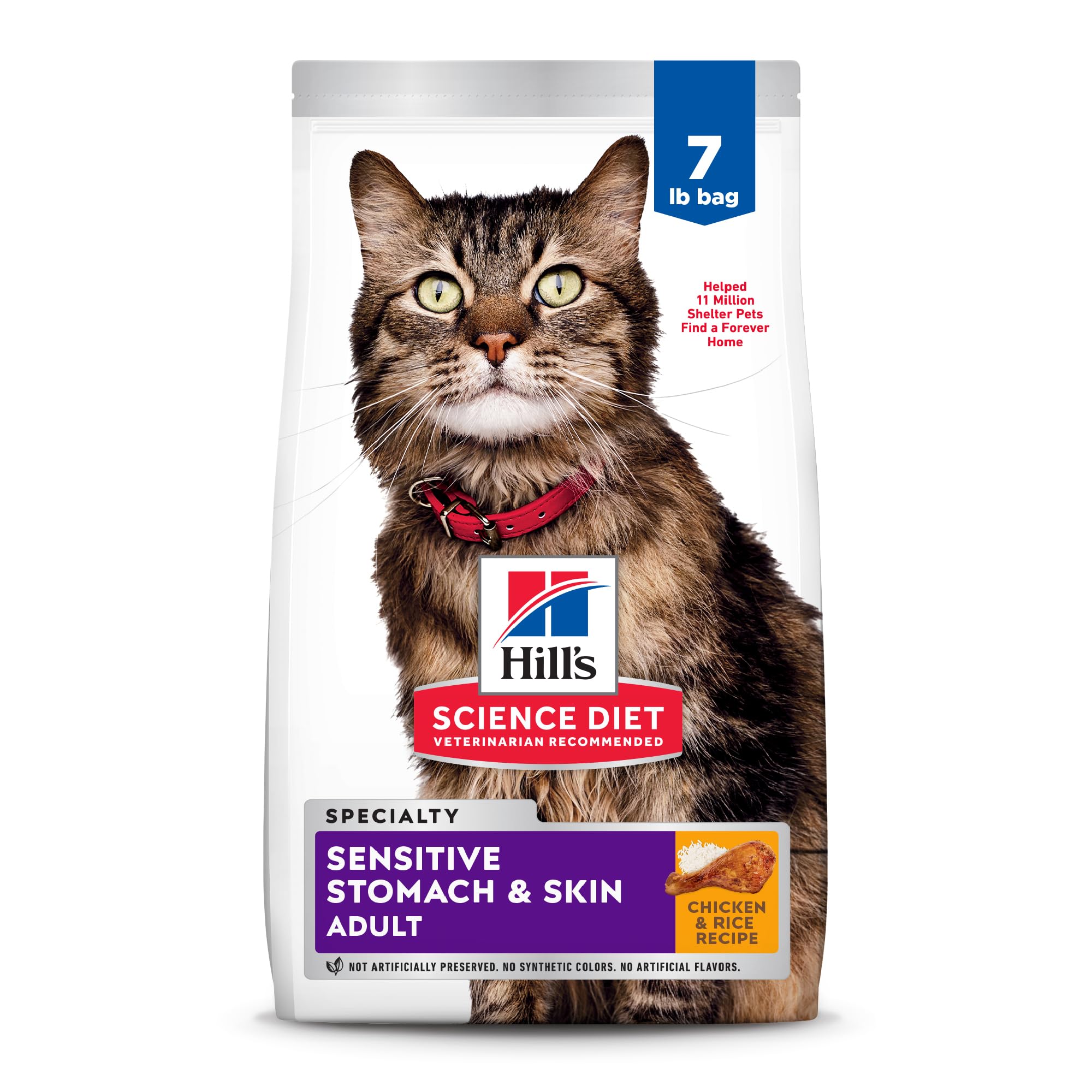
Hill's Science Diet Sensitive 7 lb

Hill's Science Diet Sensitive 7 lb

Digestive & skin issues

Our Score 9.4/10
Check Price

Worth Noting

  • Picky cats may reject the updated chicken-first formula
  • Premium price limits appeal for budget-conscious buyers
Grain-Free?
No
Protein Source
Chicken (first)
Prebiotic Fiber
Prebiotic fiber
Read the full review

Hill's Science Diet delivers on its promise of digestive and skin support with a highly digestible chicken-and-rice formula. The prebiotic fiber and balanced fatty acids help reduce vomiting, diarrhea, and dandruff, making it a reliable option for cats with mild to moderate sensitivities.

Beyond digestive relief, this food improves coat condition and reduces hairballs — a dual benefit that sets it apart from single-purpose sensitive-stomach formulas. Most cats accept the taste readily, though a small subset of picky eaters may hesitate with the updated chicken-first recipe.

This is best suited for owners who prioritize a vet-backed brand and have cats with both digestive and skin issues. However, the chicken-first ingredient means it is not appropriate for cats with known chicken allergies. For those without that restriction, the consistent results justify the premium pricing.

If your cat refuses the new formula, transition gradually by mixing with the previous food over a week to improve acceptance.

Bottom line: For cats with sensitive stomachs and skin, this formula delivers consistent digestive relief and coat improvement — worth the premium for owners who want vet-backed nutrition.

3

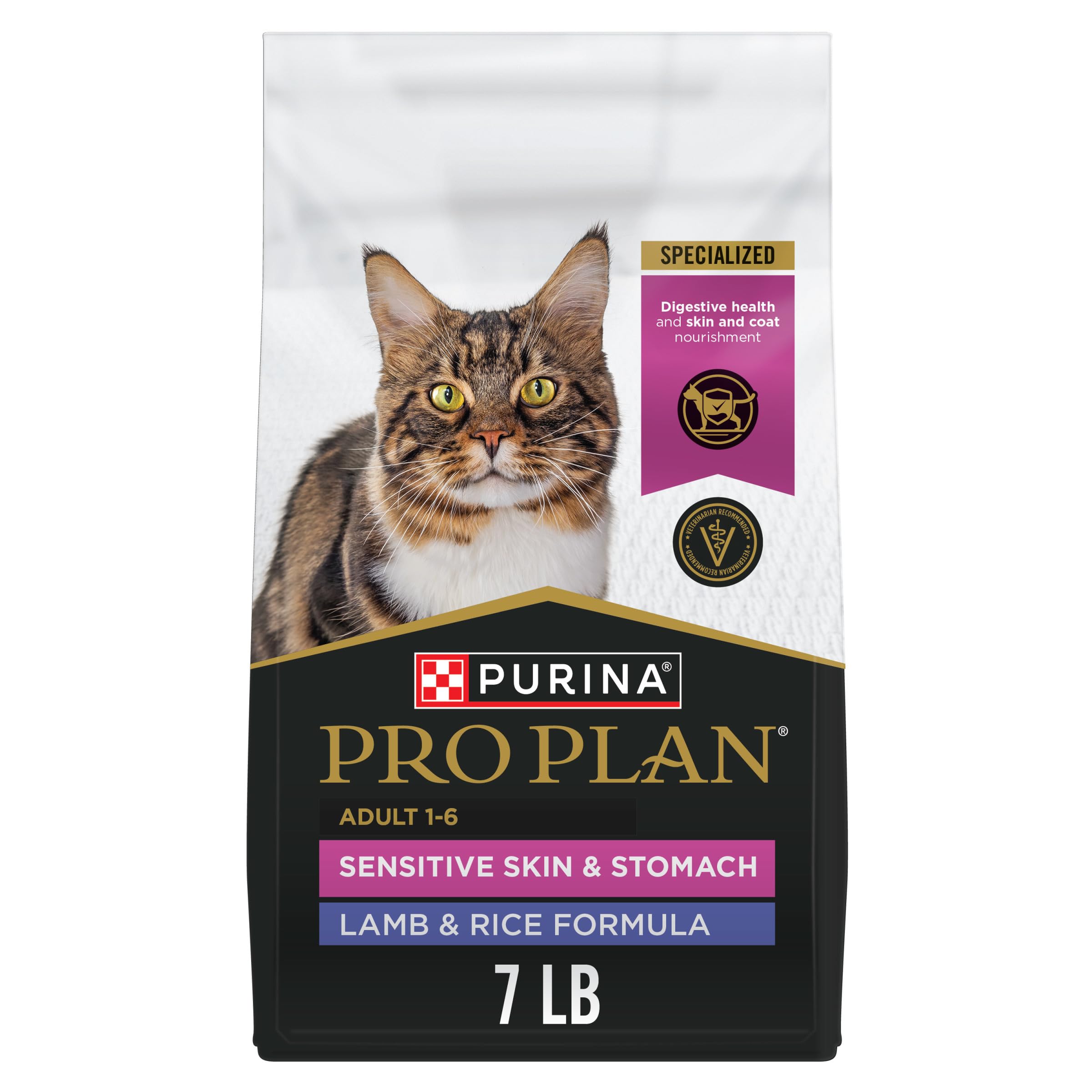
Purina Pro Plan Lamb & Rice 7 lb

Purina Pro Plan Lamb & Rice 7 lb

Poultry allergies

Our Score 9.4/10
Check Price

Worth Noting

  • Premium pricing for a 7 lb bag
  • In some cases, cats may still experience diarrhea or blood in stool during adjustment.
Grain-Free?
No
Protein Source
Lamb (first)
Prebiotic Fiber
Prebiotics+probiotics
Read the full review

Real lamb is the first ingredient, and live probiotics support digestive stability – a combination that makes this formula stand out among sensitive-stomach foods. Unlike the chicken-based top pick, this option gives owners a poultry-free route for cats with known allergies or intolerances to chicken or turkey.

This food fits cats that thrive on a novel protein source and need gentle digestive care – particularly those with skin issues linked to food sensitivities. The 7 lb bag carries a premium per-pound price, and a small number of cats may still develop loose stool or other digestive upset, so it’s worth monitoring the transition closely.

Bottom line: A strong pick for poultry-sensitive cats that need digestive support, but the price and occasional adverse reactions mean it’s best for single-cat households where the protein match is confirmed.

4

Purina Cat Chow Gentle Sensitive 13 lb

Purina Cat Chow Gentle Sensitive 13 lb

Budget multi-cat

Our Score 9.4/10
Check Price

Worth Noting

  • Some cats may still experience digestive issues, including bloody stool
  • Contains by-products, making it a step below premium brands in ingredient quality
Grain-Free?
No
Protein Source
Turkey (first)
Prebiotic Fiber
Natural prebiotic fiber
Read the full review

At under $19 for a 13 lb bag, Purina Cat Chow Gentle Sensitive delivers the lowest per-pound cost among sensitive stomach formulas. Real farm-raised turkey is the first ingredient, and added prebiotic fiber helps reduce vomiting and improve coat condition for many cats. The high palatability means even finicky eaters tend to accept it readily.

This formula is best suited for budget-conscious owners with multiple cats who need gentle digestion support without the premium price tag. However, ingredient quality is lower than brands like Blue Buffalo or Hill's (the kibble contains by-products), and a small number of cats may still experience digestive upset such as bloody stool. For households where ingredient sourcing is a priority, this tradeoff is worth weighing against the significant cost savings.

Gradual transition over 7 to 10 days can help sensitive cats adjust to the prebiotic fiber content and minimize any residual upset.

Bottom line: A cost-effective choice for multi-cat homes where gentle digestion support matters more than premium ingredients. Works well for general sensitivity, but cats with severe IBD or poultry allergies should look to prescription diets.

5

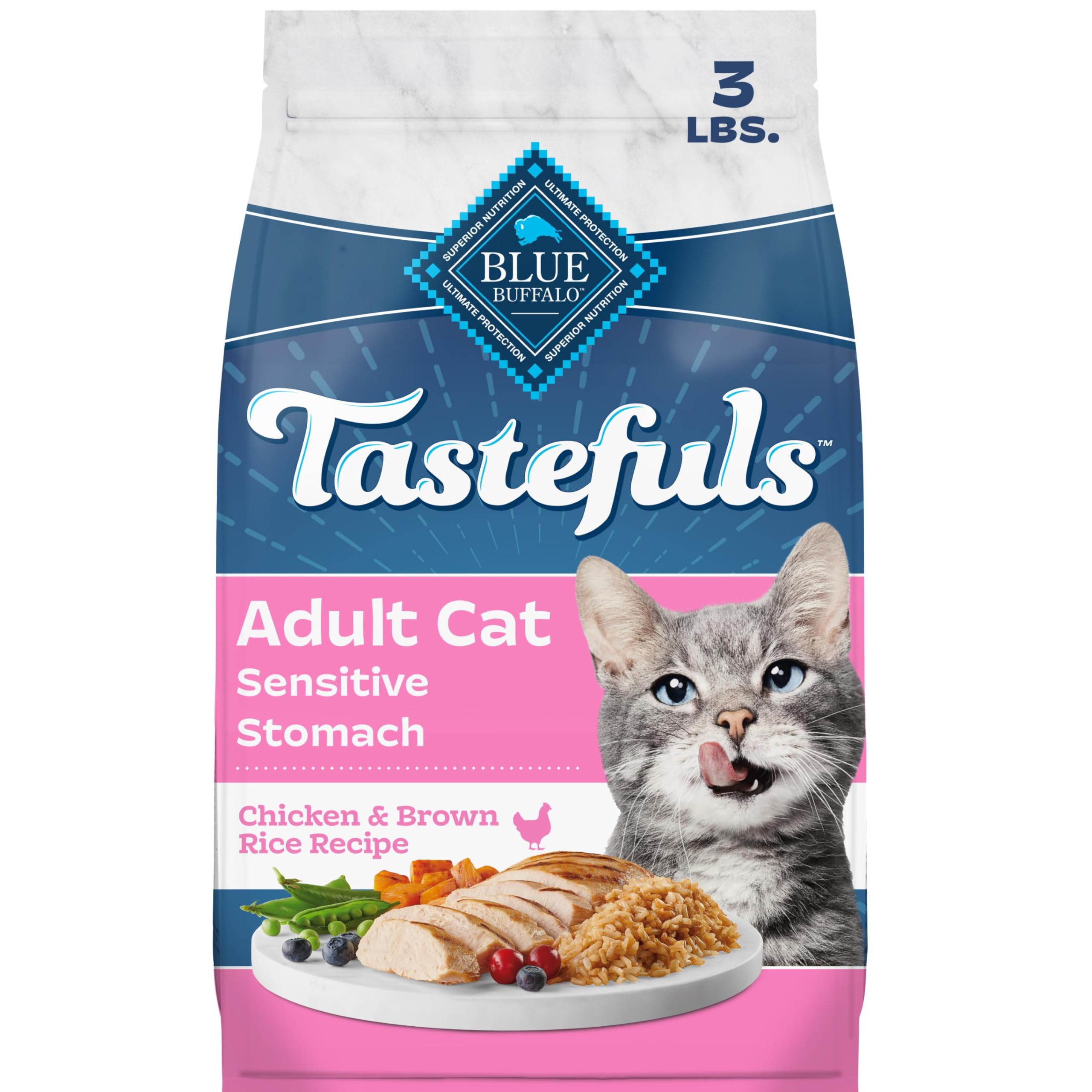
Blue Buffalo Tastefuls Sensitive 3 lb

Blue Buffalo Tastefuls Sensitive 3 lb

Natural budget option

Our Score 9.4/10
Check Price

Worth Noting

  • Bag may arrive with excessive crumbs, reducing usable food.
  • Some cats refuse to eat this formula, making it a gamble for picky eaters.
Grain-Free?
No
Protein Source
Chicken (first)
Prebiotic Fiber
FOS prebiotic fiber
Read the full review

This Blue Buffalo formula uses real chicken first and no poultry by-products, with LifeSource Bits for immune support, at a very low price. However, some cats reject the kibble, and bags can arrive with excessive crumbs due to quality control variance. It works well for owners on a tight budget whose cats tolerate chicken-based foods and are not extremely picky.

Bottom line: A budget-friendly option for owners whose cats have mild sensitivities and are not picky, but not the first choice for finicky eaters.

6

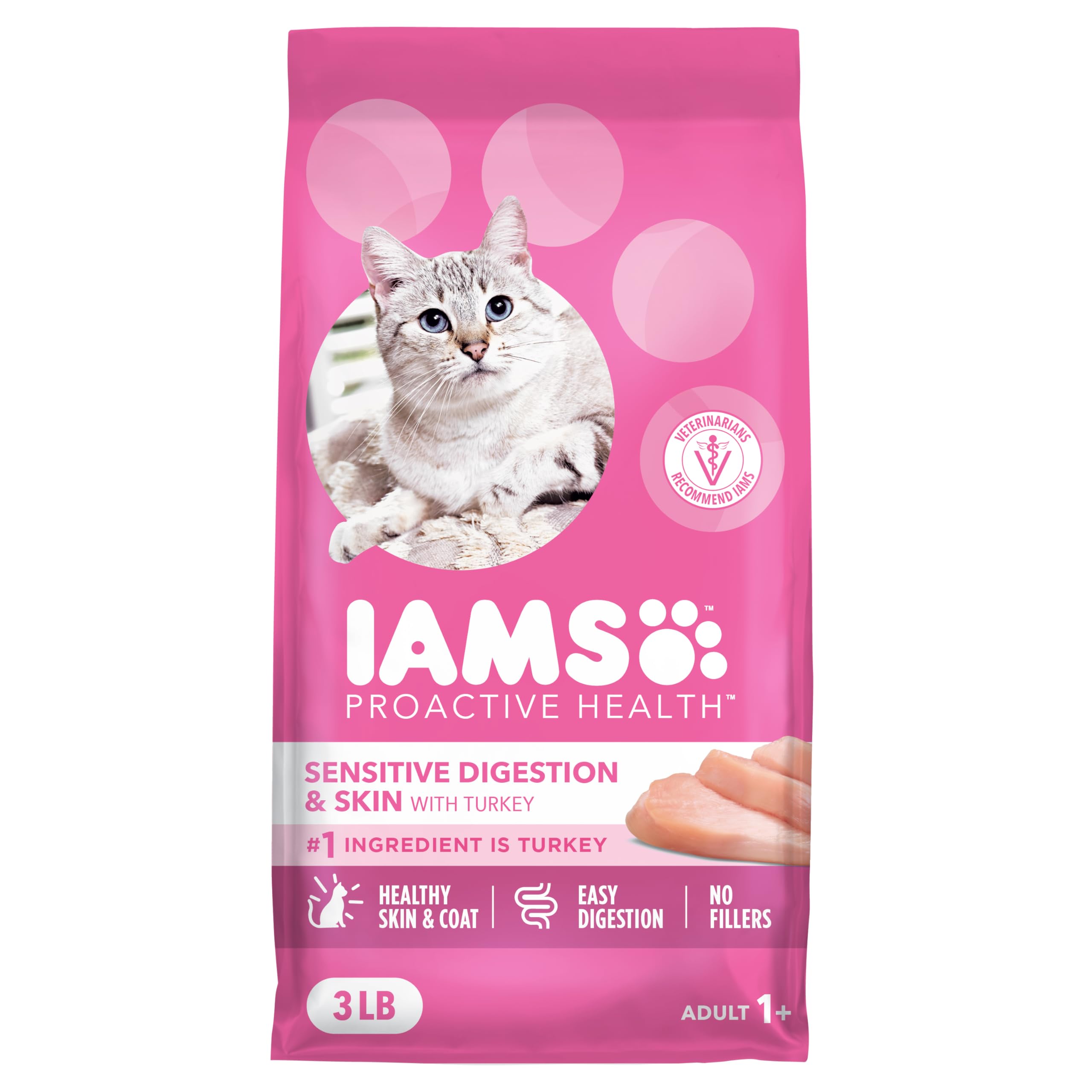
IAMS Proactive Health Sensitive 3 lb

IAMS Proactive Health Sensitive 3 lb

Ultra-budget turkey

Our Score 9.4/10
Check Price

Worth Noting

  • Palatability can be an issue
  • Contains chicken meal, which may trigger allergic reactions in sensitive cats.
Grain-Free?
No
Protein Source
Turkey (first)+chicken meal
Prebiotic Fiber
Specialized fiber blend
Read the full review

This IAMS formula offers an affordable turkey-based option for cats with sensitive stomachs, using a fiber blend that helps reduce vomiting and supports skin and coat health. However, it contains chicken meal, which can trigger allergies in some cats, and a significant number of cats may refuse the food outright. That makes it a reasonable trial food for non-picky cats without poultry sensitivities, but not a reliable long-term solution for more finicky or allergy-prone cats.

Bottom line: This works best as a budget-friendly trial for non-picky cats without poultry allergies, but it is not suitable as a long-term staple for cats with known sensitivities or picky eating habits.

7

Blue Buffalo True Solutions 3.5 lb

Blue Buffalo True Solutions 3.5 lb

Vet-formulated digestive

Our Score 9.4/10
Check Price

Worth Noting

  • Small bag size carries a premium cost per pound
  • Kibble texture can be inconsistent, with some bags containing very hard pieces.
Grain-Free?
No
Protein Source
Chicken (first)
Prebiotic Fiber
Clinically proven prebiotic
Read the full review

This dry food from Blue Buffalo is developed by veterinarians with a prebiotic fiber that improves stool quality and reduces vomiting for cats with digestive sensitivities. However, the small 3.5 lb bag carries a premium cost per pound, and some bags contain very hard kibble pieces that can bother cats with sensitive mouths. This formula works best for single-cat households where cost is less of a concern and the cat can tolerate the occasional texture variance.

Bottom line: This food fits owners of a single cat with moderate to severe digestive issues who are willing to pay a premium and accept occasional kibble inconsistencies – otherwise consider a more affordable or consistent option.

8

Royal Canin Digestive Care Dry 3 lb

Royal Canin Digestive Care Dry 3 lb

Fast eaters

Our Score 9.4/10
Check Price

Worth Noting

  • Premium price per pound compared to other digestive care options.
  • Large kibble pieces can be difficult for cats with small mouths or senior cats to chew.
Grain-Free?
No
Protein Source
Prebiotic Fiber
Prebiotics+fiber blend
Read the full review

The ring-shaped kibble design helps slow down cats that eat too quickly, reducing regurgitation. This 3 lb bag delivers Royal Canin's digestive care formula, supporting stool quality and odor. However, the per-pound cost is high, and the large kibble pieces may be too big for small or senior cats. If your cat doesn't need the slow-feeding shape, the larger Royal Canin Digestive Care bag offers better value.

Bottom line: Best suited for fast-eating cats where slowing down is the primary need, and budget is a secondary concern.

9

Royal Canin Digestive Care Wet 12 pk

Royal Canin Digestive Care Wet 12 pk

Severe GI conditions

Our Score 9.2/10
Check Price

Worth Noting

  • The food has a strong odor that some owners find unpleasant - noticeable in small kitchens or enclosed feeding areas.
  • The per-can cost is very high compared to other wet foods, adding up for long-term use or multiple cats.
Grain-Free?
No
Protein Source
Prebiotic Fiber
Prebiotics
Read the full review

Royal Canin Digestive Care Thin Slices in Gravy is the only wet food among the digestive-care options reviewed here, offering high moisture content and easy digestibility for cats with severe gastrointestinal conditions. The thin slices in gravy are designed for cats who struggle with dry kibble, particularly those with IBD, pancreatitis, or chronic vomiting. Many owners credit this food with stabilizing their cat's condition where other diets failed.

This food is best suited for owners who have a veterinary diagnosis and are willing to pay a premium for a clinically formulated diet. The strong smell of the food can be off-putting in confined spaces, and the cost per can is high - expect to spend over $28 for a 12-pack of 3 oz cans. For cats with less severe sensitivity, a dry food like the top pick may be more practical and economical.

For owners sensitive to the odor, serving the food in a well-ventilated area or rinsing the can before disposal can help.

Bottom line: This wet food is a specialized tool for cats with diagnosed digestive conditions, not a general household staple.

10

Royal Canin Sensitive Digestion 7 lb

Royal Canin Sensitive Digestion 7 lb

Persistent digestive issues

Our Score 9.2/10
Check Price

Worth Noting

  • Premium price can be a barrier compared to other sensitive stomach options.
  • Some cats may refuse the kibble or become intolerant after extended use.
Grain-Free?
No
Protein Source
Chicken (likely)
Prebiotic Fiber
Prebiotics
Read the full review

This 7 lb bag delivers the same prebiotic-rich formula that helps cats with persistent vomiting and diarrhea, using highly digestible proteins to support digestive health. It is a strong option for owners who prioritize clinical-style formulations over budget. However, the premium price remains a significant hurdle, and a minority of cats may refuse the kibble or develop intolerance over time.

Bottom line: Worth considering if your cat has persistent digestive issues and you prefer Royal Canin's veterinary-inspired approach, despite the higher cost and possible palatability issues.

How to Choose

Protein Source

Chicken is the most common protein in cat food, but also the most common allergen for IBD cats. If your cat vomits or has diarrhea after eating chicken-based diets, switching to a novel protein like lamb, turkey, or duck can resolve symptoms without needing a prescription diet.

Turkey is often well-tolerated but still a poultry protein - some cats react to all poultry. Lamb or fish-based formulas provide a clean break from common triggers. For severe cases, hydrolyzed protein diets are available only through veterinarians.

Prebiotic Fiber

Prebiotic fiber (FOS, inulin, beet pulp) feeds beneficial gut bacteria and helps firm stool. Most sensitive-stomach formulas include it, but the type and amount vary. Formulas with higher fiber content can reduce diarrhea but may cause gas or bloating in some cats.

Look for 'prebiotic fiber' in the guaranteed analysis or ingredient list. Probiotics (live bacteria) add another layer of support, but they are less stable in dry kibble than in wet food or supplements.

Grain-Free or Whole-Grain

Grain-free diets replace wheat and corn with potatoes, peas, or lentils. Some IBD cats improve on grain-free because they avoid common grain allergens. However, grain-free does not mean low-carb or novel protein - many still use chicken.

Whole-grain formulas (brown rice, oats) provide digestible carbohydrates and can be easier on the stomach than starchy grain substitutes. There is no evidence that grain-free is superior for all IBD cats. Test one type for two weeks before switching.

Kibble Size and Shape

Kibble size matters for cats that eat too fast. Large, ring-shaped pieces force slower chewing, which reduces air swallowing and regurgitation. Small, round kibble is easier for senior cats with dental issues or small mouths.

If your cat gulps food and vomits shortly after, a ring-shaped or large kibble can help. For cats that already chew slowly, standard kibble size is fine. Wet food eliminates the kibble shape question entirely.

Probiotics or Prebiotics

Live probiotics directly add beneficial bacteria to the gut, while prebiotics feed existing bacteria. Some dry foods include probiotics, but heat and storage degrade their potency. Wet food and refrigerated probiotics are more reliable.

If your cat has chronic loose stool, a food with both prebiotic fiber and added probiotics may provide the most relief. Check the bag for 'live probiotics' or 'dried fermentation products' - these indicate the bacteria were added.

Frequently Asked Questions