Health & Wellness

11 Best Lysine Supplement for Cats 2026: Picks That Cats Actually Eat

Which lysine supplements cats reliably take – and which forms and flavors work best for picky eaters. Stop wasting money on rejected chews.

Many cat owners find that a lysine supplement's effectiveness means nothing if their cat refuses to eat it. The real challenge isn't finding a potent formula – it's getting your cat to actually take it every day.

This guide focuses on the supplements that cats reliably accept, from gels that hide easily in food to powders that disappear into wet meals. We cut through marketing claims to show which forms and flavors have the best track record for picky eaters.

Whether your cat needs help with sneezing, eye discharge, or immune support, the right match comes down to texture and taste – not just ingredient lists.

1

Tomlyn Lysine Powder 3.5oz

Top Pick
Tomlyn Lysine Powder 3.5oz

Easy mixing

Our Score 9.2/10
Check Price

Worth Noting

  • Strong fishy odor may be unpleasant for owners during preparation and storage.
Form
Powder
Flavor
Fish
Read the full review

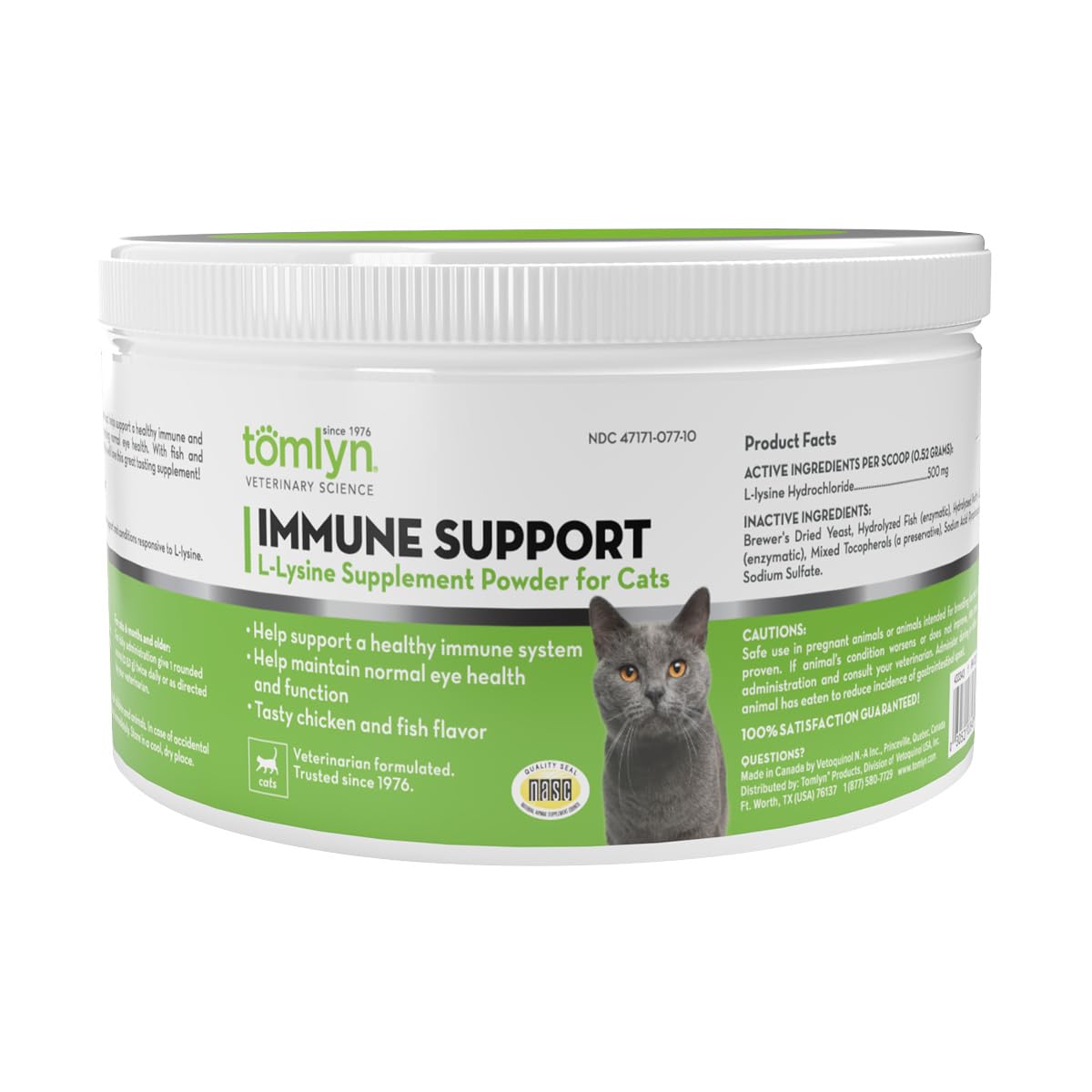
Tomlyn’s fish-flavored lysine powder mixes cleanly into wet food, making dosing straightforward even for multi-cat households. Owners report that sneezing and nasal discharge often settle within days of starting the supplement.

This option suits cats that enjoy fish flavors and owners who prefer a powder over gels or chews. The strong fishy scent can be off-putting for some owners, though most cats have no issue with it. If you or your cat are sensitive to fish odors, a different form may be more comfortable.

The powder has a noticeable fishy scent — consider mixing it into a strong-flavored wet food to keep the smell contained.

Bottom line: If your cat likes fish flavors and you want a powder that blends into wet food without fuss, this is a practical and effective lysine supplement.

2

SANTKOL Drops 60ml

SANTKOL Drops 60ml

Liquid option

Our Score 9.2/10
Check Price

Worth Noting

  • The herbal blend's impact on respiratory health may be less consistent than standard L-lysine alone.
Form
Drops (Liquid)
Flavor
Roast Chicken
Read the full review

The liquid format makes dosing straightforward for cats that turn their noses up at gels or powders, and the roast chicken flavor is a familiar savory note. The added astragalus and codonopsis aim to support immune function beyond standard lysine. That said, the specific benefits of this herbal combination are not as well-documented as plain L-lysine products — owners may find the outcome less predictable compared to more established formulas. This makes it a reasonable option for those willing to test a novel format, rather than a first-line choice for critical respiratory support.

Bottom line: This product suits owners wanting to try a liquid with added herbal support, but those seeking a well-documented solution may prefer more established lysine options.

3

Vetoquinol Viralys Gel 5oz

Vetoquinol Viralys Gel 5oz

Picky cats

Our Score 9.0/10
Check Price

Worth Noting

  • Maple flavor may be refused by some cats, requiring alternative dosing strategies
Form
Gel
Flavor
Maple
Read the full review

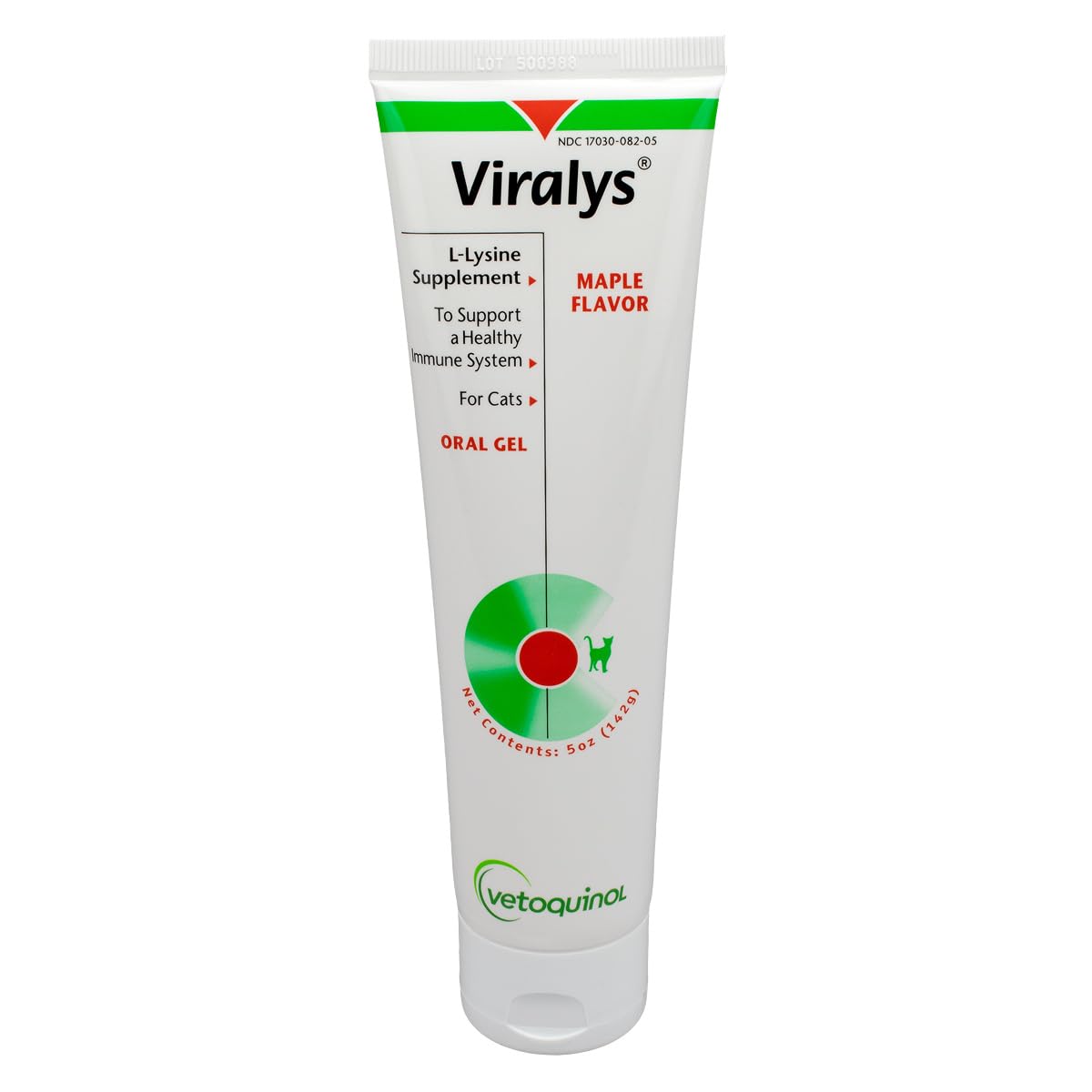
The Viralys gel formula pairs a maple flavor that cats typically accept with a simple dosing routine — either directly on the paw or mixed into food. The gel format means no measuring or mixing powders, just a precise squeeze from the tube. Each dose delivers 250mg of L-Lysine HCl, a concentration that aligns with standard feline supplementation needs.

Cats showing signs of upper respiratory irritation — watery eyes, sneezing, runny nose — can respond within a few days of consistent use. For cats with recurring flare-ups, daily dosing helps maintain symptom control. Owners can notice reduced eye discharge and fewer sneezing episodes within the first week.

This suits owners who want a vet-recommended brand and a format that works for picky eaters. The maple taste is not universal — some cats may refuse the gel, making those households better off with a salmon or unflavored alternative. For cats that do accept it, the gel is among the easiest lysine options to administer consistently. At a mid-range price, the 5oz tube provides roughly a month of daily dosing for a single cat.

If your cat refuses the gel directly, try mixing a small amount into wet food — the maple flavor can be masked.

Bottom line: The Viralys gel is a straightforward choice for owners needing a lysine supplement that works for a broad range of cats, with the maple flavor as the main limitation to watch for.

4

NOW Lysine Powder 8oz

NOW Lysine Powder 8oz

Budget multi-cat

Our Score 9.0/10
Check Price

Worth Noting

  • Unflavored powder may be detected by some cats and refused.
Form
Powder
Flavor
Unflavored
Read the full review

NOW L-Lysine Powder delivers pure L-lysine hydrochloride with zero fillers at a price that undercuts almost every other option on the shelf. Unlike the fish-flavored powder in the same category, this one relies on its unflavored profile to mix discreetly into wet food.

This supplement is best suited for cat owners who are comfortable adding a tasteless powder to strong-smelling wet food, and for multi-cat households where cost per serving matters most. Some cats detect a faint bitter taste despite being unflavored – thorough mixing into a preferred meal is essential. For most, digestive tolerance is good, and immune support for sneezing or eye discharge is consistent.

Mix into strong-smelling wet food to mask any trace of bitterness.

Bottom line: For budget-conscious multi-cat households that can commit to thorough mixing, this powder delivers effective immune support at the lowest cost per serving.

5

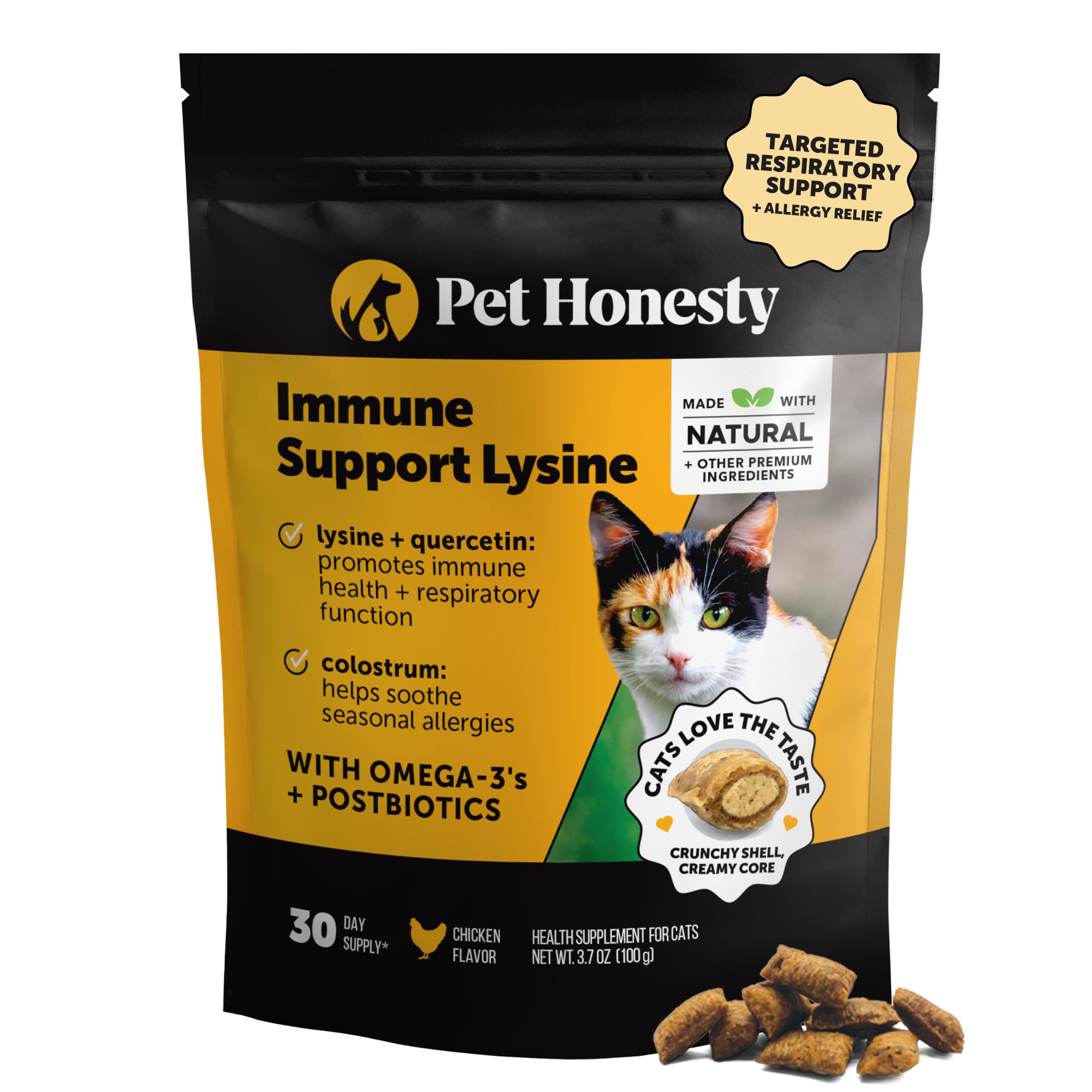
Pet Honesty Chews 30ct

Pet Honesty Chews 30ct

Chicken lovers

Our Score 9.0/10
Check Price

Worth Noting

  • Some cats refuse the chews or vomit after eating them.
  • Opened bags cannot be returned, adding risk if the cat rejects the chews.
Form
Chew
Flavor
Chicken
Read the full review

The appeal here is the chicken flavor — cats take these chews willingly, making them feel more like a treat than a supplement. Beyond standard L-lysine, the formula includes colostrum, quercetin, and omega-3s, offering broader immune and allergy support in a single chew.

This option suits owners who want a multi-ingredient immune formula in an easy-to-give treat form. However, not every cat tolerates the chews well — some may refuse them despite the flavor, and others can experience digestive upset. That makes it a try-first purchase, especially since opened bags cannot be returned.

Start with half a treat to check tolerance before using the full daily serving.

Bottom line: If your cat accepts the chews, the added immune ingredients make this a value compared to plain lysine options; but the chance of refusal or digestive trouble means buying a single bag to test first is wise.

6

Alpha Paw Powder 8oz

Alpha Paw Powder 8oz

Human-grade

Our Score 9.0/10
Check Price

Worth Noting

  • Cats sensitive to subtle bitterness may refuse the powder even when mixed in food.
Form
Powder
Flavor
Unflavored
Read the full review

Alpha Paw delivers a sizeable 8oz container of human-grade L-Lysine powder with no added flavors or fillers — a clean option for owners who prioritize ingredient purity. The powder mixes smoothly into wet food and provides 300 servings per container, making it a cost-effective choice for households where the cat is not a picky eater. However, despite being labeled unflavored, some cats may detect a subtle bitterness that leads to refusal. This limits the product to cats that readily accept unflavored powders when blended into strong-smelling food, rather than those with sensitive palates.

Bottom line: A good value for owners who want human-grade purity and have cats that eat anything, but not for finicky felines that detect off-flavors.

7

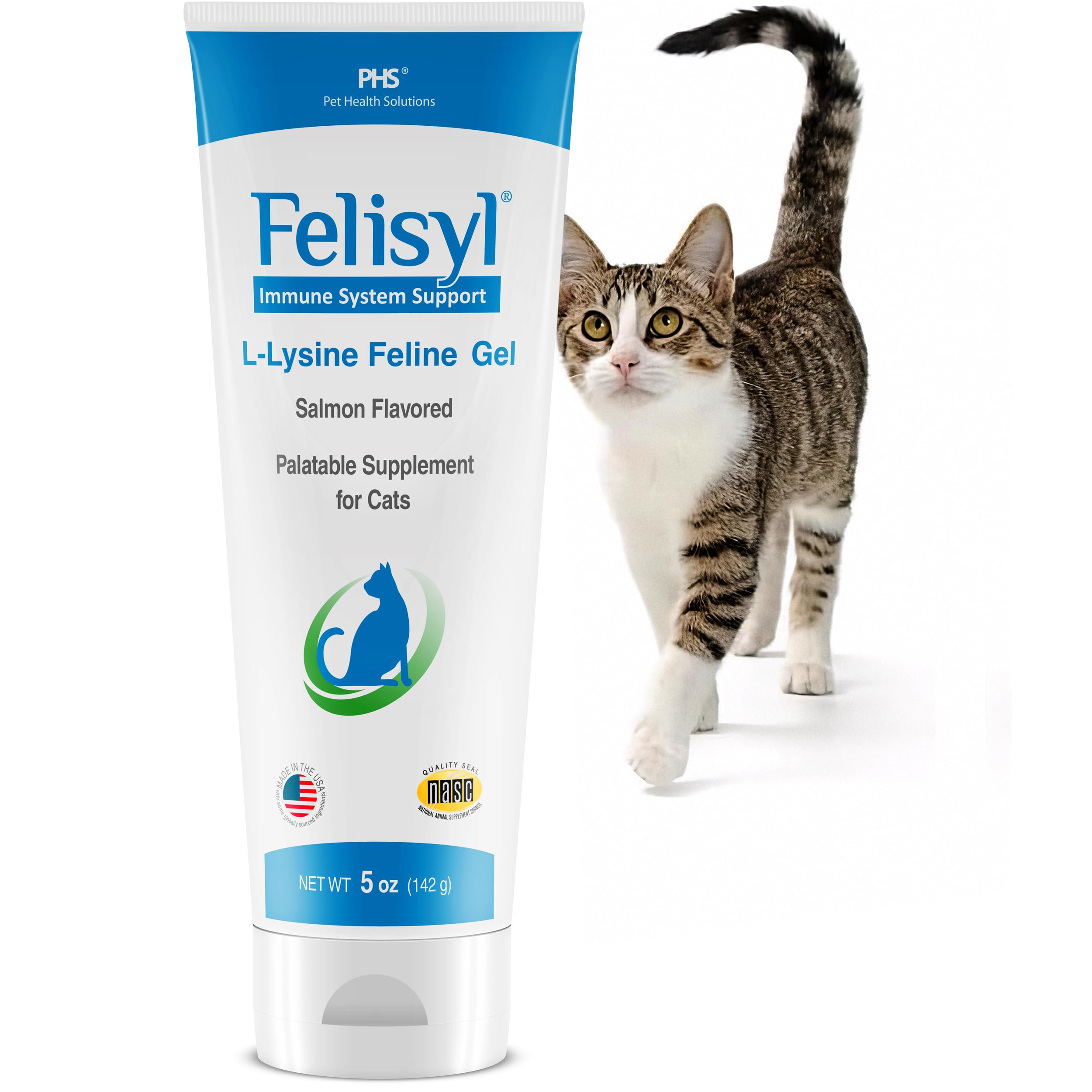
Felisyl Gel 5oz

Felisyl Gel 5oz

Salmon fans

Our Score 8.8/10
Check Price

Worth Noting

  • Tube consistency can vary, with some batches being runny.
  • Some cats may still refuse the salmon flavor or gel texture entirely.
Form
Gel
Flavor
Salmon
Read the full review

Felisyl delivers a salmon-flavored gel that many cats accept readily, especially those turned off by the maple base of the leading gel. It is NASC certified and formulated to support immune, respiratory, and eye health. However, some cats may still refuse the salmon flavor, and occasional tubes have a runny consistency that can affect dosing.

This gel is best for owners whose cats dislike maple or prefer salmon flavor, but they should be prepared for possible refusal and minor batch variability. If your cat has a strong preference for fish, this is worth trying before committing to a larger supply.

If your cat hesitates, try mixing a small amount with wet food to test acceptance before using as a full dose.

Bottom line: A solid salmon-flavored alternative for cats that dislike maple, though occasional refusal and consistency variance mean it is not a universal fit.

8

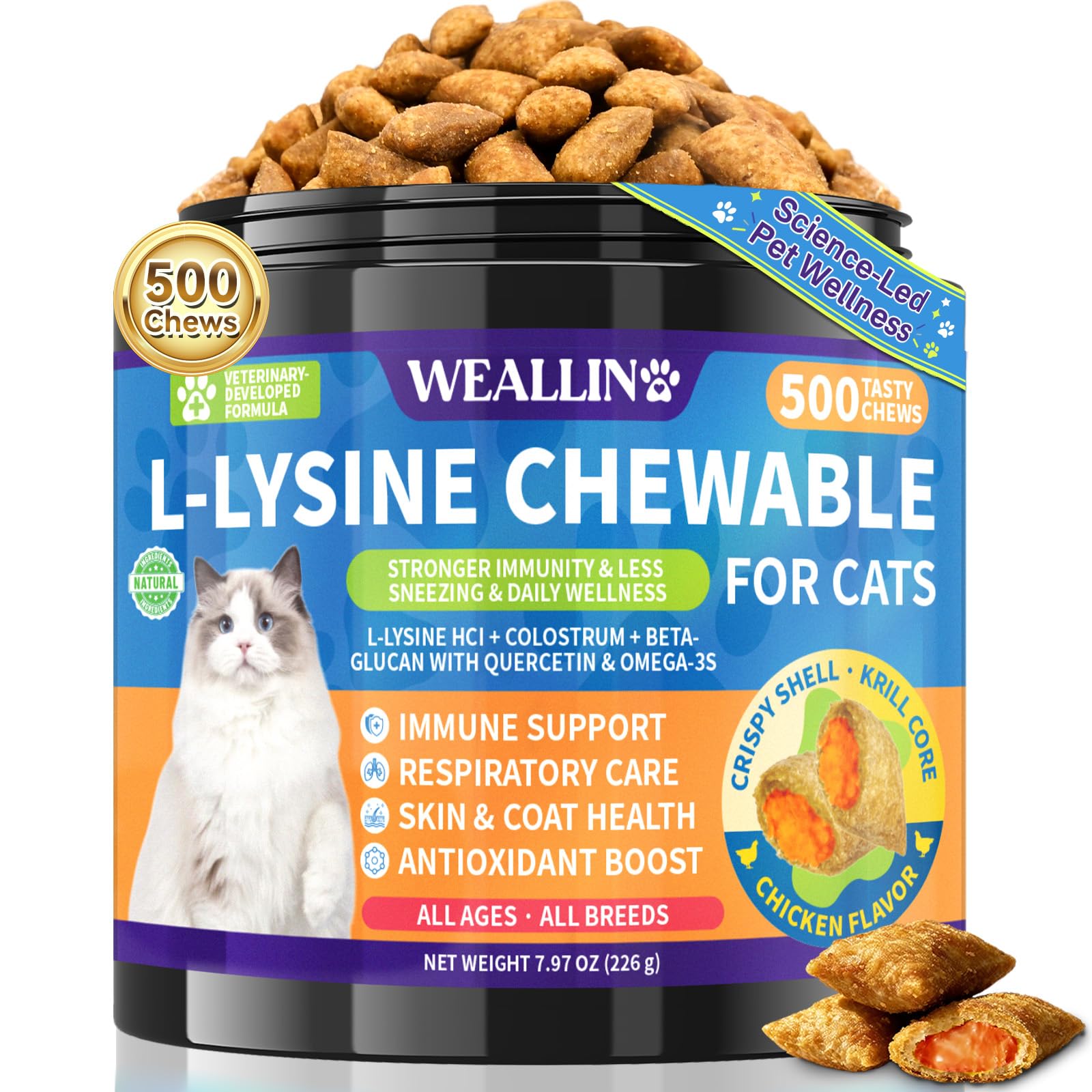
WEALLIN Chews 500ct

WEALLIN Chews 500ct

Large quantity

Our Score 8.8/10
Check Price

Worth Noting

  • Chew hardness may be problematic for cats with sensitive teeth or gums.
Form
Chew
Flavor
Chicken
Read the full review

This 500-count chew delivers a low per-dose cost for multi-cat households, adding colostrum, krill core, and omega-3s to support respiratory and immune health. However, the hard texture can be a hurdle for cats with sensitive mouths or those accustomed to softer treats.

Bottom line: This large-count chew works well for multi-cat homes where cats enjoy crunchy treats and don't have dental sensitivities.

9

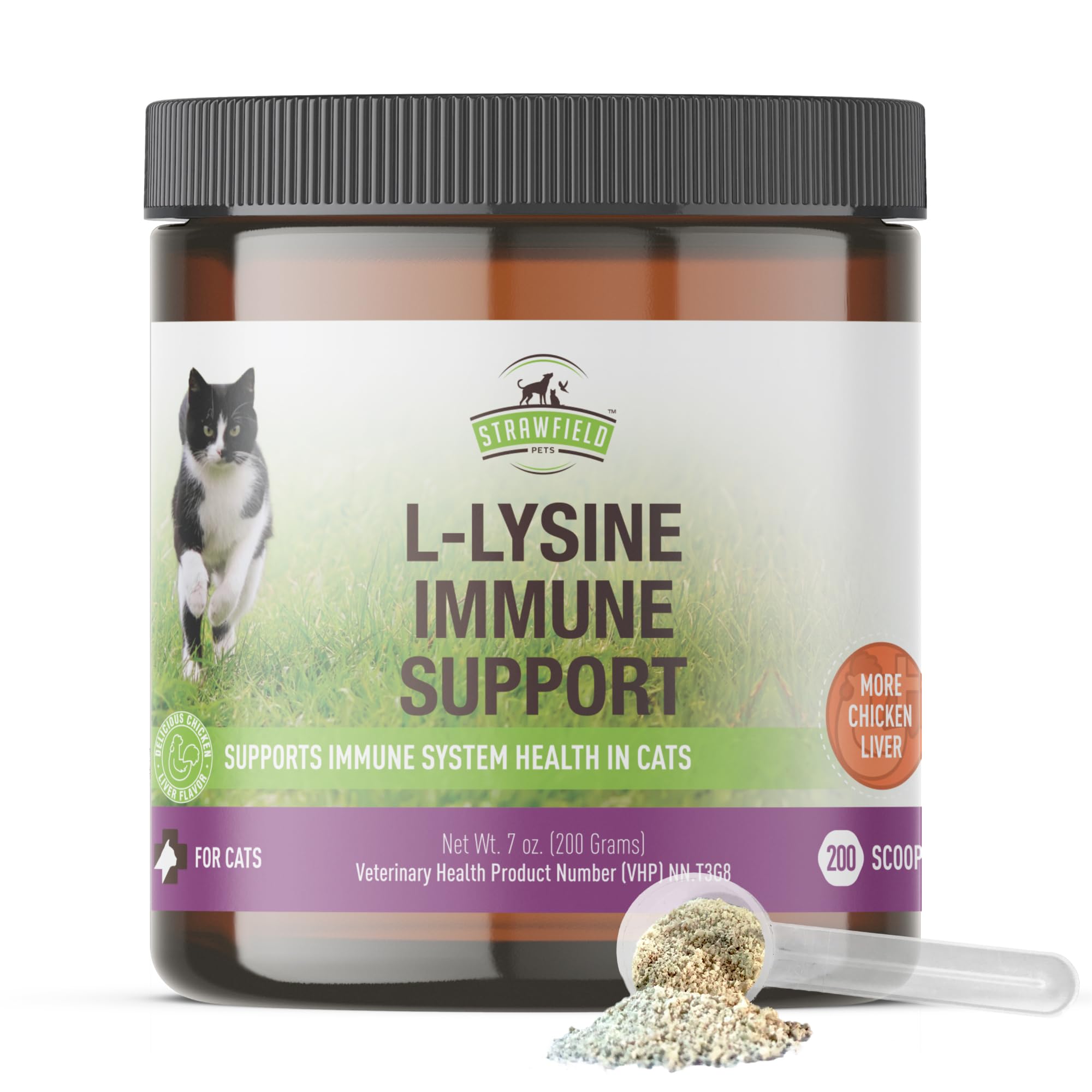
Strawfield Granules 200ct

Strawfield Granules 200ct

High dose

Our Score 8.8/10
Check Price

Worth Noting

  • Grainy texture can lead to refusal in cats sensitive to food texture.
  • Some cats experience mild digestive upset after taking these granules.
Form
Granule
Flavor
Chicken Liver
Read the full review

Strawfield Pets L-Lysine Granules deliver 900mg per scoop with a chicken liver flavor that appeals to many cats. The container lasts through daily use for one or multiple cats, offering a cost-effective way to support respiratory and immune health. However, the texture is noticeably grainy, which can cause some cats to turn away from their food. A portion of cats may also experience mild digestive upset, making acceptance a gamble even if the flavor is initially liked.

Bottom line: Best for owners who need a high-dose lysine option for multiple cats and whose cats tolerate granule textures.

10

Daybreak Powder 60sv

Daybreak Powder 60sv

Comprehensive support

Our Score 8.6/10
Check Price

Worth Noting

  • Strong fishy smell from krill may be off-putting to sensitive owners and cats
Form
Powder
Flavor
Chicken
Read the full review

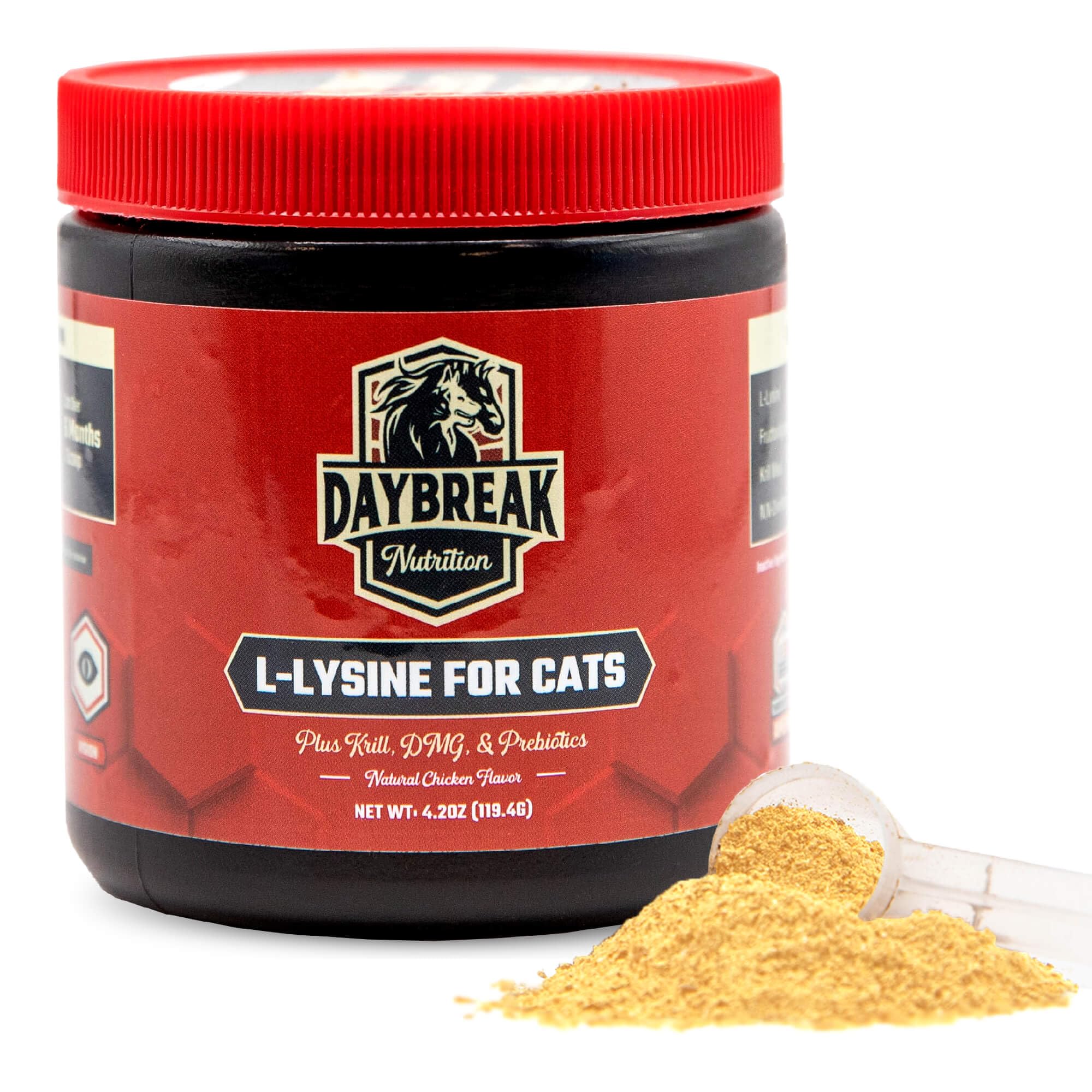
Daybreak Nutrition's Lysine powder adds prebiotics, krill, and DMG for broader immune support beyond standard lysine. The chicken flavor and fine powder mix into wet food without clumping, and the 900 mg per scoop provides a full dose. The strong fishy odor from the krill, however, can be off-putting to owners and may cause some cats to refuse the food. This makes it a better fit for cats that already accept fishy scents and owners who don't mind the smell, rather than a universal option.

Bottom line: This powder suits owners who want extra immune ingredients and have cats that don't mind fishy smells. If a neutral scent is a priority, a simpler lysine powder is a better option.

11

VetriScience Chews 90ct

VetriScience Chews 90ct

Budget chew

Our Score 8.2/10
Check Price

Worth Noting

  • For cats with dental sensitivity, the chews can become rock hard and difficult to eat.
  • In homes where strong odors are a concern, the unpleasant smell may be noticeable.
Form
Chew
Flavor
Chicken
Read the full review

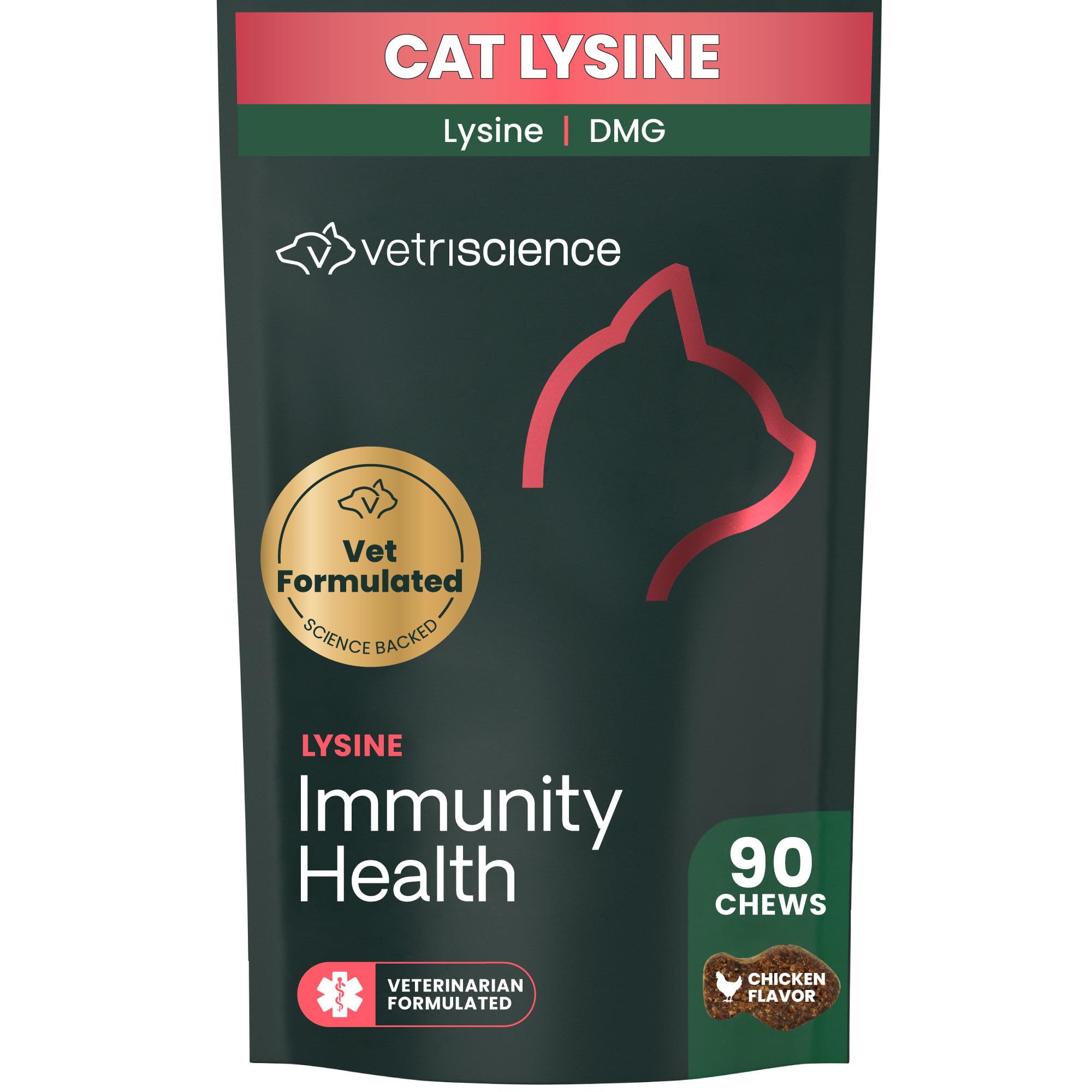
VetriScience Lysine Immunity Health Chews provide an affordable way to support a cat's immune system, with a formula that includes DMG and lysine. However, the chews can become rock hard, making them difficult to chew for some cats, and the odor may be unpleasant enough to put off both owners and finicky eaters. This product works best for cats that are not picky about texture or smell and for owners who prioritize cost over consistency.

Bottom line: Only consider this chew if your cat reliably accepts hard treats and you're not sensitive to strong smells — otherwise, a softer or less odorous supplement may be a better fit.

How to Choose

Form: Gel, Powder, Chew, or Drops

Gels are the easiest to dose – you can squeeze them onto a paw or mix into wet food without changing texture. Powders disappear into strong-smelling canned food but may be detected by picky cats. Chews work as treats but rely on the cat's willingness to chew a hard texture, and many cats reject them if the chews are too firm. Drops offer direct administration but can be messy and require precise measuring.

The hidden trade-off: gels and powders are invisible to most cats, while chews and drops give the cat more sensory feedback. If your cat has rejected one form, try another before assuming the supplement itself is ineffective.

Flavor: Maple, Fish, Chicken, or Unflavored

Flavor is the most common reason cats refuse a supplement. Maple, fish, and chicken are widely accepted, but each has drawbacks. Maple is sweet but a minority of cats dislike it. Fish is a favorite for many cats but the strong smell can be off-putting to owners and some sensitive cats. Chicken is generally safe but may be associated with other foods. Unflavored powders are the least risky for picky cats because they can be hidden, but some cats still detect a bitter aftertaste from the lysine itself.

The mechanism: cats have strong flavor preferences shaped by their individual history. Start with a small size of a flavor your cat already enjoys in food, and watch for rejection within the first few doses.

Lysine Dosage Per Serving

Dosage varies widely from 250 mg per chew to 900 mg per scoop. A higher dose per serving means fewer daily doses, which is convenient. However, chews often require multiple pieces to reach an effective level, and the texture can become a barrier. Powders and gels typically deliver a consistent dose with a single serving.

The trade-off: high-dosage products may be harder to mix or more likely to cause digestive upset in sensitive cats. Underdosing is a common mistake – check the label to ensure you are giving enough lysine relative to your cat's weight. If you're unsure, consult your vet for a target dose.

Additional Ingredients

Many supplements add colostrum, quercetin, prebiotics, krill, or DMG to support broader immune function. These ingredients can be beneficial, but they also increase the risk of digestive upset or refusal because the supplement has a more complex taste and smell. Colostrum and prebiotics are generally well-tolerated, while krill can add a fishy odor that some cats reject.

The insight: extra ingredients are not always better. If your cat has a sensitive stomach, stick to a pure L-lysine product and address other immune needs separately. The marketing of 'complete immune formulas' often masks the added risk of refusal.

Palatability: Predicting Acceptance

Palatability is the hardest factor to predict because it depends entirely on your cat's individual preferences. The best approach is to start with a small size or a single tube – don't buy a bulk container until you know your cat will accept it. Gels and unflavored powders have the highest overall acceptance rates, while chews and strongly flavored liquids are more hit-or-miss.

If your cat refuses the first product, try a different flavor or form. Many owners find that a cat that rejects a fish powder will happily eat a maple gel. Persistence with variety is key.

Frequently Asked Questions