Food & Treats

9 Best Hypoallergenic Cat Food of 2026: Find the Right Protein

Find the best hypoallergenic cat food that actually calms your cat's sensitive stomach and skin — without overpaying for ingredients they don't need.

Every cat owner knows the struggle: a switch to 'sensitive stomach' food that still leaves your cat vomiting or scratching. The real challenge isn't just avoiding allergens — it's finding a formula your cat will actually eat without turning up their nose. A rushed transition often makes things worse, no matter how gentle the formula claims to be.

Most popular options lean on chicken as the primary protein, yet chicken is among the most common feline allergens. A genuinely hypoallergenic diet may require a novel protein like venison or salmon, but these often come with a higher price tag and their own palatability risks.

This guide cuts through the marketing to show which formulas deliver consistent relief — whether your cat has mild sensitivities or chronic digestive issues — and which ones waste money on ingredients that don't matter for your cat's specific needs.

1

Purina ONE Sensitive Stomach

Top Pick
Purina ONE Sensitive Stomach

Mild sensitivities

Our Score 9.6/10
Check Price

Worth Noting

  • Some cats may still vomit occasionally on this formula, particularly during diet transitions.
Bag Size
16 lb
Protein Source
Turkey
Prebiotic Fiber
Prebiotic fiber
Read the full review

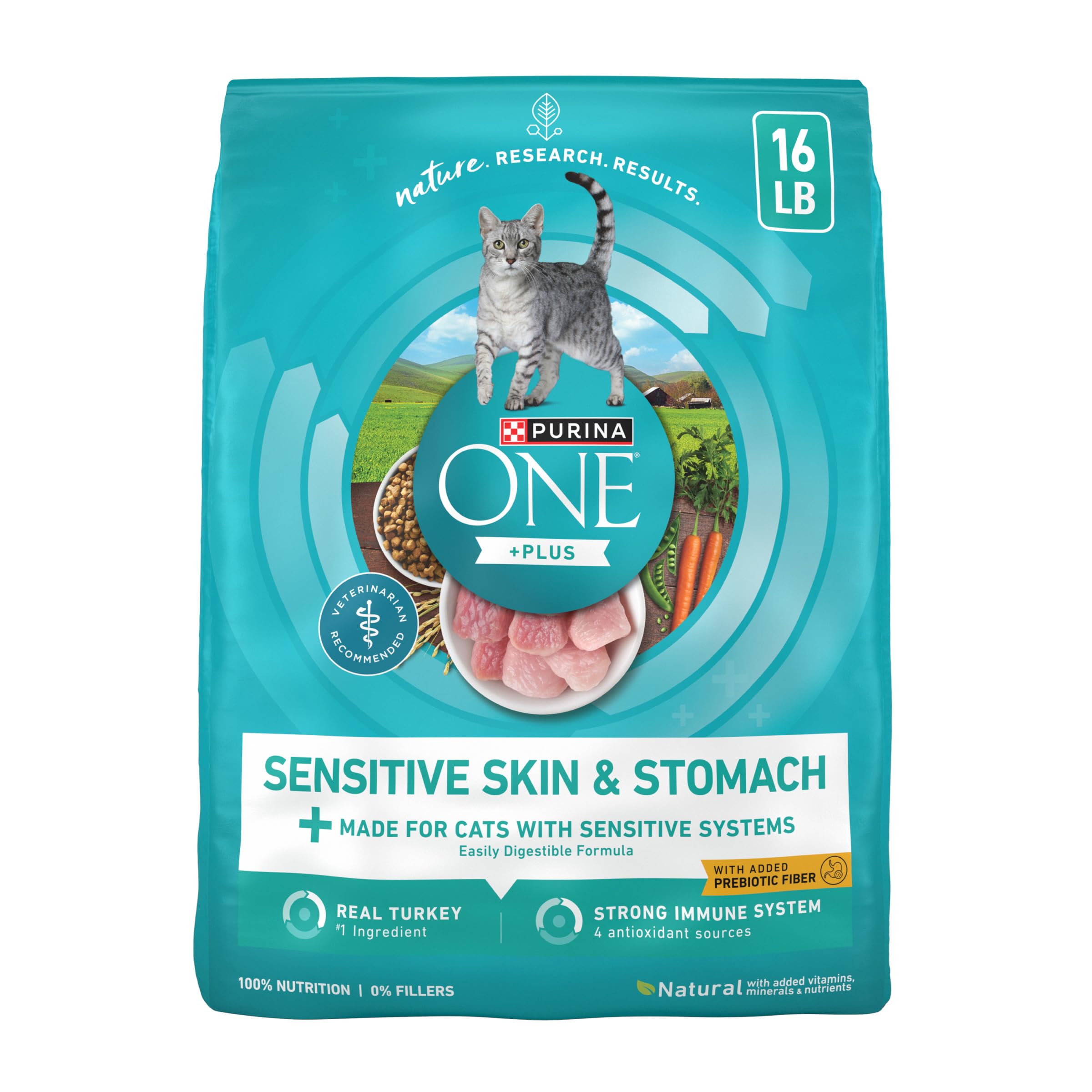
Purina ONE Sensitive Stomach delivers digestive relief comparable to premium veterinary brands at roughly half the cost per pound. The turkey-based recipe with added prebiotic fiber helps manage vomiting and digestive upset in cats with mild to moderate sensitivities.

Cats generally accept the taste well, and the large 16-pound bag suits multi-cat households. However, even with this formula, some cats may still experience occasional vomiting — particularly during the transition period or if their sensitivities are more pronounced.

This food fits budget-conscious owners whose cats tolerate turkey and have mild to moderate digestive issues. It is not appropriate for cats requiring novel protein or grain-free diets, nor for those with severe allergies that demand a veterinary-exclusive brand.

Transition slowly over 7-10 days to minimize the chance of residual vomiting.

Bottom line: The most cost-effective option for reducing digestive upset in cats with mild sensitivities — no need to pay for a vet-exclusive brand.
2

Hill's Science Diet Sensitive

Hill's Science Diet Sensitive

Chronic digestive issues

Our Score 9.4/10
Check Price

Worth Noting

  • Higher per-serving cost than many alternatives
  • Some cats may reject the taste or texture of this specific kibble.
Bag Size
7 lb
Protein Source
Chicken
Prebiotic Fiber
Prebiotic fiber
Read the full review

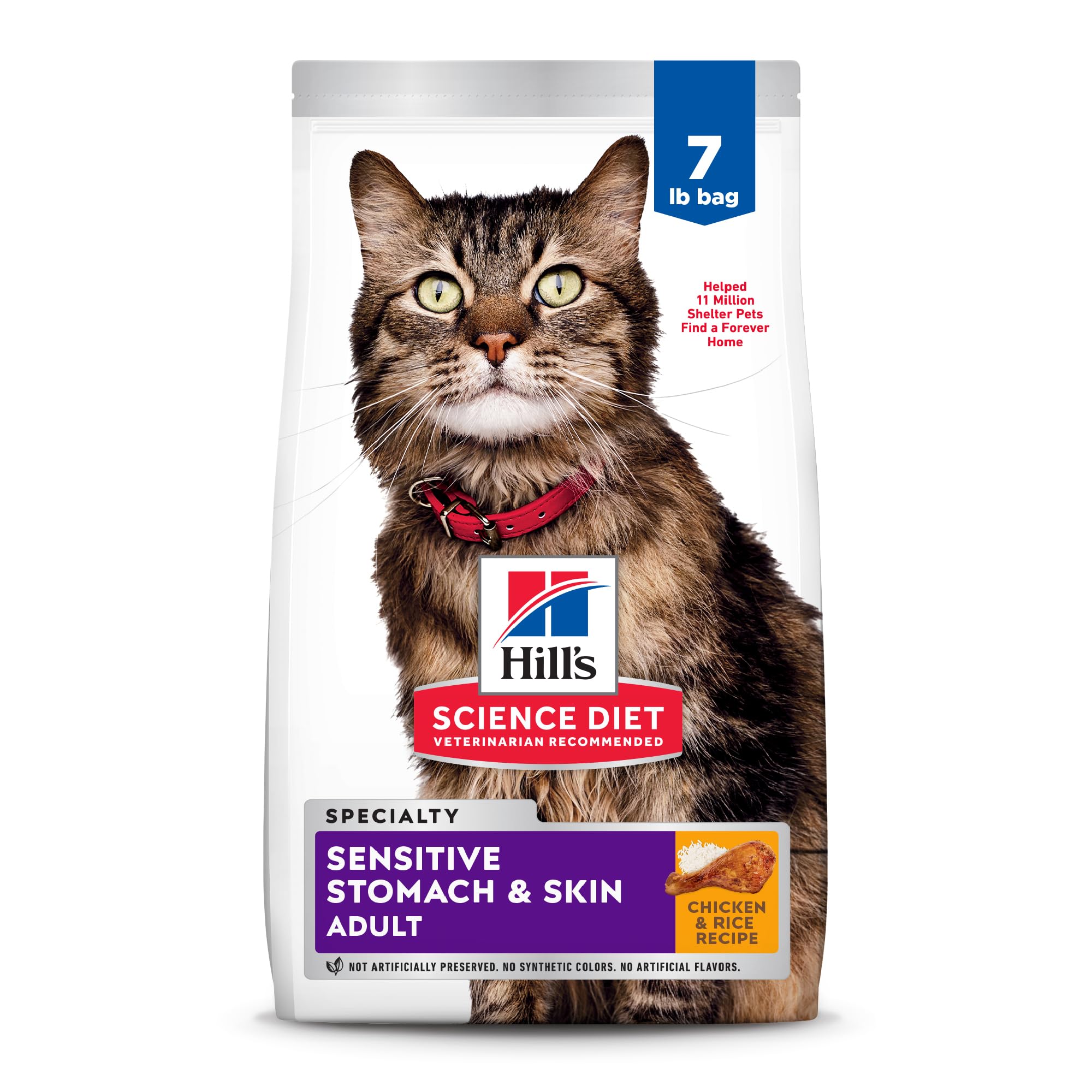
Hill's Science Diet Sensitive Stomach & Skin formula is backed by veterinary research and includes prebiotic fiber plus omega-3 and omega-6 fatty acids to support both digestion and coat condition. While the top pick delivers similar digestive relief at a lower price, Hill's carries the weight of the #1 U.S. veterinarian recommendation — a distinction that matters for cats with chronic issues.

This food is best suited for owners who already trust Hill's Science Diet and have a cat with persistent skin or stomach problems under a vet's supervision. The premium per-pound cost reflects the brand's clinical investment, but budget-conscious buyers will find cheaper alternatives that perform adequately for mild sensitivities. Some cats reject the taste or texture — a gradual transition over 7 to 10 days is advisable.

Introduce this food gradually over 7 days, mixing increasing amounts with the current diet to allow palatability adjustment.

Bottom line: If your cat has a documented response to Hill's Science Diet and you value veterinary endorsement, this formula delivers targeted digestive and skin support — just be prepared for the steeper price.

3

Purina Pro Plan LiveClear

Purina Pro Plan LiveClear

Human allergies

Our Score 9.4/10
Check Price

Worth Noting

  • Premium price per pound compared to standard sensitive-stomach formulas
  • Some cats may refuse to eat it, limiting its usefulness for allergy households
Bag Size
7 lb
Protein Source
Salmon
Prebiotic Fiber
Read the full review

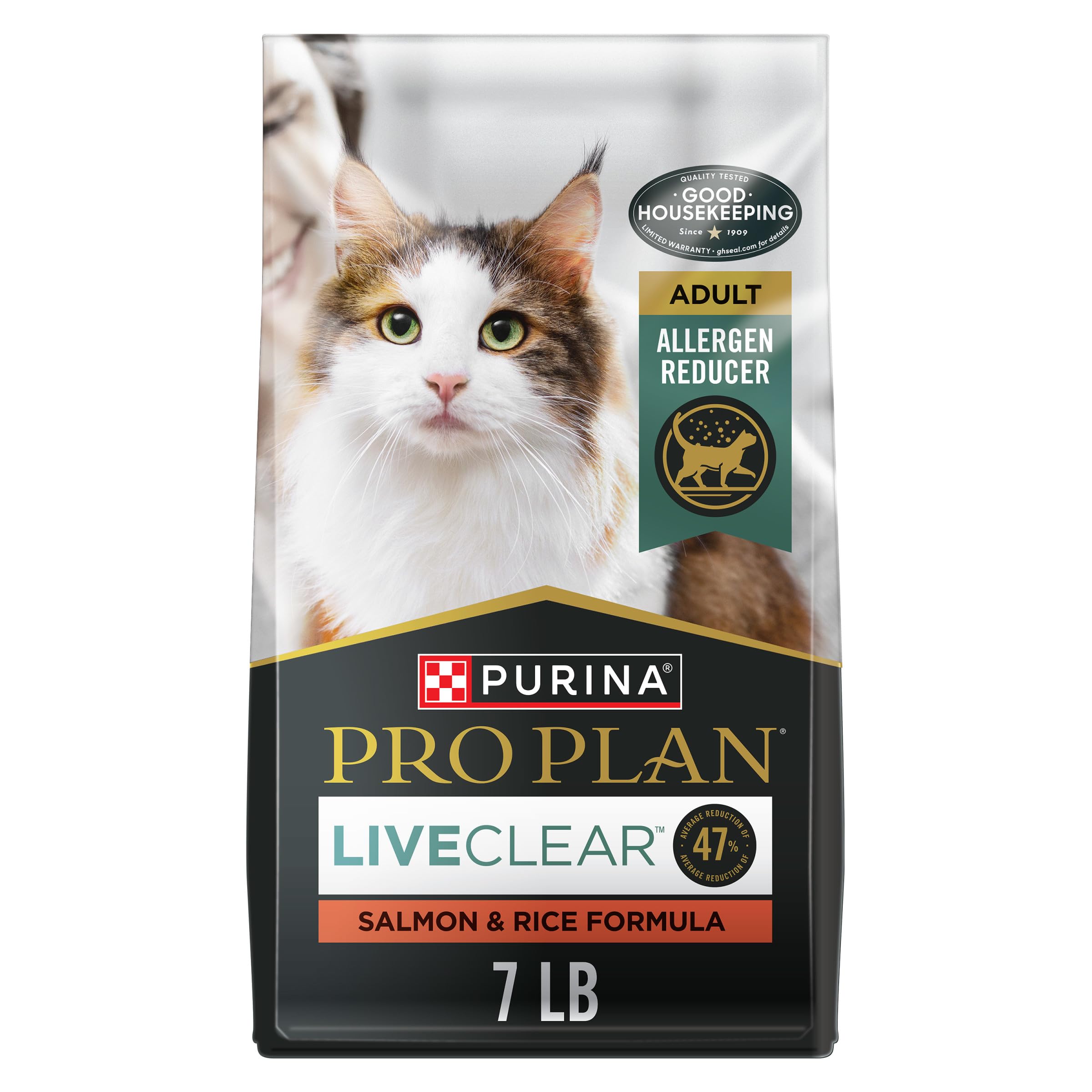
Purina Pro Plan LiveClear stands apart from standard sensitive-stomach formulas by targeting the root cause of human cat allergies: the Fel d1 protein. Through a specific egg-based ingredient, it binds the allergen in the cat's saliva, making it less active when the cat grooms. This mechanism is unique—no other food in this review set offers allergen reduction, making it a targeted solution for households where someone is allergic but wants to keep their cat.

This food uses salmon as the primary protein source, paired with guaranteed live probiotics to support digestion and immune health. The kibble is well accepted by many cats, but palatability varies: some cats refuse it entirely, which defeats the purpose for allergy households. It is also premium-priced compared to standard sensitive-stomach foods, so the cost only makes sense if the allergen-reducing benefit actually applies to your situation. Owners whose cats are picky about salmon or prone to dietary quirks should have a backup plan.

Introduce it gradually over 7–10 days, and keep a backup food on hand in case your cat refuses the new taste or texture.

Bottom line: If you or someone in your home is allergic to cats and your cat eats salmon-based food without issue, LiveClear offers a real, practical benefit no other food can match.

4

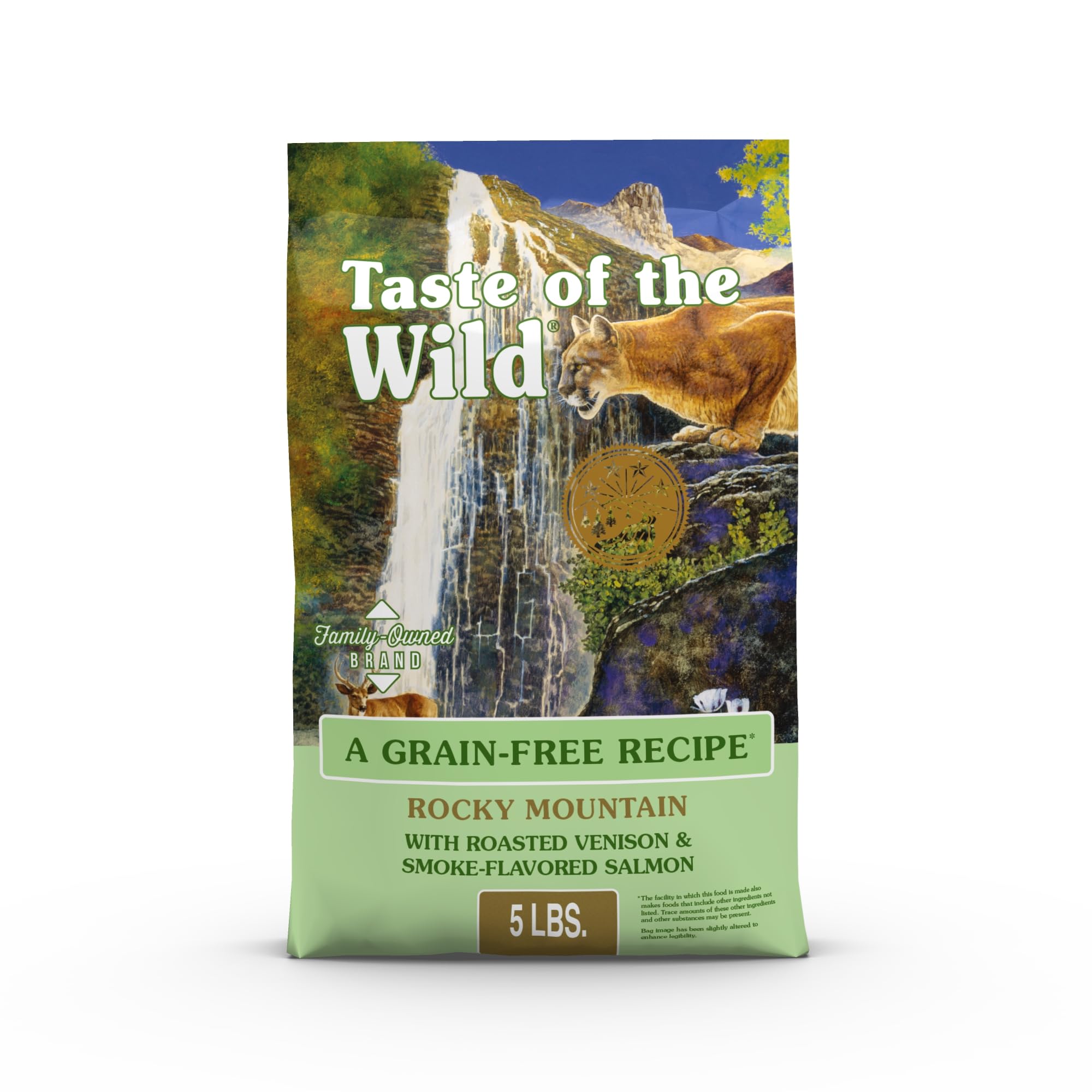
Taste of the Wild Venison

Taste of the Wild Venison

Chicken allergies

Our Score 9.4/10
Check Price

Worth Noting

  • Strong fish and venison odor that some owners find unpleasant
  • Some cats may vomit or refuse the food entirely, requiring a careful transition period.
Bag Size
5 lb
Protein Source
Venison & salmon
Prebiotic Fiber
Read the full review

The Taste of the Wild Rocky Mountain formula uses venison and salmon as primary proteins, delivering 42% protein content without grains or chicken. This sets it apart from budget-friendly options like Purina ONE, which rely on chicken as the main protein source. The grain-free recipe with added probiotics supports digestion for cats with grain intolerances.

This food fits best for cats with suspected chicken allergies who need a novel protein diet. However, the strong fish and venison odor can be off-putting to some owners, and a portion of cats may vomit or refuse the food entirely — so a slow transition is key and it is not a universal solution for all sensitive stomachs.

Introduce gradually over 7-10 days to help your cat adjust to the novel protein and reduce digestive upset.

Bottom line: For cats with confirmed chicken allergies, this grain-free venison formula is a strong choice — just be prepared for the smell and a possible transition period.

5

Blue Buffalo Sensitive Stomach

Blue Buffalo Sensitive Stomach

Mild chicken sensitivities

Our Score 9.4/10
Check Price

Worth Noting

  • Some cats may refuse the taste, making a smooth transition uncertain
  • Packaging can arrive torn during shipping, leading to crumbs or pest issues
Bag Size
3 lb
Protein Source
Chicken
Prebiotic Fiber
FOS prebiotic fiber
Read the full review

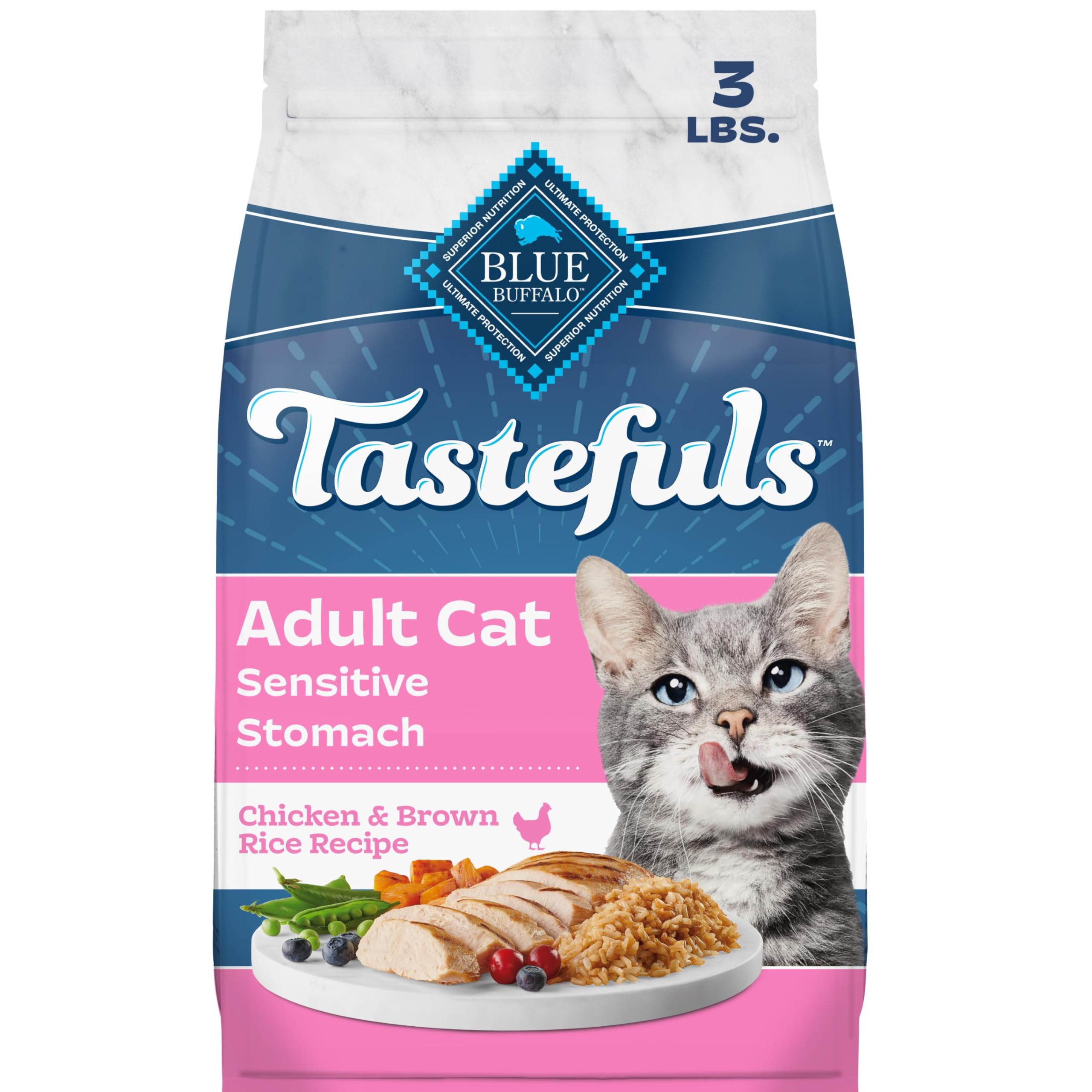
Blue Buffalo’s chicken-and-brown-rice recipe includes prebiotic fiber to support mild digestive sensitivities while avoiding poultry by-products, corn, wheat, and soy. It delivers natural ingredients at a moderate price — a reasonable option for cats that tolerate chicken. That said, taste acceptance varies, and the bag may arrive torn with crumbs or ants, which can be frustrating.

Bottom line: A good fit for owners who want a natural, by-product-free sensitive stomach food at a moderate price — provided their cat accepts the flavor and the bag survives delivery intact.

6

IAMS Sensitive Digestion

IAMS Sensitive Digestion

Moderate sensitivities

Our Score 9.4/10
Check Price

Worth Noting

  • Occasional digestive upset can occur despite the sensitive formula.
  • Some cats may refuse the turkey kibble, leading to wasted food.
Bag Size
3 lb
Protein Source
Turkey
Prebiotic Fiber
Prebiotic fiber blend
Read the full review

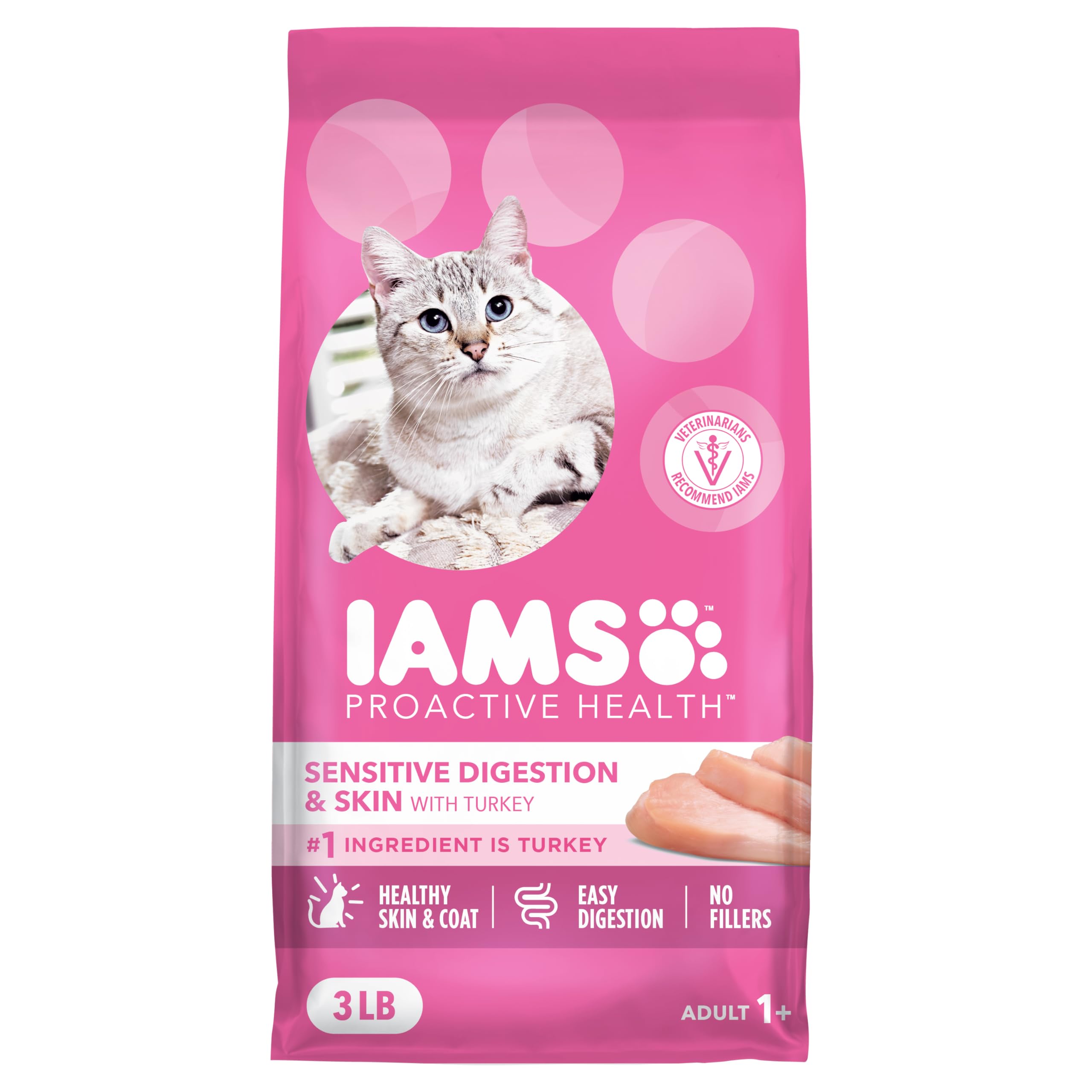
IAMS Proactive Health Sensitive Digestion offers the lowest cost per pound in this comparison, with a turkey-based recipe that helps reduce vomiting for many cats. Its budget price limits the quality of digestive support relative to premium options, making it best suited for owners who need to minimize expenses and whose cats are not picky.

Bottom line: Best for budget-conscious owners whose cats accept turkey and have only mild sensitivities — a lower-cost alternative to the top pick, but the palatability risk makes it a try-at-your-own-risk choice.

7

Blue Buffalo Digestive Care

Blue Buffalo Digestive Care

Digestive issues

Our Score 9.4/10
Check Price

Worth Noting

  • In small living spaces, the food's odor can be noticeable when serving
  • Kibble size and texture can vary between batches, which some cats find off-putting
Bag Size
3.5 lb
Protein Source
Chicken
Prebiotic Fiber
Clinical prebiotic fiber
Read the full review

This Blue Buffalo True Solutions formula provides clinically tested prebiotic fiber that reduces vomiting and diarrhea in cats with sensitive stomachs, using quality ingredients without by-products or corn. However, it is specifically formulated for digestive care, not for cats needing grain-free or novel protein diets to manage allergies. The food has a noticeable odor that may be off-putting in close quarters, and kibble size can vary between bags. While effective for its intended use, the 3.5-pound bag and per-pound cost are less economical than broader options, and Blue Buffalo already appears in other slots in this comparison.

Bottom line: Best suited for households where digestive care is the primary need and the odor is not a concern; not a substitute for general allergy or grain-free formulas.

8

Royal Canin Digestive Wet

Royal Canin Digestive Wet

Severe digestive issues

Our Score 9.2/10
Check Price

Worth Noting

  • Premium-priced per serving compared to dry food or lower-tier wet options.
  • Strong gravy odor may lead some cats to refuse the food, particularly those sensitive to smell.
Bag Size
12 x 3 oz
Protein Source
Prebiotic Fiber
Read the full review

This formula uses highly digestible proteins and a thin-slice gravy texture that cats with chronic pancreatitis, IBS, or post-surgery recovery often tolerate well. Where a dry alternative for moderate sensitivities might offer prebiotics at a lower cost, this wet food delivers the targeted digestive support that only a veterinary-grade diet can provide.

This is for owners who need a clinically proven option for a cat with diagnosed digestive issues and are willing to pay a premium per serving. The strong gravy odor and occasional refusal by some cats are real tradeoffs, but for the right case, the digestive benefits are the priority.

Let the can sit at room temperature for a few minutes before serving to reduce the strong gravy odor.

Bottom line: For cats with diagnosed digestive disorders requiring vet-grade wet food, this formula delivers results that cheaper options cannot match; the price and smell tradeoffs are worth accepting for that specific need.

9

Royal Canin Sensitive Dry

Royal Canin Sensitive Dry

Moderate-severe sensitivities

Our Score 9.2/10
Check Price

Worth Noting

  • Expensive for the bag size relative to other dry foods.
  • Some cats may refuse the kibble after partial bag use as it becomes oily.
Bag Size
3.5 lb
Protein Source
Chicken
Prebiotic Fiber
Prebiotics
Read the full review

This Royal Canin dry food works well for cats with sensitive digestion, reducing vomiting and improving coat condition. The prebiotic fiber and highly digestible proteins support stool quality. However, it carries a premium price for a 3.5 lb bag, and some cats may refuse the kibble after partial use as it becomes oily. This suits owners who trust Royal Canin's approach and need a dry food for moderate digestive issues, but it is not designed for allergy-specific needs like novel proteins or allergen reduction.

Bottom line: Consider this if you prefer Royal Canin's scientific approach and your cat has moderate digestive sensitivities, but the premium cost and potential refusal need to be acceptable.

How to Choose

Protein Source

Chicken is the most common protein in commercial cat food, yet it is also one of the most frequent allergens. Switching to a novel protein like venison, salmon, or turkey can eliminate the trigger, but these ingredients cost more and may not appeal to every cat.

A cat that has never eaten a novel protein may need a slow introduction over 10 days. If the cat refuses the new food entirely, the allergy benefit is lost. Consider a small bag first to test palatability before committing.

Prebiotic Fiber

Prebiotic fiber feeds beneficial gut bacteria and helps firm up stools. Most sensitive stomach formulas include added prebiotics like FOS or chicory root. However, too much fiber can cause loose stools or gas in some cats. Look for formulas with a moderate prebiotic content rather than 'extra fiber' claims.

Probiotics work alongside prebiotics but are less stable in dry kibble. If your cat has chronic digestive issues, a probiotic supplement may be more reliable than relying on the food alone.

Omega Fatty Acids

Omega-3 and Omega-6 fatty acids support skin health and reduce inflammation, which can alleviate itching and dander. These are often found in premium formulas but are absent from budget options. If your cat has skin issues, choose a food with added fish oil or flaxseed.

The trade-off: Omega-rich formulas cost more per pound. You can supplement with a separate omega oil, but this adds another step to feeding. For cats without skin problems, the extra cost may not be justified.

Kibble Texture and Form

Texture influences whether a cat will eat the food. Dry kibble with unique shapes (like star or cross shapes) can increase palatability. Wet food with gravy or thin slices is easier to chew and provides extra hydration, which benefits cats with chronic digestive conditions or dental issues.

The trade-off: Wet food spoils quickly after opening and requires refrigeration. It also costs significantly more per serving. Dry food is convenient and cheaper but may not be suitable for cats that need moisture or have difficulty chewing.

Bag Size and Value

Per-pound cost varies dramatically across brands. Larger bags offer the best value but risk going stale if your cat refuses the food. Smaller bags allow trial without waste but cost more ounce-for-ounce. Always calculate the daily feeding cost for your cat's specific weight.

Premium brands often sell smaller bags at a high per-pound price, banking on the owner's trust in clinical research. For budget-conscious owners, a large bag of a mid-range formula can deliver reliable results at half the cost.

Frequently Asked Questions