Food & Treats

8 Best Cat Food for Kidney Disease 2026: A Diet Your Cat Will Accept

Find a kidney-friendly diet your cat won't refuse — from vet-trusted prescriptions to low-phosphorus alternatives.

A chronic kidney disease diagnosis is stressful enough. Then comes the daily battle: a bowl of expensive prescription food that your cat sniffs and walks away from. Many renal diets are nutritionally sound but end up wasted because cats reject the taste, texture, or smell.

This guide cuts through the marketing to focus on what actually matters at feeding time: acceptance. The diets listed here are ranked not just on phosphorus levels or clinical studies, but on real-world palatability — because a perfect nutritional profile does nothing if it stays in the bowl.

Whether your cat prefers dry kibble, stewy chunks, or dense pâté, and whether you need a prescription or want an over-the-counter option, the right match exists. The key is knowing which products have the lowest rejection rates and how to transition successfully.

1

Hill's k/d Kidney Care Dry

Top Pick
Hill's k/d Kidney Care Dry

Diagnosed kidney disease

Our Score 9.2/10
Check Price

Worth Noting

  • Cats that are particularly finicky may resist the new food; gradual mixing over 7-10 days is often necessary.
  • Premium pricing can strain budgets in multi-cat households, though most owners consider the health benefits worth the cost.
Form
Dry kibble
Rx Required
Yes
Protein Level
Controlled, high quality
Extra Benefits
Appetite trigger, ActivBiome+
Read the full review

Hill's Prescription Diet k/d Kidney Care Dry Cat Food is built on decades of veterinary research, with a formula that reduces phosphorus and sodium while using ActivBiome+ technology to support kidney function. Owners consistently report improvements in energy levels and reduced vomiting, backed by the brand's status as the #1 vet-recommended renal diet in the US.

The Enhanced Appetite Trigger (E.A.T.) technology makes this kibble unusually appealing for cats that have lost interest in food due to kidney disease. Most cats accept it readily, though a small number may refuse it — patience during transition, mixing with their current food over a week, usually resolves this.

This diet is designed for cats with confirmed kidney disease, especially those that need encouragement to eat. Owners who prioritize clinically validated nutrition over minimal cost will find the premium pricing justified by measurable health outcomes. For multi-cat households or extremely budget-conscious owners, the per-bag cost may be a factor to consider.

Mix with current food gradually over a week to improve acceptance and reduce digestive upset.

Bottom line: For cats with diagnosed kidney disease that need a scientifically proven diet with high acceptance rates, this is the most reliable option available.
2

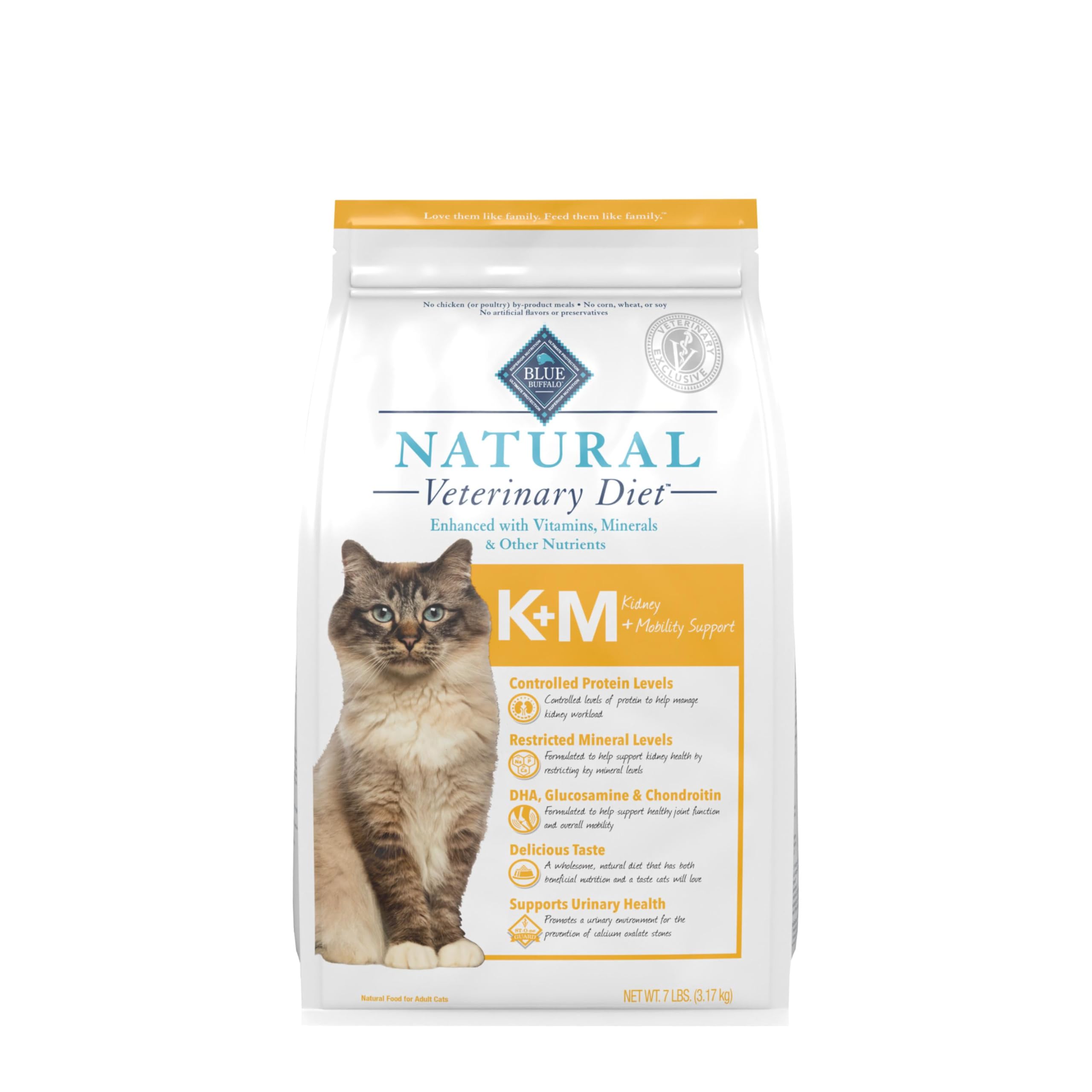
Blue Buffalo K+M Kidney + Mobility

Blue Buffalo K+M Kidney + Mobility

Kidney + joint

Our Score 9.2/10
Check Price

Worth Noting

  • Some cats still refuse - palatability is not universal
  • Premium pricing for a 7-lb bag
Form
Dry kibble
Rx Required
Yes
Protein Level
Moderate, natural
Extra Benefits
Glucosamine, chondroitin
Read the full review

Blue Buffalo K+M combines controlled protein levels with glucosamine and chondroitin for joint health, all in a formula free from by-products, corn, wheat, and soy. Owners praise the ingredient purity and the convenience of addressing two conditions with one kibble. Unlike the wet pate version from the same line, this dry format works well for cats that prefer crunchy textures.

This food suits cats diagnosed with both kidney disease and arthritis, especially when owners want to avoid artificial additives and prioritize natural ingredients. The premium price for a 7-lb bag is notable, and a small percentage of cats still refuse it, so it pays to confirm your cat accepts the taste before committing to a full bag.

A gradual transition over 7-10 days may improve acceptance, but some cats simply dislike the taste.

Bottom line: A solid choice for owners seeking a natural dual-purpose diet, provided the cat accepts it and the price fits the budget.

3

Purina NF Early Care Dry

Purina NF Early Care Dry

Early kidney care

Our Score 9.2/10
Check Price

Worth Noting

Form
Dry kibble
Rx Required
Yes
Protein Level
Moderate premium protein
Extra Benefits
Omega-3, antioxidants
Read the full review

Purina's NF Early Care dry formula targets cats with early kidney disease by moderating protein and restricting phosphorus — a proactive approach at the same mid-range price as the advanced version. The formula includes omega-3 fatty acids and antioxidants for additional support. However, its long-term real-world outcomes are less documented than some competing renal diets, making it a suitable choice for owners who trust Purina's research and want an affordable early-intervention option.

Bottom line: Best for cats diagnosed with early-stage kidney disease when you want a Purina-backed prescription at a budget-friendly price, and you're comfortable with a less documented track record.

4

Purina NF Advanced Care Dry

Purina NF Advanced Care Dry

Advanced kidney care

Our Score 9.0/10
Check Price

Worth Noting

  • Some cats refuse the food or develop diarrhea during the transition.
  • The 3.15-lb bag is small and may be inconvenient for multi-cat homes.
Form
Dry kibble
Rx Required
Yes
Protein Level
Reduced, high quality
Extra Benefits
Omega-3, antioxidants
Read the full review

Purina NF Advanced Care provides the restricted phosphorus and low protein critical for advanced kidney disease at a cost well below the leading Hill's k/d formula. Owners report notable improvements in kidney values, making it a results-driven option for cats that accept it. This contrasts with the brand's early-stage formula, which offers moderate support for less severe cases.

This diet suits budget-conscious owners of a single cat with advanced kidney disease who are willing to transition slowly. The 3.15-lb bag is practical for one cat but less convenient for multi-cat households. A minority of cats may refuse the food or develop diarrhea during the switch, so a gradual transition over 7-10 days is essential.

Transition gradually over 7-10 days, mixing increasing proportions of the new food, to minimize the risk of digestive upset.

Bottom line: For owners of a single cat with advanced kidney disease who need effective phosphorus restriction without the premium price, this Purina formula is a practical choice – provided the cat accepts the kibble and the transition is managed carefully.

5

Hill's k/d Kidney Care Wet

Hill's k/d Kidney Care Wet

Hydration & kidney

Our Score 8.8/10
Check Price

Worth Noting

  • Per-can cost is premium-priced, especially for multi-cat homes.
  • Some cats may refuse the stew due to its strong aroma and flavor.
Form
Wet stew
Rx Required
Yes
Protein Level
Controlled, high quality
Extra Benefits
Appetite trigger, ActivBiome+
Read the full review

This wet version of Hill's k/d provides the same clinically formulated kidney support as the top-rated dry kibble, but in a stew form that adds critical moisture for cats with renal issues. Owners report improved kidney values, weight gain, and reduced vomiting, and the chicken and vegetable stew uses high-quality ingredients with no by-products. However, unlike the dry version which relies on appetite-trigger technology, the wet stew's strong aroma and flavor can be hit-or-miss — some cats love it, while others refuse entirely.

This stew is best for owners whose cats already accept wet textures and need the extra hydration that canned food provides. But the distinct odor and taste may deter a subset of cats, so a slow transition is critical. For multi-cat households, the premium pricing adds up quickly compared to dry food.

Offer a small portion first and mix with current food to help your cat adjust to the strong smell.

Bottom line: This wet diet works well for cats that accept the stew, but the risk of rejection and higher cost make it a secondary option after the dry version for most buyers.

6

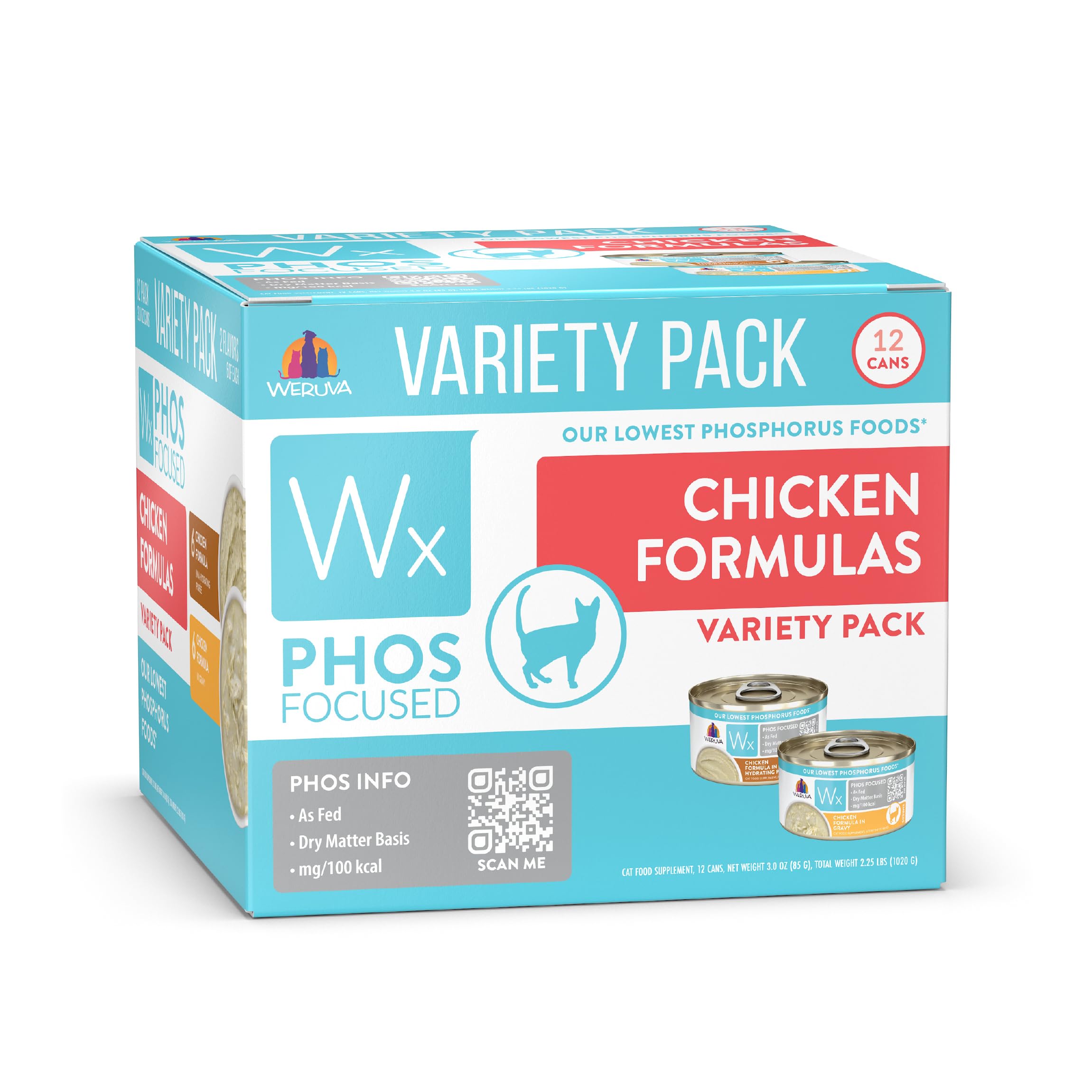
Weruva Wx Phos Focused Wet

Weruva Wx Phos Focused Wet

Low phosphorus OTC

Our Score 8.4/10
Check Price

Worth Noting

  • Cats may refuse this food due to its unusual texture and smell
  • Texture varies between cans
Form
Wet chunks/gravy
Rx Required
No
Protein Level
Moderate, bone-free
Extra Benefits
Grain-free, no fillers
Read the full review

Formulated with up to 50% less phosphorus than AAFCO minimums, this Weruva wet food offers a path to kidney support without a prescription. It uses bone-free chicken and avoids fillers or by-products, giving owners control over ingredients while targeting renal needs.

This variety pack is best suited for owners who want to avoid prescription diets and whose cats are open to unusual textures. However, some cats may refuse the food due to its distinct smell and mouthfeel, and the pack alternates between shreds and pâté — so each can may look different than expected.

The variety pack alternates between shreds and pâté; testing one texture first can reduce waste.

Bottom line: Good value for kidney nutrition if your cat accepts the texture, but the rejection risk makes it a gamble — start with a single can.

7

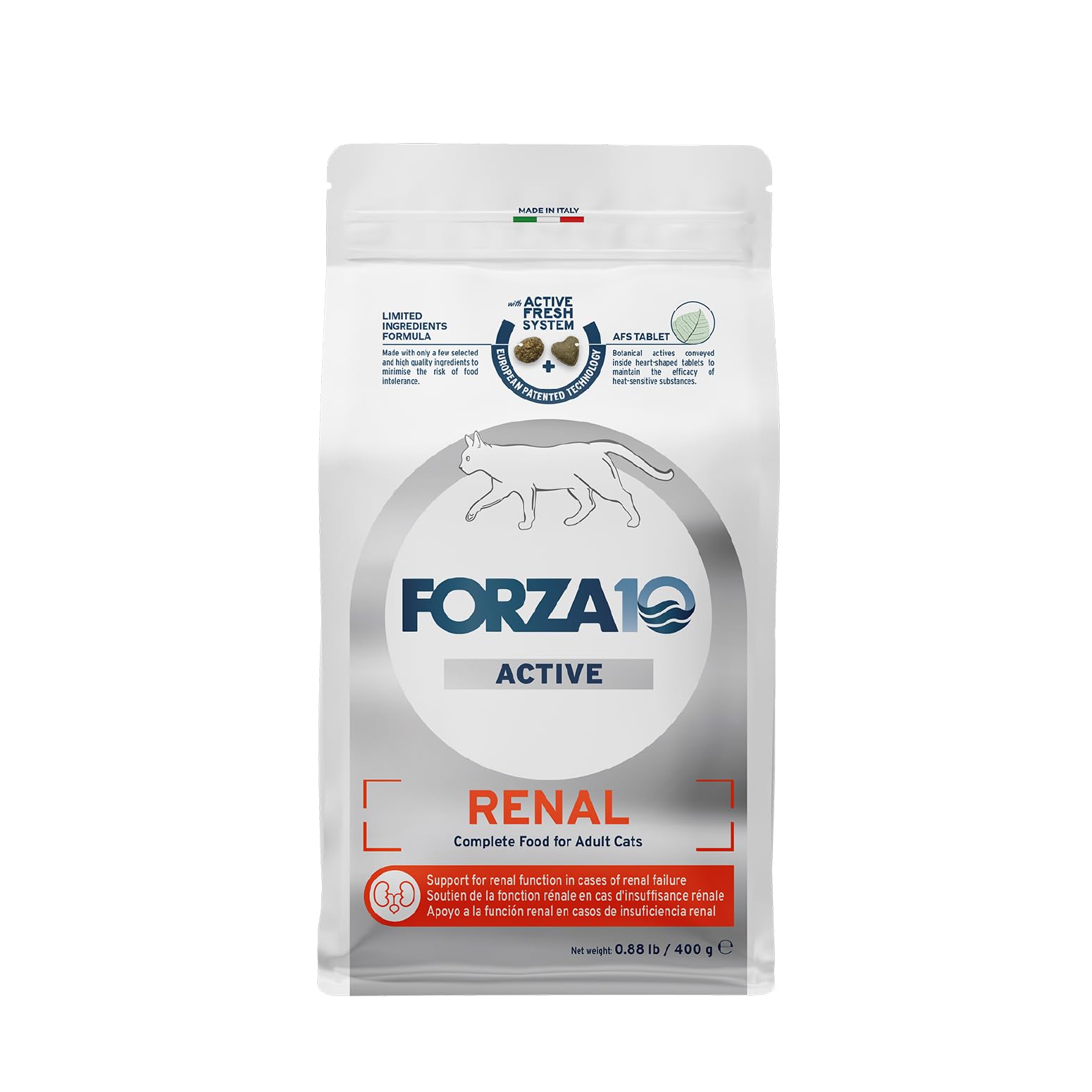
Forza10 Kidney Support Dry

Forza10 Kidney Support Dry

Budget fish flavor

Our Score 8.2/10
Check Price

Worth Noting

  • Strong fish scent can make the food unappealing to cats and owners alike.
  • Tiny 0.88-lb bag costs roughly the same as a standard bag, making per-ounce value poor.
Form
Dry kibble
Rx Required
No
Protein Level
Hydrolyzed fish protein
Extra Benefits
Cranberry, dandelion
Read the full review

This Forza10 dry food offers an affordable entry point into OTC kidney support with natural botanicals and no fillers. Many owners report improvements in kidney function and weight gain after switching. However, the strong fishy scent can be off-putting to cats and owners alike, and the 0.88-lb bag carries a high per-pound cost. This option is best taken as a short trial or for cats already known to enjoy fish flavors.

Bottom line: Best suited as a trial bag for cats that already enjoy fish flavors, or for owners who want to test an OTC renal diet without committing to a larger bag.

8

Blue Buffalo K+M Kidney Wet

Blue Buffalo K+M Kidney Wet

Kidney + joint wet

Our Score 8.0/10
Check Price

Worth Noting

  • Pâté texture is dense and dry, which may require added water for some cats.
  • Palatability can be inconsistent; some cats may refuse it.
Form
Wet pâté
Rx Required
Yes
Protein Level
Controlled protein
Extra Benefits
Joint support, natural
Read the full review

This wet pâté from Blue Buffalo combines controlled protein for kidneys with glucosamine and chondroitin for joints, using natural ingredients without fillers. The texture is dense and dry — some cats may need water mixed in to accept it. Palatability varies; some cats reject it altogether, making the dry version a more reliable choice for most owners. If your cat already likes dense pâté and you want both kidney and mobility support in a wet format, this fits that specific need.

Bottom line: This wet pâté is worth trying if your cat already enjoys dense textures and you prioritize natural ingredients — but be prepared for possible rejection and the need to add moisture.

How to Choose

Phosphorus and Sodium Control

Restricted phosphorus and sodium are the cornerstones of renal diets. High phosphorus accelerates kidney damage by forcing remaining nephrons to work harder. Most prescription diets keep phosphorus below 1% dry matter, while non-prescription options vary widely.

The trade-off: lower phosphorus often means lower palatability. Phosphorus contributes to flavor and texture, so heavily restricted foods can taste bland or metallic. Cats with advanced disease need stricter limits, but earlier-stage cats may accept a moderate-phosphorus food that tastes better.

Protein Quality and Quantity

Kidney diets reduce protein to lessen the workload on the kidneys, but the protein present must be highly bioavailable — easily digestible with minimal waste. Chicken, fish, and egg-based proteins are typical. Overly low protein can lead to muscle wasting, especially in older cats.

The hidden issue: protein sources affect taste. Chicken-based diets tend to be more accepted than fish-based ones, which can have strong odors that some cats love and others hate. A diet with moderate premium protein often hits the sweet spot between renal protection and acceptance.

Prescription vs. Over-the-Counter

Prescription diets (Hill’s, Purina Pro Plan, Blue Buffalo Veterinary) are formulated to meet strict therapeutic guidelines and have clinical studies backing them. A veterinarian’s authorization is required, and they are typically more expensive. Over-the-counter foods like Weruva and Forza10 offer lower phosphorus without a vet visit.

The reality: OTC options often have less rigorous phosphorus control and higher rejection rates because they rely on natural ingredients that vary batch to batch. However, for early-stage or maintenance cats, they can be a practical alternative — if your cat accepts the taste.

Dry vs. Wet Form

Wet food provides additional water, which is critical for kidney cats prone to dehydration. The extra moisture helps flush toxins and supports kidney function. Dry kibble is more calorie-dense, easier to store, and often more accepted by cats that dislike wet textures.

Many owners feed both — dry for convenience and wet for hydration. The key is to find a texture your cat likes. Stews and chunks in gravy are generally more appealing than dense pâtés. If using dry, ensure your cat drinks enough water (consider a fountain).

Additional Functional Benefits

Some kidney diets include extras like appetite stimulants (Hill’s E.A.T. technology), joint support (glucosamine/chondroitin), or omega-3 fatty acids for anti-inflammatory effects. These can improve quality of life, especially for senior cats with multiple issues.

Be cautious of claims: appetite triggers help many cats but don’t guarantee acceptance. Joint support is valuable if your cat has arthritis, but it often comes in a combined formula that may have a different nutritional profile than a pure renal diet. Prioritize kidney-specific needs first, then layer on extras.

Frequently Asked Questions