Food & Treats

11 Best Cat Food for Constipation 2026: Fiber-Rich Picks That Ease Digestion

Struggling with your cat's constipation? We help you choose from fiber-rich dry foods that target hairballs and digestion, with honest trade-offs on moisture needs.

Many cat foods marketed for hairball control pack in fiber, but that same fiber can sometimes cause more digestive upset or simply not be enough to move things along. If your cat is straining on the litter box, you need a formula that does more than just pass hair — it needs to support gentle, regular bowel movements.

The best approach isn't a single magic ingredient. Some cats respond well to beet pulp, others need prebiotic fibers like psyllium, and many still require added moisture from wet food or pumpkin to fully resolve constipation. This guide cuts through the marketing to show you which dry foods actually deliver the fiber and digestibility that matter, and where you'll need to supplement.

1

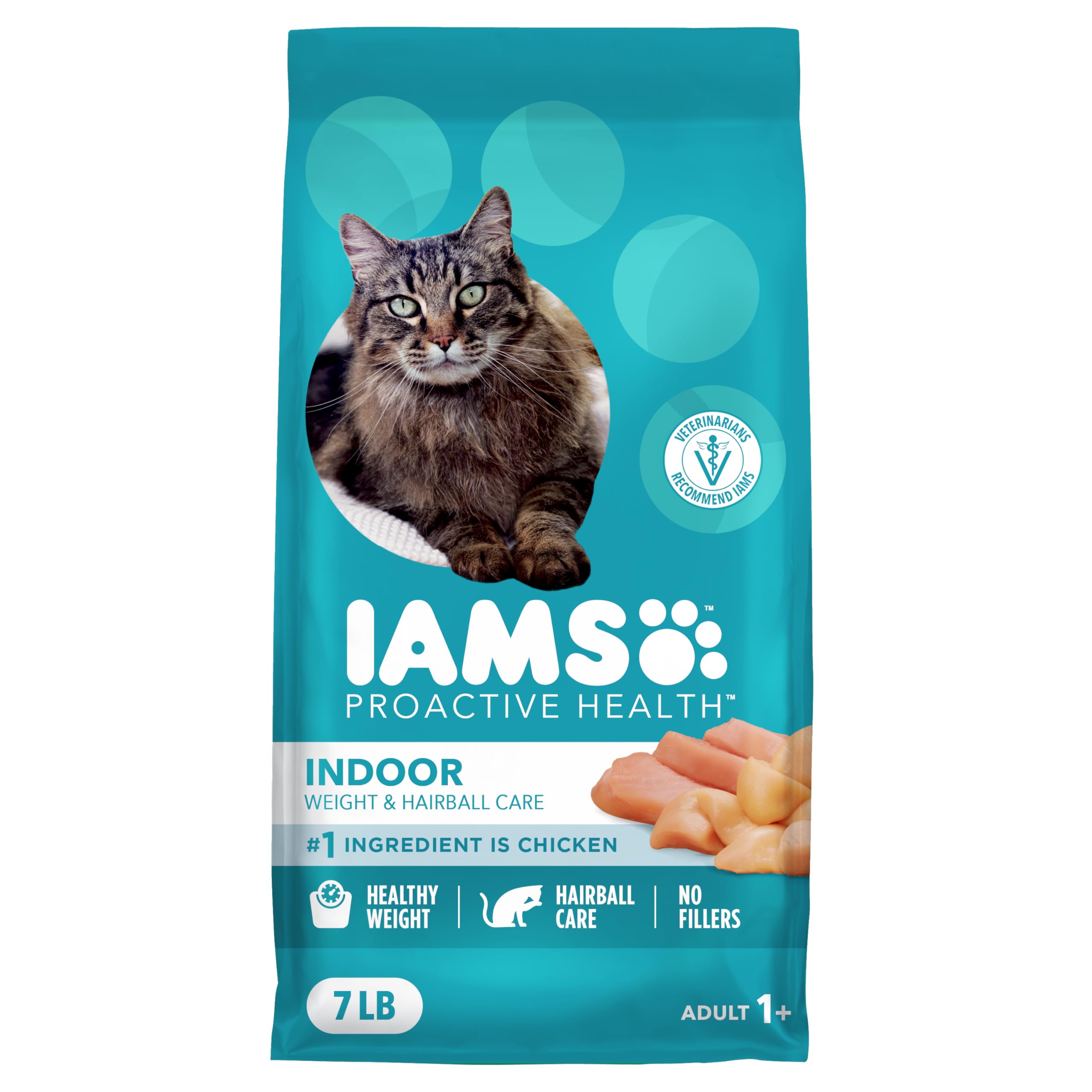
IAMS Indoor Weight/Hairball

Top Pick
IAMS Indoor Weight/Hairball

Hairball control value

Our Score 9.6/10
Check Price

Worth Noting

  • Some cats may experience vomiting or diarrhea when eating this high-fiber food.
Fiber Type
Beet pulp
Digestibility
Moderate
Vet Recommended
No
Hairball Control
Yes
Read the full review

This IAMS formula uses a proprietary fiber blend with beet pulp to move hair through the digestive tract, which keeps hairballs under control in indoor cats. The real chicken and prebiotics support overall health, and the price makes it practical for multi-cat households. However, the fiber content can cause digestive upset in some cats — vomiting or diarrhea may occur, so a gradual transition is important. This food works best for owners who want an affordable, effective hairball solution and whose cats already tolerate high-fiber dry food well.

Transition slowly over 7 days to reduce the chance of digestive upset.

Bottom line: A budget-friendly hairball control food for cats that handle high-fiber diets well — if your cat has a sensitive stomach, consider the IAMS Sensitive Digestion variant instead.

2

Purina ONE Hairball

Purina ONE Hairball

Bulk hairball control

Our Score 9.6/10
Check Price

Worth Noting

  • Fiber may cause vomiting in some cats with sensitive digestion
Fiber Type
Natural fiber-rich blend
Digestibility
Moderate
Vet Recommended
No
Hairball Control
Yes
Read the full review

The 16-pound bag delivers natural fiber to reduce hairballs at the lowest cost per serving among bulk options. For multi-cat homes, this is a budget-friendly choice. The fiber content can trigger vomiting in cats with sensitive stomachs, similar to IAMS hairball formula but with a slightly smaller following. It remains a strong value for those who need volume without premium spending.

Bottom line: Ideal for multi-cat owners who prioritize cost and volume and can tolerate the occasional digestive upset.

3

Hill's Sensitive Stomach

Hill's Sensitive Stomach

Digestive sensitivity

Our Score 9.4/10
Check Price

Worth Noting

  • Some cats may reject the taste or kibble size
Fiber Type
Prebiotic fiber
Digestibility
High
Vet Recommended
Yes
Hairball Control
No
Read the full review

The prebiotic fiber in this formula helps regulate digestion, reducing episodes of vomiting and loose stools in sensitive cats. Omega-3 and omega-6 fatty acids support skin and coat health, which can reduce shedding and hairball formation. Owners often see firmer stools within a week of switching.

This food is tailored for cats with chronic stomach sensitivity rather than general hairball issues. It’s a premium-priced option – roughly double the cost of budget alternatives – but the digestive support can be worth it for cats that have tried other foods without success.

Introduce gradually over a week to give your cat time to adjust to the new kibble texture.

Bottom line: If your cat’s digestive issues are linked to sensitivity, this formula offers effective support – a worthwhile option for owners following vet guidance.

4

Purina Cat Chow Gentle

Purina Cat Chow Gentle

Budget multi-cat

Our Score 9.4/10
Check Price

Worth Noting

  • Contains grains and is not suitable for cats on a grain-free diet.
Fiber Type
Natural prebiotic fiber
Digestibility
High
Vet Recommended
No
Hairball Control
No
Read the full review

The Purina Cat Chow Gentle formula uses real turkey as the first ingredient and adds natural prebiotic fiber to ease mild stomach sensitivity at a price that works for multi-cat homes. This is not a high-fiber constipation remedy — the fiber level is moderate and best suited for cats with occasional vomiting or loose stools rather than chronic blockage. It contains grains, so grain-free households should look elsewhere. For large families on a tight budget whose cats have mild digestive issues but no grain intolerance, this 13-pound bag delivers reliable daily feeding without breaking the bank.

Bottom line: A practical daily food for mild stomach sensitivity at a price that large households will appreciate — just know it won't fix serious constipation and isn't grain-free.

5

Royal Canin Digestive Care

Royal Canin Digestive Care

Chronic digestive issues

Our Score 9.4/10
Check Price

Worth Noting

  • In multi-cat homes or for cats with dental issues, the large ring shape may be difficult to chew.
  • For households on a budget, the per-pound cost is steep for daily feeding.
Fiber Type
Prebiotics & dietary fiber
Digestibility
High
Vet Recommended
Yes
Hairball Control
No
Read the full review

Royal Canin Digestive Care delivers targeted digestive support: manufacturer testing shows over 95% of cats have healthy stool within 10 days. The ring-shaped kibble encourages slower eating, which can reduce regurgitation in cats that bolt their food. Unlike Royal Canin's hairball formula that uses fiber to push hair through, this formula focuses on prebiotics and highly digestible proteins to calm the digestive tract.

This food suits cats with chronic digestive sensitivities, such as IBS or frequent vomiting, where dietary management is critical. The premium price per pound and large kibble size mean it's best for owners willing to invest in a specialized diet and whose cats can handle the oversized pieces.

If your cat struggles with the large kibble, try moistening it to soften – some cats adapt over time.

Bottom line: A specialized digestive care formula that delivers consistent stool quality improvements, but the price and kibble size limit practicality to owners who can afford a prescription-level diet and have cats willing to accept the unconventional shape.

6

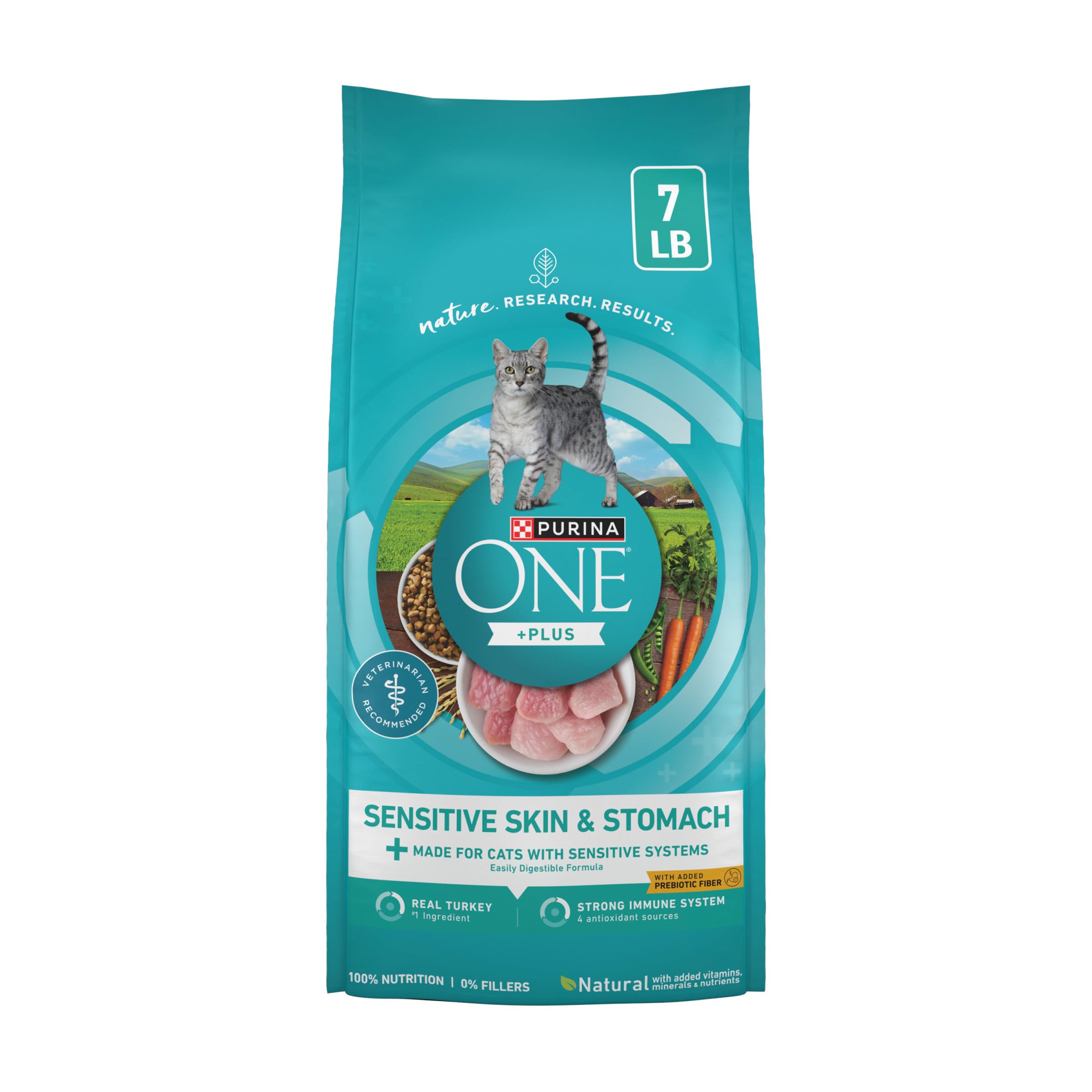
Purina ONE Sensitive

Purina ONE Sensitive

Turkey-based sensitive

Our Score 9.4/10
Check Price

Worth Noting

  • Turkey sensitivity may cause reactions in some cats
Fiber Type
Prebiotic fiber
Digestibility
High
Vet Recommended
No
Hairball Control
No
Read the full review

Real turkey is the first ingredient, paired with prebiotic fiber to support gentle digestion without straining the budget. This formula works best for cats with mild to moderate stomach sensitivity, particularly those who prefer poultry-based diets. The turkey base means cats with known turkey allergies or sensitivities may have issues — worth confirming before a full purchase.

Transition slowly over 7-10 days to minimize any digestive reaction.

Bottom line: For cat owners seeking an affordable sensitive stomach food with real turkey, this option delivers reliable digestive support without the premium price tag.

7

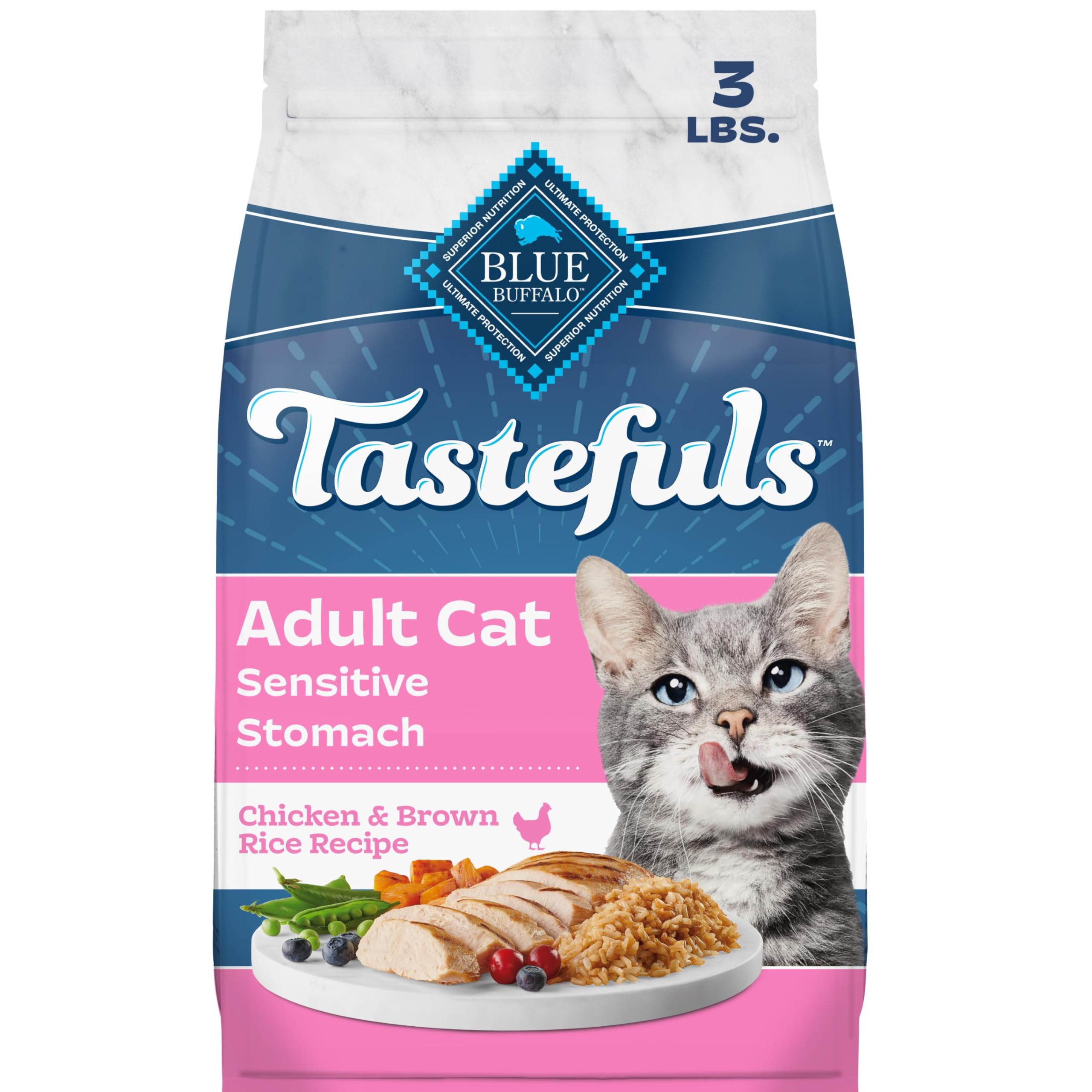
Blue Buffalo Sensitive

Blue Buffalo Sensitive

Trial size sensitive

Our Score 9.4/10
Check Price

Worth Noting

  • Cost per pound is high due to small 3-pound bag
Fiber Type
FOS prebiotic, brown rice
Digestibility
High
Vet Recommended
No
Hairball Control
No
Read the full review

This Blue Buffalo formula uses real chicken and FOS prebiotic to support digestion, with no by-products or fillers. It helps reduce vomiting for cats with sensitive stomachs. However, the 3-pound bag has a high cost per pound, and it isn't formulated for constipation — that requires a high-fiber diet.

Bottom line: Consider this only if your cat has mild digestive issues; for constipation, a high-fiber formula is needed.

8

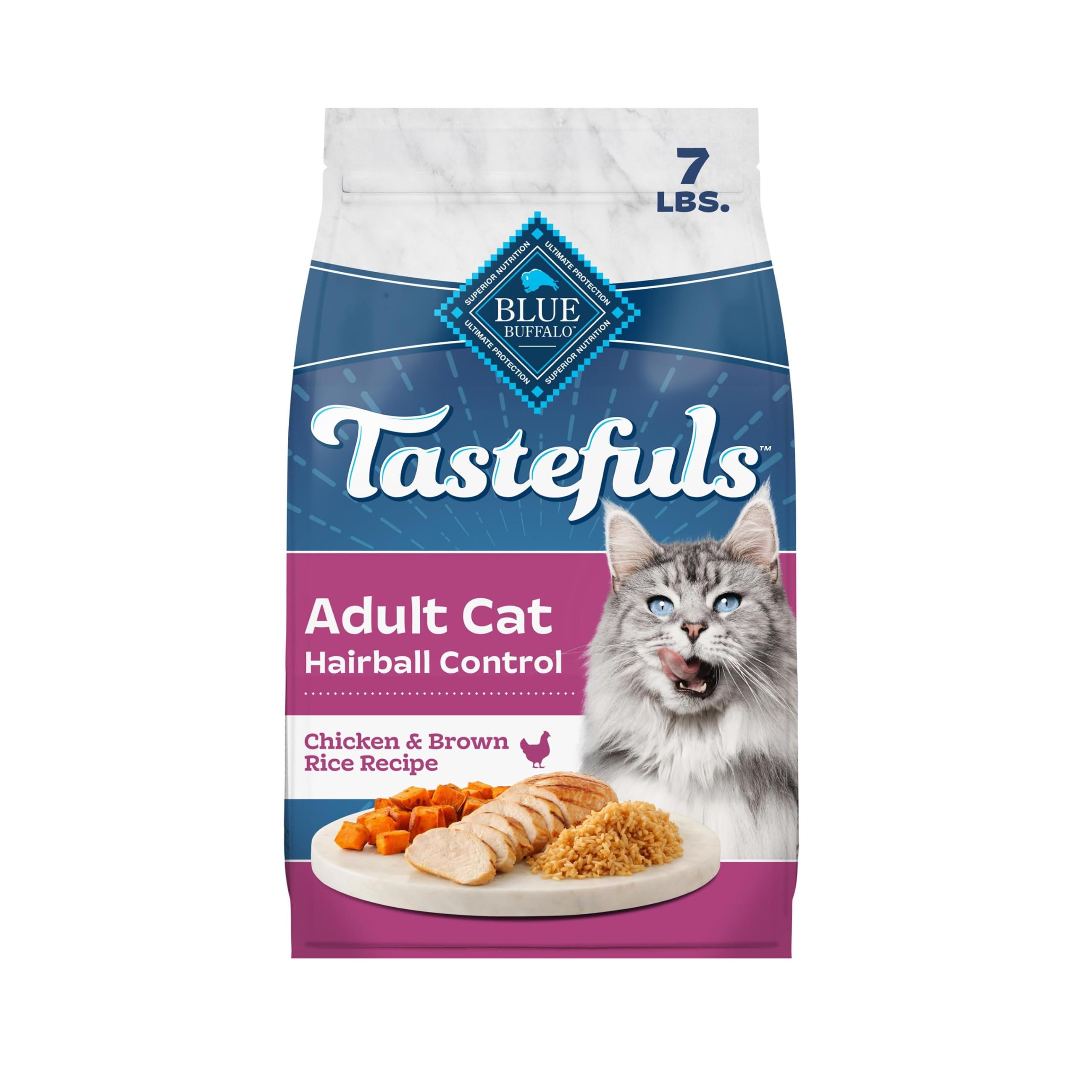
Blue Buffalo Hairball

Blue Buffalo Hairball

Natural hairball control

Our Score 9.4/10
Check Price

Worth Noting

  • High fiber content may cause diarrhea or constipation in some cats
Fiber Type
Psyllium, cellulose
Digestibility
Moderate
Vet Recommended
No
Hairball Control
Yes
Read the full review

The psyllium and cellulose fibers effectively reduce hairballs for many cats. But that high fiber can cause digestive upset in some cats, and the cost per pound exceeds budget options like IAMS or Purina. It works best for owners who prioritize natural ingredients and have cats without sensitive stomachs.

Bottom line: This food is a strong choice for persistent hairball issues if your cat tolerates high fiber and you are willing to pay for premium ingredients.

9

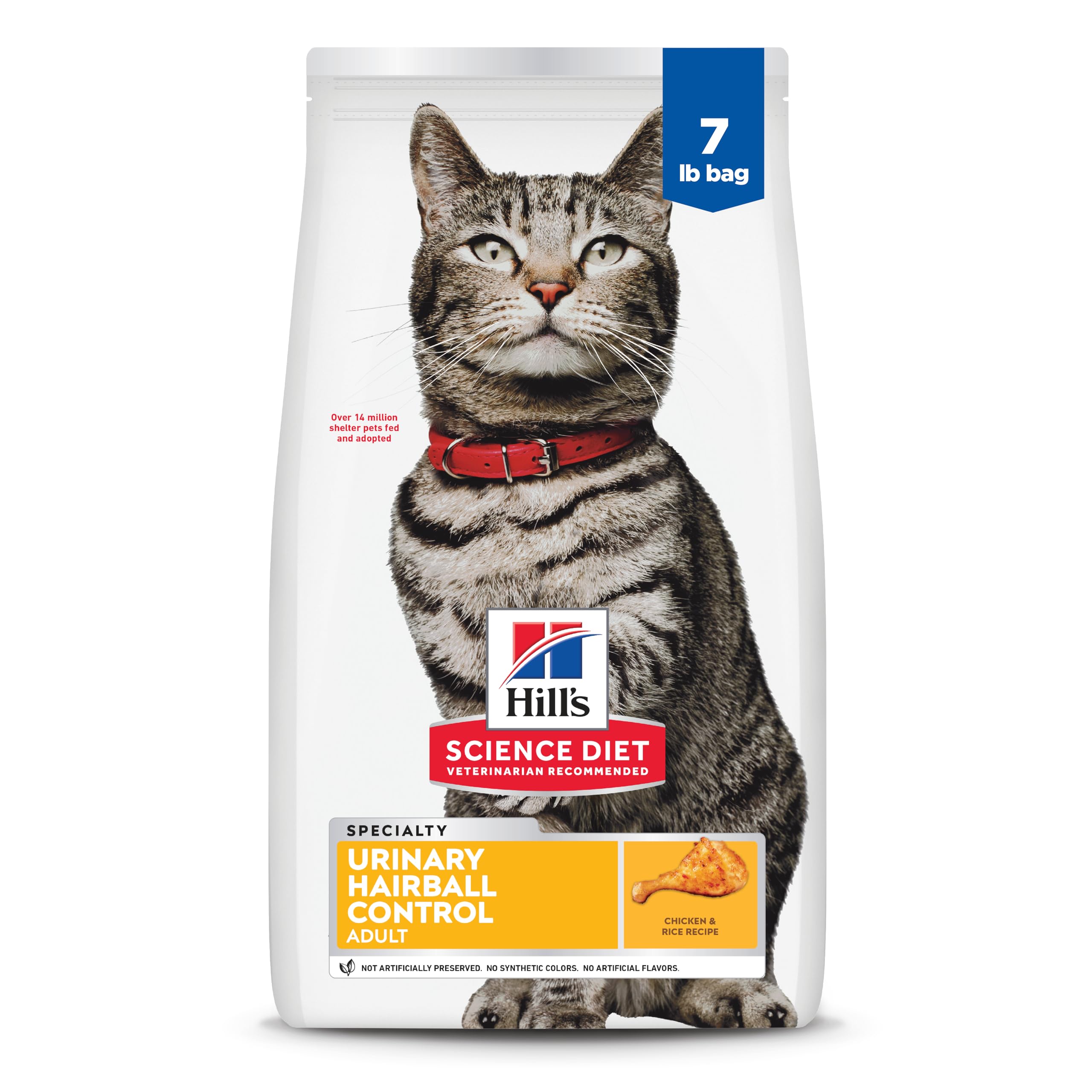
Hill's Urinary & Hairball

Hill's Urinary & Hairball

Urinary + hairball

Our Score 9.2/10
Check Price

Worth Noting

  • Large kibble pieces can be difficult for small-jawed cats or seniors to eat.
  • Premium pricing per pound may not fit all budgets.
Fiber Type
Natural fiber
Digestibility
Moderate
Vet Recommended
Yes
Hairball Control
Yes
Read the full review

This formula combines urinary tract mineral control with hairball-reducing fiber. The fiber helps with occasional hairballs but is not a targeted constipation solution — cats needing focused digestive support are better served by the top pick. The large kibble size can be a problem for smaller cats or seniors with dental issues.

Ideal for cats that have both urinary and hairball concerns and whose owners accept a premium price for a combined formula. If constipation is the primary issue, look to a dedicated digestive health food instead.

If your cat struggles with the large kibble, moistening the food can soften the pieces enough to make eating easier.

Bottom line: A good option for cats needing combined urinary and hairball care, but not a constipation remedy — check the top pick for digestive-focused support.

10

Hill's Hairball Control

Hill's Hairball Control

Single-cat trial

Our Score 9.2/10
Check Price

Worth Noting

  • Premium price for a 3.5-lb bag makes it less economical for daily feeding in multi-cat households.
Fiber Type
Natural fibers
Digestibility
Moderate
Vet Recommended
Yes
Hairball Control
Yes
Read the full review

This Hill's formula uses vet-recommended natural fiber to reduce hairballs, but its fiber profile targets hair movement, not constipation relief. The 3.5-lb bag and premium price limit daily feeding to single-cat homes or a trial run.

Bottom line: Suitable for a single-cat household seeking a vet-backed hairball control, provided the small bag size and higher per-pound cost are acceptable.

11

Royal Canin Sensitive Digestion

Royal Canin Sensitive Digestion

Sensitive digestion

Our Score 9.2/10
Check Price

Worth Noting

  • Some cats may not accept the unique kibble shape, requiring a slow transition.
Fiber Type
Prebiotics
Digestibility
High
Vet Recommended
Yes
Hairball Control
No
Read the full review

This sensitive digestion formula uses highly digestible proteins and prebiotics to calm stomachs, but its premium price and unique kibble shape (which some cats may reject) prevent it from outperforming more affordable options like Hill's sensitive stomach formula. It's not intended for cats needing constipation-specific high-fiber formulas.

Bottom line: If your cat has general digestive sensitivity and tolerates unusual kibble shapes, this can reduce vomiting and diarrhea — but not for constipation-specific needs.

How to Choose

Fiber Type

Not all fiber works the same for constipation. Beet pulp is a moderate soluble fiber that adds bulk and moisture to stool, while psyllium is a stronger soluble gel-forming fiber that can soften hard stools more effectively. Prebiotic fibers like FOS and inulin feed good gut bacteria but may not provide enough mechanical bulk on their own.

For a constipated cat, a blend that includes a gelling fiber (psyllium) or a consistent source of insoluble fiber (cellulose) often works better than a single prebiotic. Check the ingredient list for psyllium, beet pulp, or cellulose as the primary fiber source.

Digestibility

A highly digestible food reduces the amount of undigested material that can slow down transit time. Look for formulas with a single high-quality protein source (like chicken or turkey as the first ingredient) and added prebiotics that support gut flora. Foods labeled 'sensitive stomach' often have smaller, more digestible kibble and limited ingredients.

Cats with chronic constipation may need a formula that is both easily digestible and contains a moderate fiber level. Too much indigestible fiber can actually worsen constipation by creating a bulk that the colon cannot move. The sweet spot is a food with around 3-5% crude fiber from a gentle source.

Hairball Control

Most hairball control foods rely on increased fiber to push hair through the digestive tract. While this can help some cats pass hair more easily, the same fiber may not provide enough lubrication for a cat that is truly constipated. Hairball formulas typically use moderate fiber levels (around 3-5%) which can be insufficient for severe constipation.

If your cat has both hairballs and constipation, a dedicated hairball formula might help reduce hairball frequency but you may still need to add wet food or a fiber supplement to address the constipation. Monitor stool consistency closely when starting a hairball food.

Vet Recommended

Veterinary-recommended brands like Hill's Science Diet and Royal Canin formulate their foods based on scientific research and clinical trials. Their sensitive stomach and digestive care lines often include precise fiber blends and highly digestible proteins that are more reliably effective than generic 'sensitive' formulas.

The trade-off is cost: these foods are significantly more expensive per pound than budget options. For a cat with mild, occasional constipation, a budget-friendly hairball formula may work just as well. But for chronic or recurring issues, the investment in a vet-recommended diet often pays off in fewer vet visits.

Frequently Asked Questions