Doors & Outdoor

8 Best Cat Cage of 2026: That Stay Stable Without Extra DIY

The best cat cages that are stable out of the box, so you don't need to reinforce with zip ties.

Many cat cages come with a hidden expectation: you'll need to add zip ties or wire to keep them stable. It's a common workaround that owners discover only after assembly, and it can turn a simple purchase into an unexpected project. But understanding what makes a cage stable helps you choose wisely.

The difference between a cage that wobbles and one that stays put comes down to frame design and build quality. Models with thicker wire gauge, welded joints, and locking shelf brackets stand rigid out of the box. Those with plastic connectors and thin wire require reinforcement to feel secure. Knowing this distinction helps you pick the right cage for your cat's weight and activity level.

This guide identifies the cages that prioritize stability from the start, saving you time and frustration. You'll find options for every budget, from affordable units for kittens to premium enclosures for multiple cats, all chosen for their ability to hold up to daily use without extra reinforcement. No zip ties required.

1

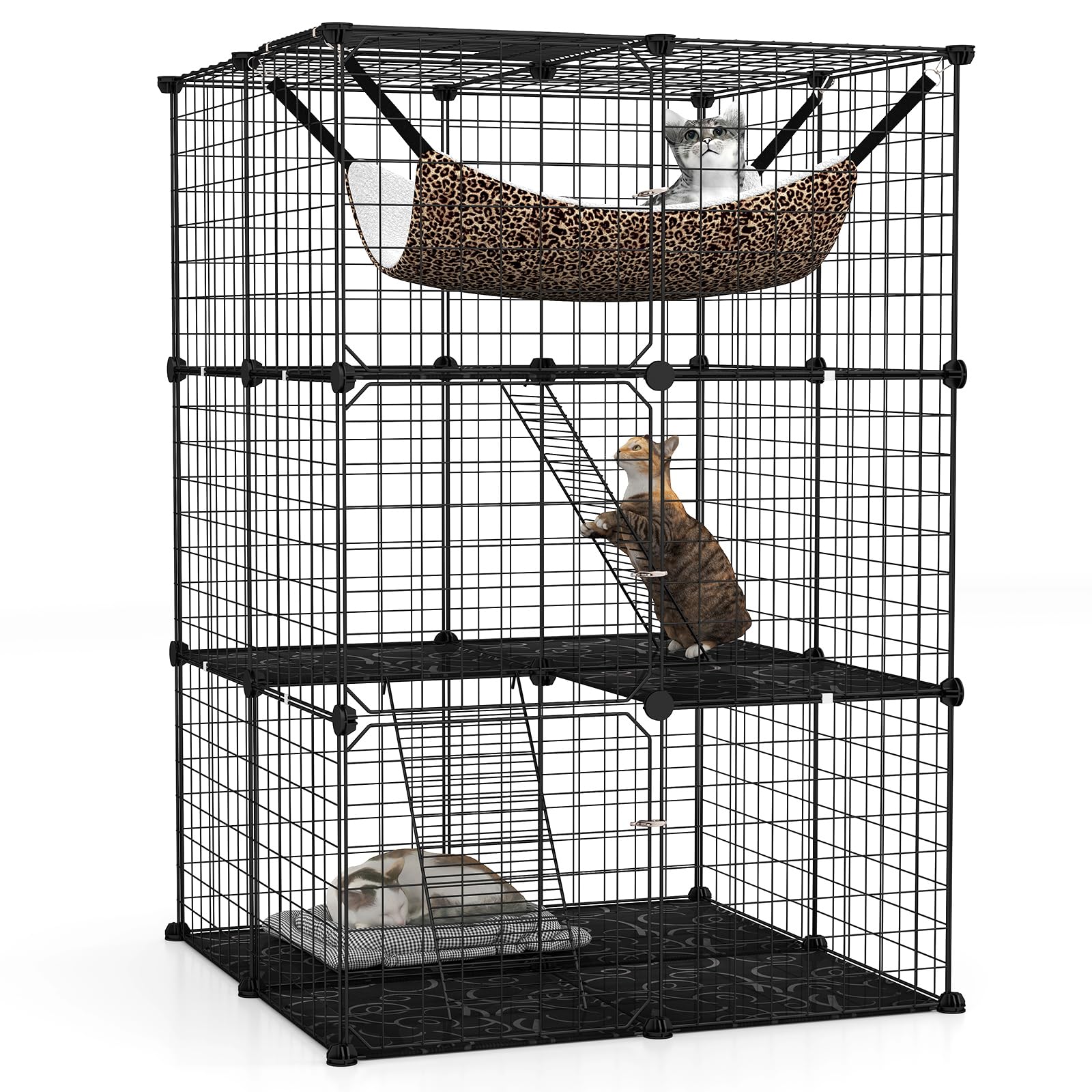
Amazon Basics 3-Tier Cat Cage

Top Pick
Amazon Basics 3-Tier Cat Cage

Most cat owners

Our Score 9.2/10
Check Price

Worth Noting

  • Shelf connectors may need zip ties for maximum rigidity in some setups
Height
50.6 inches
Removable Tray
Yes
Number of Levels
3
Read the full review

Assembling this three-level cage takes under ten minutes without tools, and the structure stands firm enough for daily confinement of two adult cats. The locking wheels make it easy to roll from room to room, and the removable tray slides out for quick cleaning.

The shelves support a litter box and two cats without sagging, though a small number of owners find that zip ties on the shelf connectors add extra rigidity. The 1.36-inch bar spacing keeps most cats inside, and the two front doors provide convenient access. The cage is not weatherproof, so it stays indoors.

This cage suits foster caregivers on a budget, households with one or two cats, and anyone who prioritizes easy setup over premium build. For owners who need rock-solid rigidity without any adjustments, a model with welded joints (like the Prevue) is a better fit, but the Amazon Basics handles normal daily use well and allows a simple DIY fix if wobble appears.

Adding zip ties to the shelf joints can eliminate any slight wobble and increase long-term rigidity.

Bottom line: For most indoor cat owners, this cage delivers a balance of space, stability, and ease of use that is hard to match at its price.

2

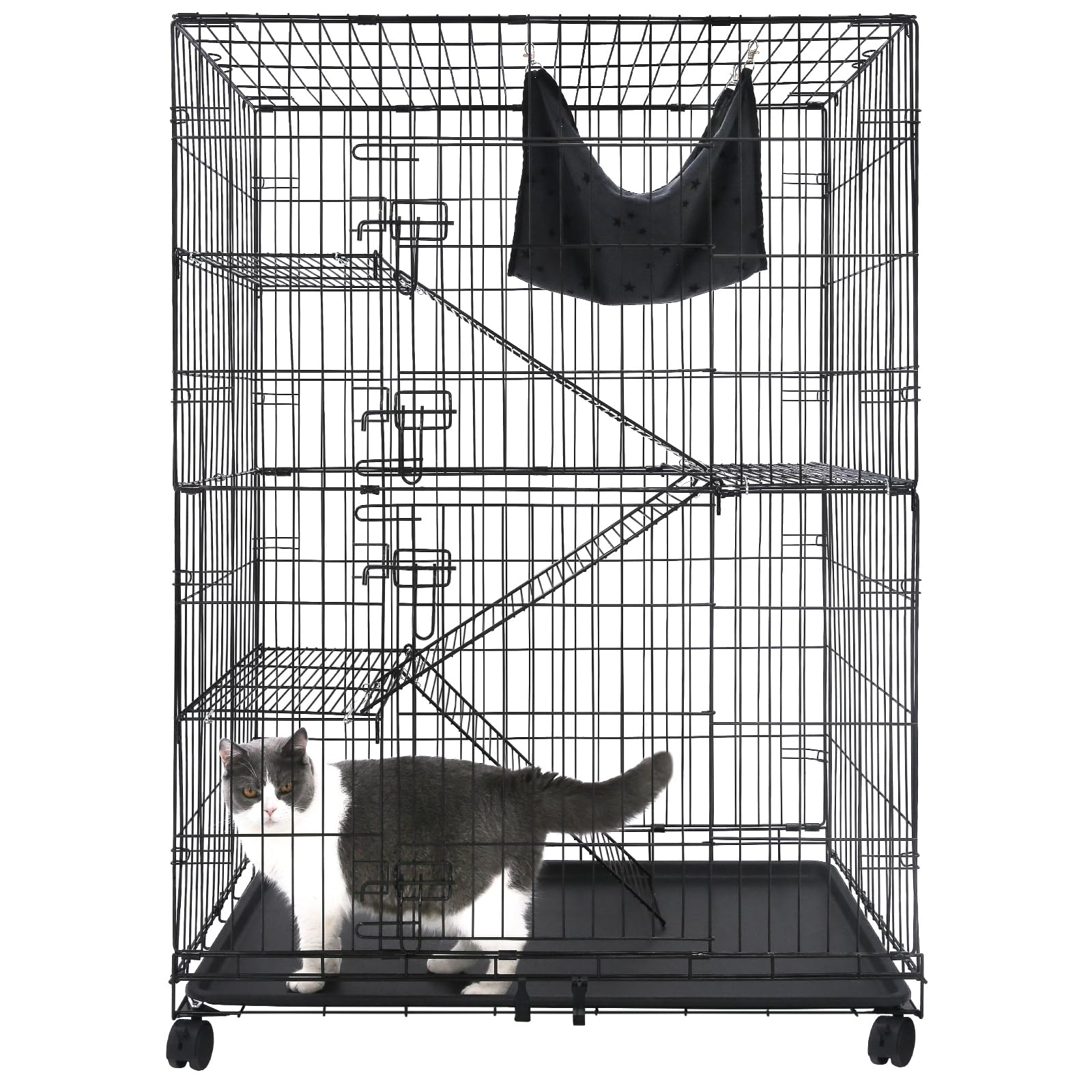
Prevue Deluxe Cat Home

Prevue Deluxe Cat Home

Foster multi-cat

Our Score 9.2/10
Check Price

Worth Noting

  • Bent bars or cracked plastic base may occur from shipping
  • Wheels may not lock securely on all surfaces
Height
44.9 inches
Removable Tray
No
Number of Levels
3
Read the full review

The Prevue Deluxe Cat Home uses thicker wire and welded joints for a noticeably more rigid frame that holds its shape without needing zip ties or reinforcement. The three-level interior offers generous room for multiple cats, and the tool-free assembly gets the cage set up in minutes.

This cage is built for long-term use in foster homes or households with several cats who need a secure indoor enclosure. It is premium-priced, so expect solid materials and a heavy-duty plastic base, though occasional shipping damage or wheel lock inconsistencies have been reported. For those who prioritize stability over portability and budget, this is the most rigid option in this category.

Test wheel locks on your floor surface before relying on them to keep the cage stationary.

Bottom line: This cage delivers premium stability for multi-cat homes, but factor in the possibility of shipping damage and wheel lock quirks.

3

Homey Pet 4-Tier Cat Cage

Homey Pet 4-Tier Cat Cage

Small adult cats

Our Score 9.0/10
Check Price

Worth Noting

  • Plastic shelves can crack under cats over 13 lbs.
  • Ramps and shelves may need extra zip ties for stability.
Height
50 inches
Removable Tray
Yes
Number of Levels
4
Read the full review

The Homey Pet 4-tier cage stands out with its included ramp and hammock, accessories that add enrichment without extra cost. Assembly takes under 20 minutes, and the metal frame feels adequate for cats under 13 lbs. The locking wheels let you reposition the cage easily, though the plastic shelves and ramps are the main trade-off here.

This cage suits owners of kittens and small adult cats who want a multi-level setup with fun features. The plastic shelves can crack under cats over 13 lbs, so stick with lighter pets. For a sturdier build with fewer frills, the Amazon Basics 3-tier cage (the top pick) offers better long-term rigidity for heavier cats.

Securing the ramps with zip ties improves stability.

Bottom line: A feature-rich cage for light cats and kittens, but skip it if your cat is over 13 lbs or you need rock-solid stability.

4

MidWest Cat Playpen

MidWest Cat Playpen

Foster kitten homes

Our Score 8.6/10
Check Price

Worth Noting

  • Assembly requires two people and may need extra reinforcement for stability
  • Durability concerns with bent bars and cracked trays have been noted over time
Height
50.5 inches
Removable Tray
Yes
Number of Levels
4
Read the full review

This MidWest playpen offers generous space for multiple kittens or small cats, making it a frequent choice in foster circles. With four levels, locking wheels, and a plush bed, it packs a lot of features at a mid-range price. Unlike the top pick’s near-tool-free assembly, this model demands a bit more patience and often a second set of hands during setup.

Best suited for foster homes and multi-kitten households where the extra assembly effort is a fair trade for the square footage. The metal bars and tray have shown signs of wear in some cases, and the cage may need zip ties or wire to feel fully stable. Owners comfortable with minor DIY reinforcement will get the most out of this playpen.

Adding zip ties at the connection points greatly improves rigidity without permanent modification.

Bottom line: For foster homes and multi-cat households willing to spend a little extra time on assembly, this playpen delivers generous space and good value — the top pick is a better fit for those wanting a hassle-free, stable cage out of the box.

5

PawGiant 6-Tier Cat Cage

PawGiant 6-Tier Cat Cage

Maximum vertical space

Our Score 8.6/10
Check Price

Worth Noting

Height
72 inches
Removable Tray
Yes
Number of Levels
6
Read the full review

At 72 inches tall with six levels, this cage offers the most vertical climbing space among standard wire enclosures. The roomy interior can accommodate multiple small cats, and the included hammock adds enrichment.

Best suited for owners with multiple small cats who need tall space for supervised play or short-term housing. The cage can wobble during active use, and the wheels may bend if rolled often — keeping it stationary and limiting use to calm cats avoids these issues.

Lock the wheels after positioning the cage to reduce wear and prevent scratching.

Bottom line: If vertical space is your priority and you have light, calm cats, this cage delivers — just keep it in one place and supervise play to avoid stability surprises.

6

Oneluck 3-Tier Cat Cage

Oneluck 3-Tier Cat Cage

Budget-conscious owners

Our Score 8.6/10
Check Price

Worth Noting

  • Cage can wobble when bumped, reducing stability
  • Door latches may not lock securely, allowing escape
Height
35.4 inches
Removable Tray
No
Number of Levels
3
Read the full review

At this price, the Oneluck 3-Tier Cage provides a usable space for a single kitten. The 35-inch height and three levels give a small cat room to move, and assembly is manageable with patience. However, the frame can wobble with any bump, and the door latches may not hold a determined cat. These compromises make it suitable only for supervised, short-term use with a lightweight kitten — not for multi-cat homes or owners needing a reliable enclosure.

Use the included zip ties on all corner joints to improve stability.

Bottom line: Fits a single kitten in a supervised, temporary setup, but not for active or escape-prone cats.

7

PAWING 3x3x4 Cat Cage

PAWING 3x3x4 Cat Cage

Storage cage fans

Our Score 8.2/10
Check Price

Worth Noting

  • Storage compartments inside the cage reduce the available floor space for cat movement.
Height
55 inches
Removable Tray
No
Number of Levels
3
Read the full review

The PAWING Large Cat Cage offers a rare combination of a metal wire enclosure and integrated storage cubes, making it possible to keep cat supplies organized within the cage structure. The 41x41x55-inch dimensions provide ample space for up to three cats, with three levels and four doors for access. However, because durability and stability under daily use have not been verified through extensive real-world experience, this cage is best suited for buyers who prioritize the storage design and are comfortable with uncertainty about long-term structural integrity.

Bottom line: Best suited for those who value integrated storage over a proven track record — the cage works as a wire enclosure with organizational convenience, but long-term reliability is an open question.

8

Tangkula 3-Tier Cat Enclosure

Tangkula 3-Tier Cat Enclosure

Budget buyers

Our Score 8.0/10
Check Price

Worth Noting

  • Shelves may not stay in place under the weight of a larger cat, limiting the cage to kittens or light adults.
  • Assembly can be frustrating due to unclear instructions and fit issues.
Height
42 inches
Removable Tray
No
Number of Levels
3
Read the full review

The Tangkula Cat Enclosure includes a skylight, hammock, and two ladders at an entry-level price, giving small cats room to climb. The wire frame and shelves can shift during use, and the assembly instructions leave room for interpretation - these factors make it impractical for larger or active cats. Limited feedback means its durability over time remains uncertain, but for a single kitten on a tight budget it provides a functional playpen.

Bottom line: Best suited for a single kitten or as a temporary playpen where assembly time isn't a concern and the cage won't be moved frequently.

How to Choose

Number of Levels

More levels give your cat more vertical territory but add weight and potential wobble. A 3-tier cage is usually stable enough for one or two cats, while 4 to 6 levels require a wider base or locking wheels to prevent tipping.

If you have an active jumper, stick with a 3-tier model unless the cage has a very low center of gravity.

Height (Vertical Space)

Taller cages are great for climbing but become top-heavy. A 50-inch cage works for most cats; 72-inch models need a footprint of at least 36x22 inches to stay upright.

Check the base width: narrow tall cages often need extra anchoring.

Bar Spacing

Bar spacing should be 1 inch or less for kittens and small cats to prevent escape or head entrapment. For adult cats, up to 1.6 inches is acceptable, but check that larger breeds can't squeeze through.

Wider bars also make the cage feel less enclosed and easier to clean.

Sturdiness and Stability

Stability comes from wire gauge and joint design. Thicker wire (12-14 gauge) resists bending; welded joints are stronger than plastic snap-together connectors. Many budget cages rely on zip ties to lock panels — a sign that reinforcement is expected.

Look for models that list 'locking brackets' or 'tool-free assembly' backed by user feedback on rigidity.

Ease of Assembly

Tool-free snap-together designs are fastest but often less sturdy. Screw-together or bolt-assembled cages take longer but produce a more rigid frame.

Read assembly reviews carefully: some cages require two people or additional reinforcement to achieve advertised stability.

Removable Tray

A removable tray makes cleaning much easier — just slide it out and hose it down. Some trays are shallow plastic that can crack under heavy cats; deeper metal trays are more durable but heavier.

If you plan to use the cage full-time, prioritize a tray that is both removable and reinforced.

Frequently Asked Questions