Collars & Safety

9 Best Bite Proof Gloves for Cats 2026: That Stop Cat Teeth

Find bite-proof gloves that actually protect your hands and forearms from cat bites and scratches, with honest trade-offs on fit and dexterity.

Many gloves sold as 'bite proof' for cats use thin leather that a determined cat can puncture. Combine that with an oversized fit that makes gripping and grooming difficult, and you end up with less protection than the label suggests.

The real difference comes down to forearm length, material thickness, and honest design. Longer gloves shield your arms but reduce dexterity; shorter gloves are easier to move in but leave your forearms exposed. Fit complaints are common, especially for smaller hands, making dexterity a bigger trade-off. Your choice depends on whether you need to trap a feral cat or bathe a house cat.

This guide highlights gloves that deliver on their claims, based on thousands of owner experiences. You'll see which models stop cat teeth reliably and where to compromise on fit or flexibility. No single glove fits every situation, so we match the right tool to your cat-handling needs.

1

WZQH 23.6" Leather Gloves

Top Pick
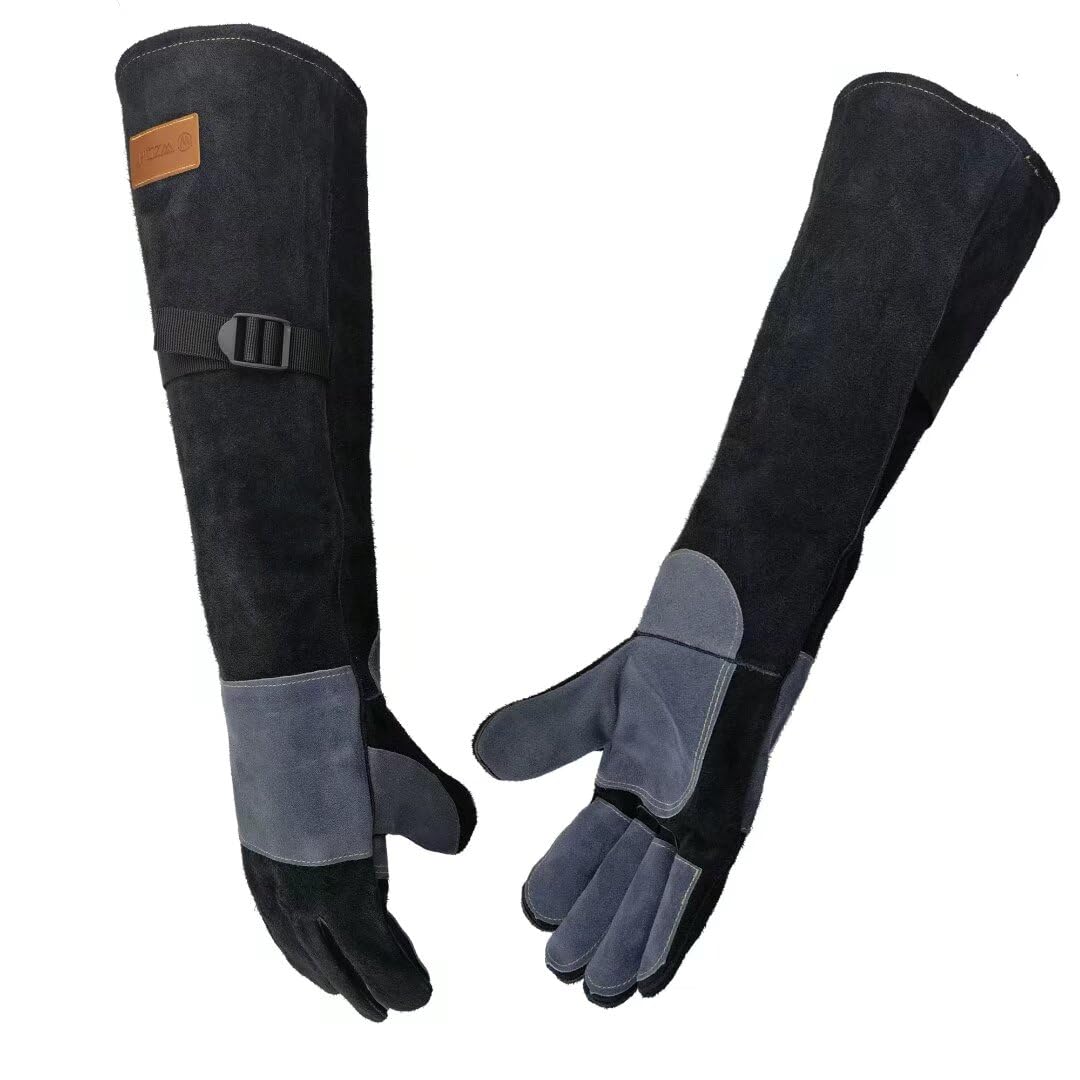
WZQH 23.6" Leather Gloves

Feral cat handling

Our Score 9.4/10
Check Price

Worth Noting

  • The large fit can be awkward for people with smaller hands, especially for detailed grooming.
Dexterity
Bulky, limited fine tasks
Fit & Sizing
Runs large for small hands
Glove Length
23.6 inches
Bite Resistance
Stops cat teeth reliably
Read the full review

The 23.6-inch length shields the entire forearm from bites and scratches, while the double-layer leather and Kevlar stitching prevent punctures from even determined cats. The adjustable cuff keeps the gloves secure during handling, and the reinforced palms add durability for vet visits or trapping.

These gloves suit owners who prioritize maximum protection over dexterity, ideal for feral cat handling or multi-use scenarios like welding and gardening. However, the fit runs large, especially for small hands, making precise tasks like nail trimming difficult. If your hands are on the smaller side, expect some bulkiness.

Wearing a thin liner glove underneath can help take up extra space for smaller hands.

Bottom line: For anyone needing full-arm protection from aggressive cats, these are the gloves to choose just be aware the large fit requires trying on before committing.

2

RAPICCA 16" Double Leather

RAPICCA 16" Double Leather

Shorter cuff

Our Score 9.2/10
Check Price

Worth Noting

  • Fit may be too large for smaller hands, reducing dexterity for precise tasks.
  • Bite resistance is not absolute
Dexterity
Reduced dexterity
Fit & Sizing
Often too large
Glove Length
16 inches
Bite Resistance
Effective, some punctures reported
Read the full review

The RAPICCA's 16-inch double-layer cowhide with Kevlar stitching provides effective protection against cat bites and scratches for typical handling tasks. Its shorter length leaves forearms exposed, and the oversized fit can reduce dexterity — making these gloves better suited for quick on/off tasks rather than prolonged grooming. They work well for budget-conscious cat owners who value ease of use when handling medium-sized animals like cats, birds, or reptiles.

Wearing thin liner gloves underneath can help improve fit and comfort if the sizing feels loose.

Bottom line: A capable glove for cat owners who prioritize ease of use and shorter length over full forearm protection — at a budget-friendly price.

3

ENPOINT 23.6" Leather

ENPOINT 23.6" Leather

Feral trapping

Our Score 9.0/10
Check Price

Worth Noting

  • Strong chemical or leather odor can linger and be off-putting
Dexterity
Limited
Fit & Sizing
Oversized
Glove Length
23.6 inches
Bite Resistance
Effective for cats and birds
Read the full review

This glove offers solid bite and scratch protection with full arm coverage, suitable for short-term feral cat trapping or bird handling. The 23.6-inch length gives good forearm coverage, and the thickened leather resists punctures. However, the lingering chemical odor and baggy fingers make it unpleasant for extended use and unsuitable for tasks needing precision.

Bottom line: Best for short-term trapping or bird handling where protection matters more than comfort or dexterity.

4

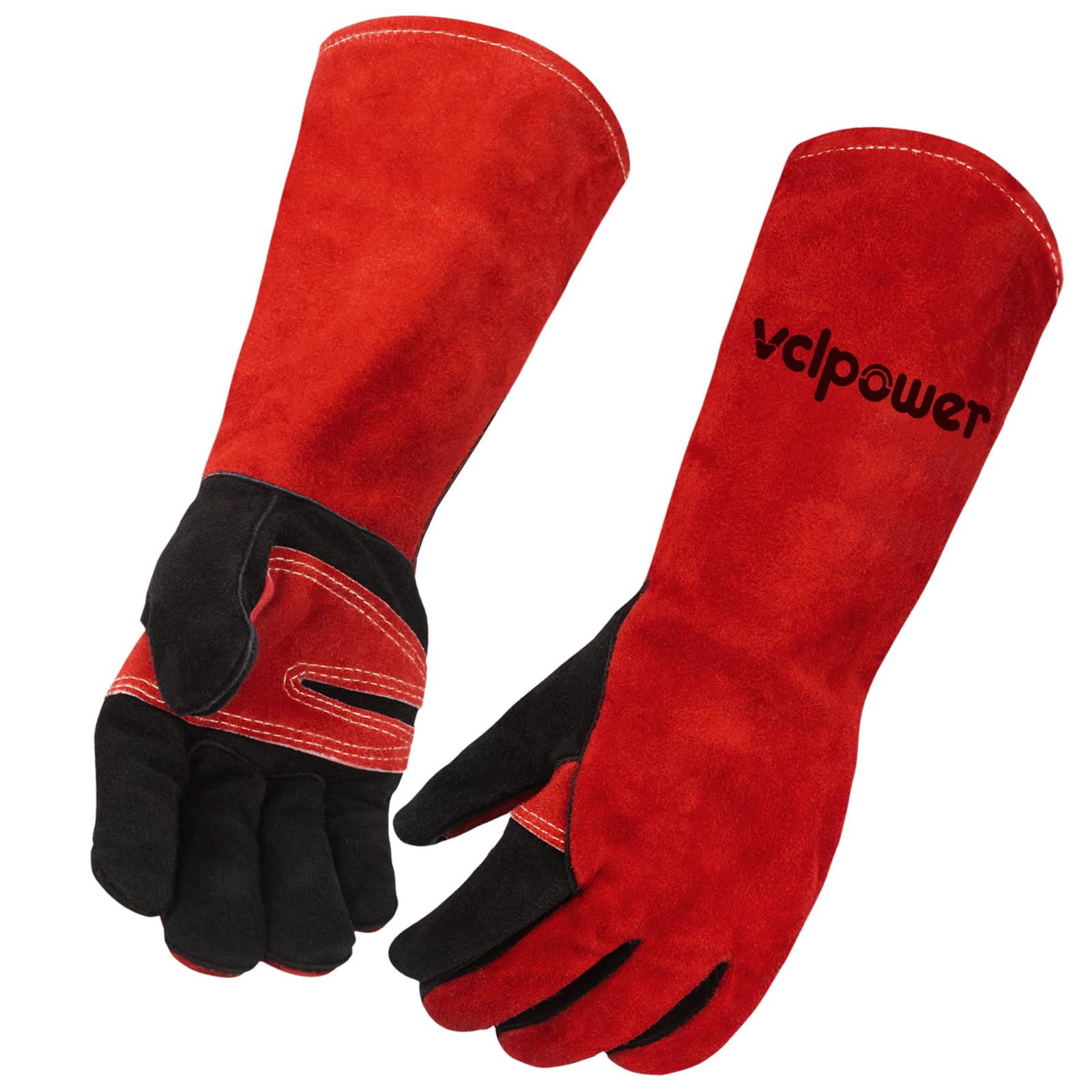
vclpower Size M Gloves

vclpower Size M Gloves

Small hands

Our Score 8.8/10
Check Price

Worth Noting

  • Short 16-inch length provides less forearm coverage than longer models.
  • Sizing can run small, making the fit too snug for some hands.
Dexterity
Better dexterity than oversized
Fit & Sizing
Snug for small hands
Glove Length
16 inches
Bite Resistance
Good bite protection for small hands
Read the full review

These gloves deliver a snug fit for small hands, using double leather padding that stops cat bites and scratches during handling. Unlike the WZQH model that runs large, the vclpower's 16-inch length trades forearm coverage for a better fit on smaller frames. Best for cat rescue volunteers and petite individuals who need bite protection without excess material, but the shorter cuff leaves arms exposed to scratches above the wrist.

If forearm protection is critical, pair with long sleeves or a longer model.

Bottom line: For small-handed users who prioritize fit over arm coverage, these gloves offer targeted protection at a budget price.

5

HANDLANDY Heavy Duty

HANDLANDY Heavy Duty

Feral trapping

Our Score 8.8/10
Check Price

Worth Noting

  • Stiff and bulky design limits finger movement and fine control.
  • Fit runs large, especially for smaller hands.
Dexterity
Very stiff, minimal dexterity
Fit & Sizing
Too large, especially women
Glove Length
Full arm
Bite Resistance
Stops feral cat bites
Read the full review

The HANDLANDY Animal Handling Gloves use very thick cowhide to stop bites from feral cats and handle rough rescue work. The tradeoff is a stiff, bulky design that makes nail trimming or scruffing nearly impossible. This glove is for owners who prioritize maximum durability and forearm protection over dexterity — ideal for trapping and transporting spicy cats, but not for grooming or precision tasks.

Bottom line: A specialized tool for rescue work, not for grooming or tasks requiring fine motor control.

6

PetFusion Grooming Gloves

PetFusion Grooming Gloves

Grooming & bathing

Our Score 8.8/10
Check Price

Worth Noting

  • Cat teeth can puncture the synthetic material, offering no bite protection
  • Sizing can be inconsistent; medium may feel too large for some hands
Dexterity
Good dexterity for grooming
Fit & Sizing
Inconsistent sizing
Glove Length
17.4 inches
Bite Resistance
Scratch-resistant, not bite proof
Read the full review

The PetFusion Glove is built for grooming tasks where dexterity and water resistance matter. Its silicone knobs provide grip during bathing and brushing, and the synthetic material withstands playful scratches from most cats. The glove is comfortable to wear and machine washable, keeping it fresh after repeated use.

This glove works best for owners with calm, non-biting cats who need gentle grooming support. Cat teeth can easily puncture the thin synthetic material, so it should not be relied on for handling aggressive or feral cats. For bite protection, a thicker leather glove like the top pick is necessary.

If between sizes, try a smaller size first — the medium runs long for average hands.

Bottom line: A practical grooming aid for cooperative cats, but not a substitute for bite-proof handling gloves.

7

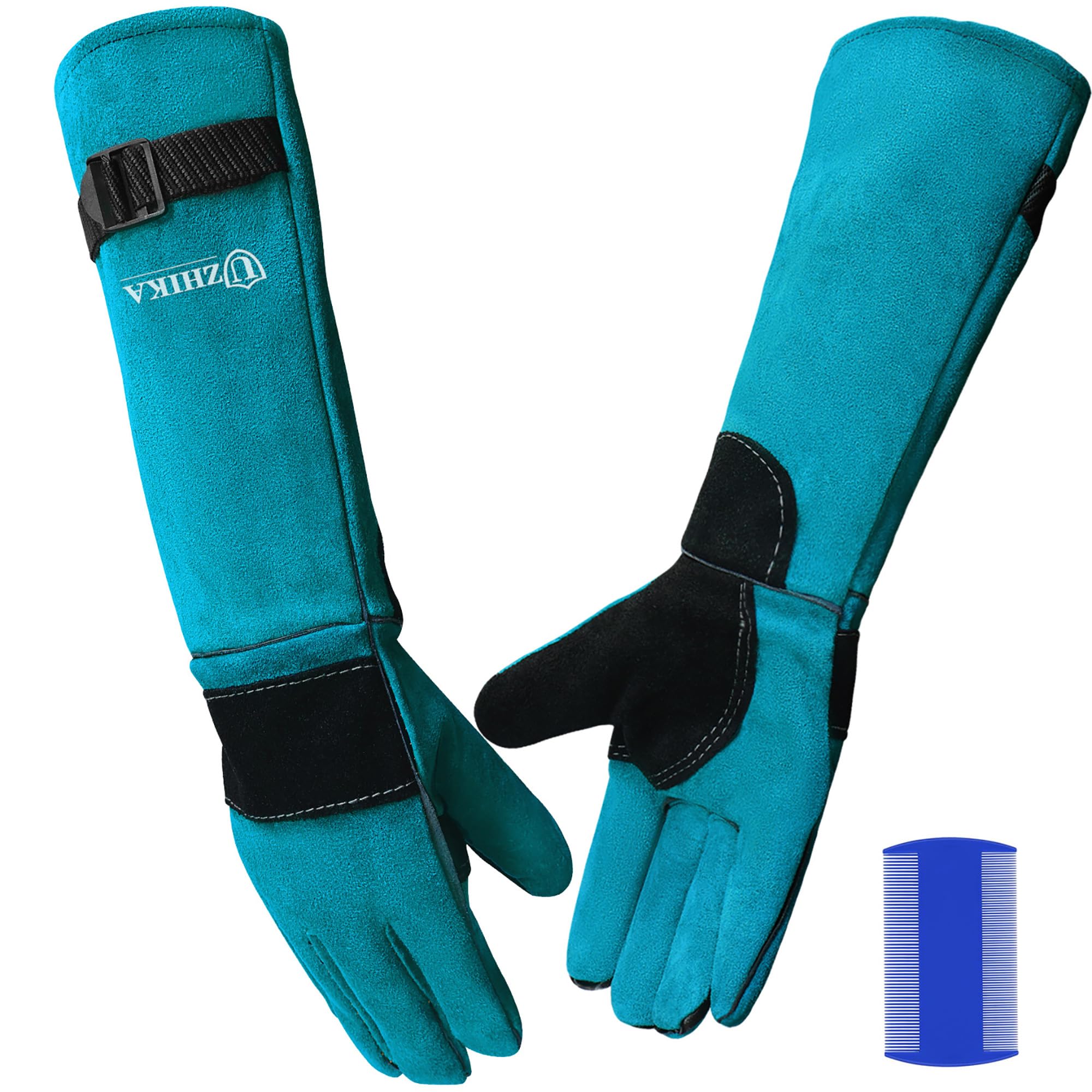
Uzhika 23.6" Leather

Uzhika 23.6" Leather

Feral kittens

Our Score 8.8/10
Check Price

Worth Noting

  • Stitching may feel cheaply made on some units
Dexterity
Moderate
Fit & Sizing
One size fits most
Glove Length
23.6 inches
Bite Resistance
Good for kittens, limited reviews
Read the full review

Provides full forearm protection with thickened cowhide at a low price, making it a practical option for occasional kitten trapping or handling calm cats. That said, some units may have stitching that feels cheaply made, and the limited long-term feedback from users means durability under regular use is less certain than with more established models.

Bottom line: Works well for occasional kitten trapping or handling cooperative cats; if you need a glove for aggressive biters or frequent use, a more thoroughly reviewed option is worth the extra spend.

8

Haulonda Kevlar 23.7"

Haulonda Kevlar 23.7"

Extra bite protection

Our Score 8.8/10
Check Price

Worth Noting

  • Stitching at the thumb webbing can separate after a few weeks of regular use.
Dexterity
Poor dexterity
Fit & Sizing
Excessively large
Glove Length
23.7 inches
Bite Resistance
Kevlar adds bite resistance
Read the full review

Kevlar reinforcement gives this glove extra bite resistance for handling cats that test your gloves. However, stitching at the thumb webbing can separate after a few weeks, and the bulky fit makes precise gripping difficult.

Bottom line: Suitable for owners who prioritize extra bite protection over durability and dexterity, especially for short handling sessions with kittens or small cats.

9

Haulonda 23.7" Leather

Haulonda 23.7" Leather

Cat vet visits

Our Score 8.8/10
Check Price

Worth Noting

  • Finger compartments are too large for precise handling tasks
Dexterity
Reduced grip control
Fit & Sizing
Finger compartments too large
Glove Length
23.7 inches
Bite Resistance
Stops cat bites, some punctures
Read the full review

This glove uses thick cowhide to block cat scratches and bites during vet visits or light grooming. The oversized finger compartments make scruffing or holding clippers awkward, and long-term bite resistance varies. It works as a secondary option for calm cats where forearm coverage matters more than fine control.

Bottom line: Suitable as a backup glove for handling cooperative cats during vet visits or gardening, but not the first choice for aggressive biters or tasks needing dexterity.

How to Choose

Glove Length

Longer gloves (23-24 inches) cover your forearms up to the elbow, which is where cats often scratch or bite when you scruff or hold them. Shorter gloves (16 inches) are quicker to put on and less bulky, but they leave your wrists and lower arms vulnerable.

If you handle feral cats or need to restrain a cat firmly, choose the longer option. For grooming or short vet visits where you can keep the cat at a distance, shorter gloves may be sufficient.

Material & Reinforcement

Single-layer leather can be punctured by a cat's canine teeth under pressure. Double-layer leather on fingers and palms, combined with Kevlar stitching, provides a much more reliable barrier. The Kevlar threads prevent seams from splitting when the cat bites down.

Some gloves market themselves as 'bite proof' using thin cowhide. Look for hefty split cowhide at least 1.2mm thick, and double layers on high-contact areas.

Bite Resistance

No glove is 100% puncture-proof against a determined, full-force bite. However, the best models stop the vast majority of cat bites through a combination of thick leather, multiple layers, and reinforced stitching. User reports reveal that many cheaper gloves fail this test.

The most reliable way to gauge real-world bite resistance is to check feedback from other cat owners who have handled aggressive cats. The volume of consistent positive reports matters more than marketing language.

Fit & Sizing

Most bite-proof gloves come in a single size that is designed for average to large male hands. Women and men with smaller hands often find the fingers too long, making it hard to grip the animal securely. This looseness can actually reduce protection because the cat's teeth can pinch the loose material.

Look for brands that offer specific sizes (like medium) or models with adjustable cuffs that can tighten the fit. A snug glove is safer than a loose one.

Dexterity

Thick, reinforced leather naturally limits finger movement. If you need to perform precise tasks like nail clipping or medicating, you may find these gloves too clumsy. The trade-off is between protection and the ability to do fine motor work.

For grooming and bathing where the cat is cooperative, a flexible, water-resistant glove with silicone knobs (like the PetFusion) provides enough dexterity while still blocking scratches. For handling aggressive cats, dexterity must be sacrificed for safety.

Frequently Asked Questions